The Centre on Thursday directed all States and Union territories to intensify vigil against the monkeypox disease at international entry points, hospitals, and high-risk areas as cases are on the rise globally.
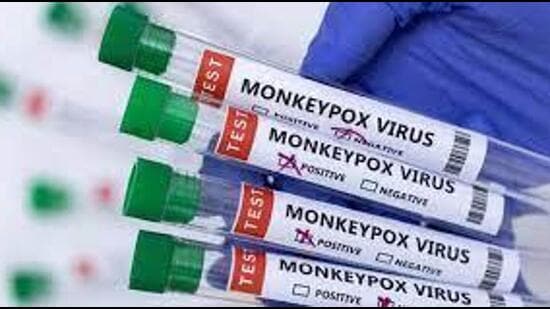
“This is in continuation of this Ministry’s earlier communication vide DO No. 2.2801510612022; dated 31st May 2022 wherein a comprehensive ‘Guidelines for Management of Monkeypox Disease’ issued by this Ministry was shared with all States/UTs... Continued expansion of spread of Monkeypox disease globally calls for proactive strengthening and operationalisation of requisite public health actions for preparedness and response against the disease in lndia also,” wrote Union health secretary Rajesh Bhushan in a letter to states.
According to the World Health Organisation (WHO), this is the first time that cases and clusters are being reported concurrently in five WHO Regions, which made the UN health body assess the overall risk of spread of cases as “moderate” at global level.
As part of the guidelines, Bhushan said directed there should be orientation and regular re-orientation of all key stakeholders including health screening teams at points of entries, disease surveillance teams, doctors working in hospitals about common signs and symptoms, differential diagnosis, case definitions for suspect, probable, or confirmed cases and contacts. Contact tracing and other surveillance activities must be undertaken following detection of a case, testing, infection prevention protocols, clinical management etc.
The health secretary reiterated his earlier directive that screening and testing of all suspect cases should be done at points of entries, and in the community (either through hospital based surveillance and targeted surveillance under measles surveillance or intervention sites identified by national aids control organization (NACO) for men who have sex with men, and female sex workers.
{{/usCountry}}The health secretary reiterated his earlier directive that screening and testing of all suspect cases should be done at points of entries, and in the community (either through hospital based surveillance and targeted surveillance under measles surveillance or intervention sites identified by national aids control organization (NACO) for men who have sex with men, and female sex workers.
{{/usCountry}}In positive cases where blisters appear, patient isolation (until all lesions have resolved and scabs have completely fallen off), protection of ulcers, symptomatic and supportive therapies, continued monitoring and timely treatment of complications are the key measures that need to be taken to prevent death.
There is a need for intensive risk communication focusing healthcare workers, and identification of sites in health facilities (such as skin, paediatric out-patient departments, immunization clinics, intervention sites identified by NACO etc.) as well as creating awareness among general public about simple preventive strategies and need for prompt reporting of cases.
“Hospitals must be identified and adequate human resource and logistic support should be ensured at identified hospitals equipped to manage suspect or confirmed cases of Monkeypox..,” said Bhushan.
The non-endemic countries that are seeing an outbreak include US, the UK, Belgium, France, Germany, Italy, Netherlands, Portugal, Spain, Sweden, Australia, Canada, Austria, Israel and Switzerland.
The cases usually are reported from African countries including Central African Republic, Democratic Republic of the Congo, Gabon, Liberia, Nigeria, Republic of the Congo, and Sierra Leone.
The health ministry said it continues to maintain a close watch over the evolving situation.