
 E-Paper



China is biggest stumbling block in India’s UNSC permanent membership
China has been blocking efforts to begin formal negotiations on UNSC expansion, saying that there is no need to rush through the reforms. The intergovernmental negotiations process has been on for more than 10 years.

 Prefer HTon Google


PM Modi expressed India’s strong support for multilateralism, described the UNSC as a necessity but asserted that it was under stress. “The credibility and effectiveness of global institutions is being questioned. The reason for this is that there has been no change in these institutions despite the passage of time. These institutions reflect the mindset and realities of the world 75 years ago,” he said.
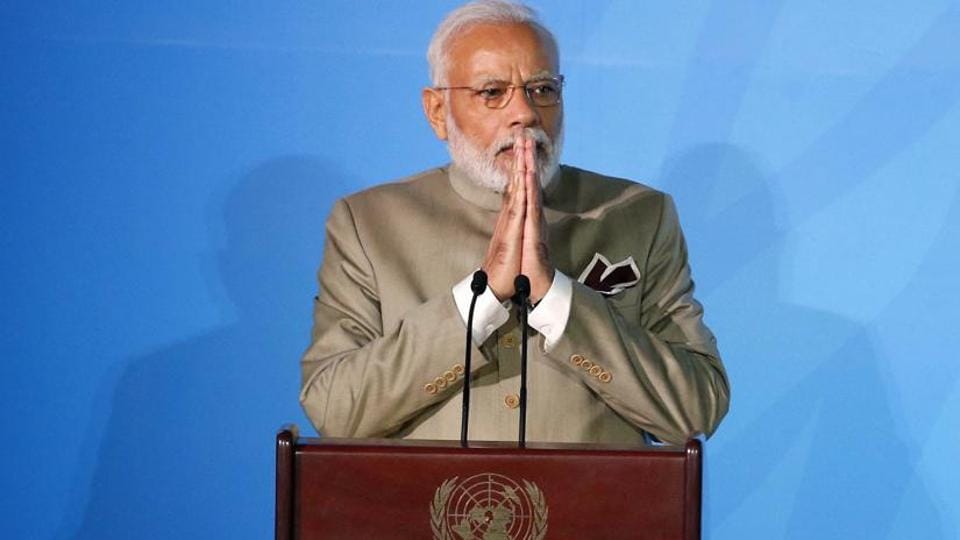
The remarks come ahead of India assuming one of the 10 rotating non-permanent seats at the UN Security Council in January. India has declared that “reformed multilateralism” would be a key focus of its two-year term.
PM Modi described terrorism as the biggest threat to the world, a pointer to Pakistan and also as an indirect swipe at China that has shielded Pakistan and Pakistan-based terrorists from sanctions by the UN. China did block sanctions against Pakistan-based terror group founder Jaish-e-Mohammed Masood Azhar for a decade before it had to step aside in 2019 under intense international pressure. China has been standing in the way of India’s entry to Nuclear Suppliers Group (NSG) by tagging it along with entry of Pakistan despite New Delhi’s impeccable non-proliferation record in contrast to Islamabad that has been a direct beneficiary of nuclear proliferation by North Korea and China.
PM Modi isn’t the only one to press for reform of the UN Security Council. UN General Assembly President Volkan Bozkir recently spoke out against the existing structure, saying it was failing to respond to the world’s biggest challenges due to “competing interests”. French President Emmanuel Macron already has called for an overhaul of international cooperation mechanisms, going to the extent of underscoring that the UNSC “no longer produces useful solutions today”.
The UN Security Council reform has been on the agenda for more than a decade. But member nations haven’t been able to agree on how big the council should become and whether other nations should have veto powers. As a result, the Security Council continues to reflect the global power structure of 1945, when the Second World War victors – the P-5 – the USA, UK, France, Russia and China – acquired their privileged status. Critics have long argued that the council in its present form, is both undemocratic and anachronistic and would stand to lose its effectiveness and legitimacy unless it is transformed to reflect today’s world.
India’s Permanent Representative to the UN, Ambassador TS Tirumurti, speaking in the UN General Assembly this week, said ‘’Today’s Security Council is an impaired organ. It has been unable to act with credibility essentially due to its unrepresentative nature. But then, what is happening inside the Intergovernmental Negotiations (IGN) process, which we seem to be wedded to?’’
Intergovernmental Negotiations framework is a group within the United Nations that is looking into UNSC reforms. But it has made no progress since 2009 when it was formed.
There have been no serious attempts to come up with a consolidated text to begin formal negotiations due to resistance by certain countries such as China that are opposed to the expansion of UNSC membership.
For years, India, Germany, Japan, and Brazil have been trying to get a permanent seat to the UN Security Council but the UN charter is such that it gives permanent members the veto power to any resolution, including the expansion of membership.
While the first four have backed India’s permanent membership, China has time and again stalled it by laying down conditions impossible to meet. China says there are major differences among UN members over UNSC reforms and insists that a “package solution” should be found to accommodate the interests and concerns of all parties.
The Chinese mission to the UN has questioned the need for reforms in “haste”. It doesn’t matter that the informal negotiations for reforms have been on for the last 10 years. “To start text-based negotiation in a haste or to impose a single document is not conducive to building a consensus and promoting unity,” the Chinese mission said in a statement.
India along with Japan, Germany and Brazil, however, called out China’s delaying tactics in September this year. New Delhi told the UNGA president that the inter-government negotiation process had become a convenient smokescreen to hide behind for those who didn’t want to see any reforms in the security council, a reference to countries such as China, Turkey and Pakistan.


