Chief Justice of India BR Gavai on Wednesday said the Constitution of India is the supreme authority and that all three wings of democracy — the executive, legislature, and judiciary — function within its framework.
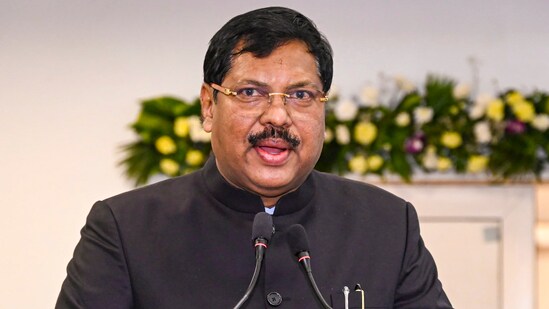
Speaking at a felicitation event in his hometown Amravati, CJI Gavai addressed long-standing debates over institutional supremacy in a democracy. “While many say and believe that Parliament is supreme, according to me, it is the Constitution of India that is supreme. All three wings of the democracy work under the Constitution,” he said, reported news agency PTI.
Referring to the Supreme Court’s landmark judgment on the ‘Basic Structure’ doctrine, Gavai clarified that while Parliament has the power to amend the Constitution, it cannot alter its core principles.
“There is always a discussion as to which wing of democracy -- the executive, legislature or the judiciary -- is supreme,” he said, reiterating that the Constitution remains above all.
A judge is a ‘custodian’ of citizens' rights
{{/usCountry}}“There is always a discussion as to which wing of democracy -- the executive, legislature or the judiciary -- is supreme,” he said, reiterating that the Constitution remains above all.
A judge is a ‘custodian’ of citizens' rights
{{/usCountry}}On judicial conduct, Gavai stressed that independence is not defined by opposing the government but by upholding the rights of citizens and constitutional values. “A judge should always remember that we have a duty, and we are custodians of the rights of citizens and constitutional values and principles. We don't just have power, but a duty is cast upon us,” he said.
He added that public opinion should not influence judicial decision-making. “We have to think independently. What people will say cannot become a part of our decision-making process,” the CJI said.
Reaffirming his commitment to constitutional rights, Gavai cited his ruling against “bulldozer justice” and called the right to shelter “supreme.”
Recalling his early years, the CJI shared that he initially aspired to become an architect but ultimately fulfilled his father's wish. “My father had wanted to become a lawyer but was unable to become one, as at the time he was arrested for being part of the freedom movement,” he said.
(With PTI inputs)