The Supreme Court collegium’s latest round of recommendations for the Bombay high court is interesting because one of the 14 names proposed for elevation is Raj Damodar Wakode, 45. If his career follows the usual trajectory, he will be in the zone of consideration for the office of Chief Justice of India decades later.
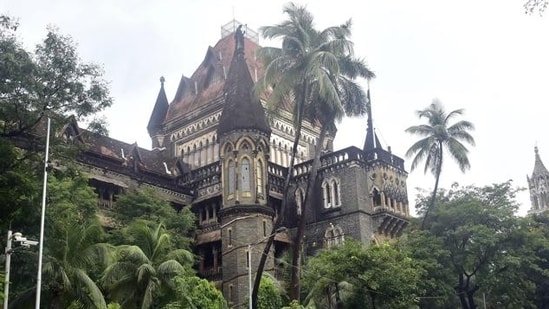
That would be significant because he is the nephew of Chief Justice of India (CJI) Bhushan R Gavai, the son of his cousin. That is still rare, but not uncommon in the Supreme Court. As an HT analysis of all Supreme Court judges between 26 January 1950 and 15 May 2025 showed, 32 of the 279 judges were close family relations. To be sure, by the time Wakode eventually finds his way to the top court (if he does), there are likely to have been some more such instances.
The most famous uncle-nephew pair has to be Justice HR Khanna and his nephew, former CJI Sanjiv Khanna.
The collegium’s statement placed on the Supreme Court website last week lists only the names being recommended and does not disclose any accompanying particulars such as professional affiliations, past associations or the decision-making coram.
{{/usCountry}}The collegium’s statement placed on the Supreme Court website last week lists only the names being recommended and does not disclose any accompanying particulars such as professional affiliations, past associations or the decision-making coram.
{{/usCountry}}A person aware of the matter told HT that CJI Gavai recused himself from deliberations on recommendations where he was directly or indirectly related. “The applications by the candidates and high court proposals had also mentioned about their association with Justice Gavai,” this person added.
Former Supreme Court judge, Justice Abhay S Oka, emphasised that while the system cannot be deprived of a competent candidate just because a collegium member is related to her or him, a proper process must be followed and details of the decision-making process should be published in the interest of institutional transparency. “In such cases, for maintaining transparency, necessary material should be put in the public domain, indicating the decision-making process followed by the Supreme Court,” he said.
According to Justice Oka, who also hails from Maharashtra, it may not be per se “legally wrong” for a collegium to recommend a candidate even though he or she is related to the CJI, provided the CJI recuses in collegium meeting and adds the next senior-most judge in the collegium for considering the candidate.
“Even interaction with the candidate by the collegium must be by the reconstituted collegium…Thus, necessary material should be put in the public domain. The issue of propriety is also involved even though the concept of propriety differs from person to person,” Justice Oka said. He suggested that the memorandum of procedure (MoP), which guides appointments and transfers of judges of constitutional courts, should be amended “so that this kind of controversy does not arise.”
Interestingly, two other names on the August 19 list also trace back to the CJI’s early professional circle. Advocate Ranjitsinha Raja Bhonsale is the son of the late Barrister Raja S Bhonsale, the former advocate general and Bombay high court judge in whose chamber Justice Gavai trained as a junior lawyer. Advocate Mehroz Ashraf Khan Pathan, another recommendee, has also been associated with Justice Gavai as his junior from the time the latter practised.
The collegium, led by CJI Gavai, recommended fourteen lawyers for appointment as additional judges of the Bombay high court through two resolutions on August 19, including Siddheshwar Sundarrao Thombre, Pathan, Bhonsale, Sandesh Dadasaheb Patil, Shreeram Vinayak Shirsat, Hiten Shamrao Venegavkar, Rajnish Ratnakar Vyas and Wakode in one tranche, and Nandesh Shankarrao Deshpande, Amit Satyavan Jamsandekar, Ashish Sahadev Chavan, Vaishali Nimbajirao Patil-Jadhav, Abasaheb Dharmaji Shinde and Farhan Parvez Dubash in the other.
Their appointments will take effect after the Centre clears the recommendations and issues the notification. The Bombay high court’s sanctioned strength is 94 and it has a current working strength of 69 judges. Apart from the principal seat in Mumbai, the high court has benches at Nagpur, Aurangabad (Chhatrapati Sambhajinagar), Goa (Panaji) and the new circuit bench at Kolhapur.