
 E-Paper



ONOE bill doesn’t weaken idea of govt in power till it has majority: ex-CJI Khanna
Ex-CJI Khanna will attend the meeting of the parliamentary panel examining the Constitution (129th Amendment) Bill and the Union Territories Laws (Amendment) Bill

 Prefer HTon Google


The One Nation, One Election (ONOE) bill does not directly “abridge or downsize” the principle that an elected government stays in power as long as it has majority support in the legislature, former Chief Justice of India (CJI) Sanjiv Khanna has said in submission to the panel examining the Constitution (129th Amendment) Bill and the Union Territories Laws (Amendment) Bill for simultaneous polls.
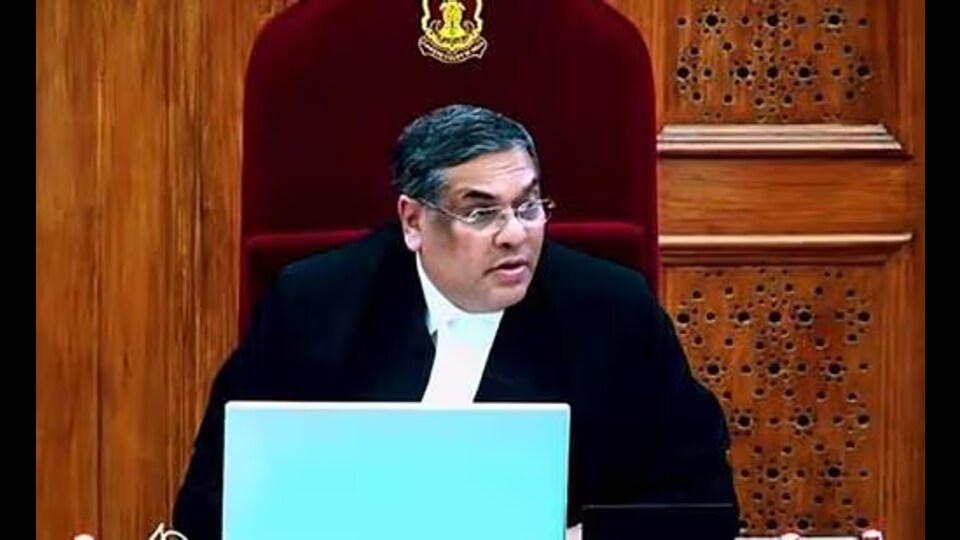
A 39-member Bharatiya Janata Party (BJP) lawmaker PP Chaudhary-led Joint Parliamentary Committee (JPC) was formed in December last year to examine the two bills.
Justice (Retd) Khanna, who is scheduled to attend the JPC meeting on August 19, submitted that deferring elections “may result in indirect President’s rule,” said people aware of the details of the submission. The people added that the former CJI said the bill “may have an indirect impact and effect”, if the elected government falls, as the newly elected legislative assembly will not have a fixed tenure of five years as presently prevalent, but a restricted one with the next scheduled simultaneous polls for the House of People and the state assemblies.
The contentious bill proposes the alignment process to begin in 2029 and the first simultaneous elections in 2034.
Justice (Retd) Khanna referred to instances where elected governments could not complete their term since the first election in 1951. He outlined that in case of premature dissolutions of the House of People and/or the state assemblies, the number of elections as per the proposal will increase. This would not be true in case the legislatures continue for the full term, he said.
A person aware of the details said Justice (Retd) Khanna has drawn attention to Clause 5 of the proposed Article 82A that confers unfettered discretion to the Election Commission of India (ECI) to form an opinion that the elections to an assembly cannot be conducted along with the general elections of the House of People. The clause says that the ECI can recommend to the President to declare by an order that the election to that assembly may be conducted at a later date. “He has pointed out that this clause will be open to question as violating and offending the basic structure of the Constitution on the grounds of being arbitrary and offending Article 14 of the Constitution,” said the person, speaking on condition of anonymity.
The former CJI, who referred to his judgment in the electoral bond case, submitted that deferring elections “may result in indirect President’s rule”. “He has said that it might be seen as the Union government taking over the reins of the state government. And this can be questionable judicially, as violating the federal structure envisaged in the Constitution,” the person quoted above said.


