The Supreme Court on Thursday asked the Union government to consider revising a 40-year-old rule under the Motor Vehicles Act that restricts states to maintain funds up to ₹20 lakh for paying compensation claims to victims of road accidents involving state-run vehicles.
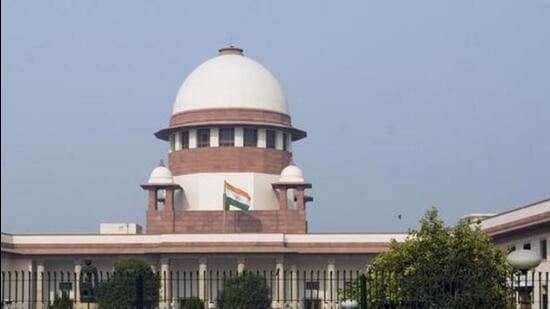
The amount of ₹20 lakh or ₹2,500 per vehicle was fixed in October 1982 under the Motor Vehicles Act, 1939 and the same has not been revised since. “Despite lapse of 40 years, there has been no revision of this amount,” a bench of justices Sanjay Kishan Kaul and MM Sundresh said.
When the Motor Vehicle Rules were framed in 1989, the amount was introduced under Rule 152.
“In our perspective, Centre needs to revisit the figure provided in Rule 152,” the bench said, noting that the amount provided by the rule was too meagre for meeting the compensation claim expenses payable by states or state transport corporations.
To highlight how unrealistic this figure is, amicus curiae N Vijayaraghavan informed the court that in Tamil Nadu, the total dues payable by the state road transport corporation in cases settled by Lok Adalats was to the tune of ₹400 crore.
“This shows the gravity of the situation,” the bench observed while asking additional solicitor general (ASG) Jayant Sud to take up the matter with the Centre. Sud informed the court that proviso to the same rule allows periodic enlargement of fund.
{{/usCountry}}“This shows the gravity of the situation,” the bench observed while asking additional solicitor general (ASG) Jayant Sud to take up the matter with the Centre. Sud informed the court that proviso to the same rule allows periodic enlargement of fund.
{{/usCountry}}Realising the dearth of funds available with the state road transport corporations, the apex court had on November 16, last year directed state governments to contribute additional equivalent to meet compensation claims paid across past three financial years sum to the corpus. The court direction was to be complied by all states by February 15.
Andhra Pradesh and Telangana road transport corporations, however, appealed the court to modify its directions, claiming that the additional corpus would add a huge financial burden on the two southern states. Appearing for the Andhra Pradesh transport corporation, senior advocate Gaurab Banerjee said, “In the last three years, the claims settled by us amount to ₹100 crore.” To which, the bench replied: “This itself shows that the ₹20 lakh limit is meaningless.”
The court dismissed their applications for modifying its order and instead granted the applicants and all other states time till April-end to comply with its order.
The court also allowed states the liberty to explore the feasibility of insuring its entire fleet of buses/vehicles. In this, the bench encountered a related problem in another provision of the Motor Vehicles Act that granted exemption from insurance to state-operated vehicles. The amicus curiae pointed out that due to the clause, mentioned in Section 146 of the Act, insurance companies refused to offer third-party insurance cover.
The bench observed, “Due to this exemption, unnecessarily litigants suffer, states suffer and corporations suffer. Because of this exemption, state corporations do not take insurance. As a result of this, a large amount of liability comes upon the corporation and the states do not grant them funds. The objective for which this exemption was created has lived out its purpose.”
Noting this aspect, the top court in its November 16 order said that states that failed to create the additional corpus of funds based on past three years’ claims will not be allowed to claim exemption from insurance. The court asked Sud to revisit this exemption with the passage of time and the complexities involved in the matter.
The bench posted the matter in July and directed that in the meantime, if any state wishes to get its transport fleet insured, “the insurance companies will not decline to give insurance on the ground that exemption is granted under Section 146”.
The bench was also informed that the road transport corporation in the Union territory of Puducherry has got all its vehicles insured by a public insurance company. ASG Sud informed the court that even the corpus of fund under Rule 153 can be periodically revised by states, pointing to Rajasthan that has a corpus of ₹350 crore set apart to meet the liability arising out of compensation claims against the state.