The Constitution is meant for every citizen, said Chief Justice of India (CJI) NV Ramana on Sunday, asserting that a constitutional republic shall only thrive when its citizens are aware of their rights and duties under the Constitution.
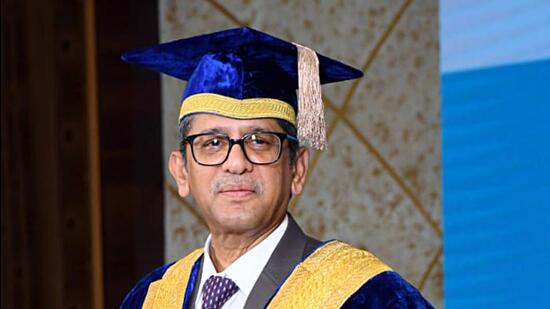
Speaking at a convocation ceremony of Hidayatullah National Law University in Chhattisgarh’s Raipur, the CJI, however, rued that the knowledge of the Constitution in India is limited to a very small section of population.
“The sad reality is that the supreme document which defines the aspirations of modern independent India is confined to the knowledge of law students, legal practitioners, and a very small segment of the Indian population,” regretted the judge, as he underlined the role of youth in achieving social transformation through the rule of law and the Constitution.
Every individual must be made aware of their rights and duties, said justice Ramana, imploring all citizens to promote constitutional culture and raise awareness in the society.
“The Constitution is meant for every citizen… We have collective duty to promote the constitutional culture and raise awareness. It should be your endeavour to explain the Constitutional provisions in simpler terms and assimilate its ethos into the minds of the people. A constitutional republic shall only thrive when its citizens are aware of what their Constitution envisages,” said the CJI.
Terming law an instrument of social change, the judge urged the law students and lawyers to be the beacon of social justice, become the voice of the voiceless and bridge the gaps in a world of rising inequities.
{{/usCountry}}Terming law an instrument of social change, the judge urged the law students and lawyers to be the beacon of social justice, become the voice of the voiceless and bridge the gaps in a world of rising inequities.
{{/usCountry}}“Law graduates must inculcate analytical skills, critical evaluation and creative solutions to social and legal problems… most vulnerable are often the victims of human rights violations, either by the State or by anti-social elements. As young advocates, you are best placed to strongly oppose the same through legal action,” CJI Ramana told the graduating students in Raipur.
CJI Ramana also encouraged the young law graduates to become a partner in the legal aid movement.
“We need young talented minds to steer the movement in the right direction. Go to the people who cannot reach you. Understand the prevailing social issues, raise concerns and stand up for them. Educate people to secure their rights and provide legal guidance whenever you can,” added the CJI.
Knowledge and information are the biggest assets one can possess, emphasised justice Ramana, exhorting the young graduates to start thinking out of box and not in traditional ways.
“The best lawyers are the ones who are well acquainted with history, politics, economics and other social and scientific developments around them… A lawyer needs to be an all-rounder, a leader and a changemaker,” he said.