It is not the function of courts to “preach or teach” citizens on what they ought to say or not, retired Supreme Court Judge Abhay Oka said, while urging constitutional courts to quash criminal cases initiated merely to silence dissent.
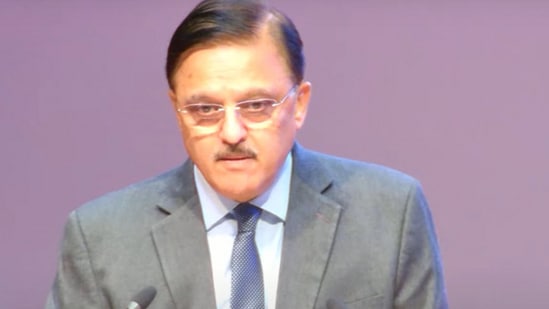
Speaking at the inaugural Advocate Haroon Solkar Memorial Lecture Series in Mumbai on Saturday, Justice Oka said courts are not meant to decide what citizens should or should not say. Their responsibility is to safeguard fundamental rights, even when the views expressed by individuals may not align with those of the judges, news agency PTI reported.
Courts must protect dissent, even when they disagree with views
Justice Oka said citizens have a constitutional right to stage peaceful protests and express their grievances.
Also read | ‘Citizens need not say only what rulers like’: Justice Abhay Oka on free speech, protests
Referring to Irish writer Sir Thomas More, he said citizens cannot be expected to speak only in ways that please those in power.
{{/usCountry}}Referring to Irish writer Sir Thomas More, he said citizens cannot be expected to speak only in ways that please those in power.
{{/usCountry}}“If democracy is to survive, we must guard and protect our freedoms guaranteed under Articles 19(1)(a) and 21 of the Constitution of India (dealing with fundamental rights) even if we have to pay a huge cost to protect these fundamental rights,” he told the gathering, as per the news agency.
He highlighted that people often approach courts seeking the dismissal of criminal cases filed over alleged violations of their right to freedom of expression.
Also read | 'Withdraw FIRs now': CJP to BJP after top court clarifies order on protest-linked cases
When such matters come before courts, judges must examine whether an offence has actually been committed and whether there has been an infringement of fundamental rights, Justice Oka said.
‘It is not the function of court to preach or teach’
Justice Oka said courts may not agree with the statements or opinions expressed by petitioners, but that cannot become a reason to deny protection of free speech.
“The court may not like what the petitioners have said or expressed, but still it is the duty of the court to protect the freedom of speech and expression. It is not the function of the court to preach or teach the petitioner what he or she should have said or not said,” the former Judge said.
Also read | Stone-pelting by CJP protesters happened even after Parliament march violence: Officials
He said the role of courts is limited to determining whether an offence is made out and whether constitutional rights have been violated.
Peaceful protests are constitutional right
Justice Oka said citizens have the right to put forward their demands, while the state has a responsibility to consider them.
He added that if grievances are not addressed, people have the right to hold peaceful protests as a way of expressing their dissatisfaction.
"If demands are not considered, the citizens have a right to stage a peaceful protest, because that is the only way of expressing displeasure," noted Justice Oka, who served in the Supreme Court from August 2021 until May 2025.
He said courts must remain vigilant against attempts to weaken constitutional values and ensure that freedom of speech and expression is not restricted.
"I always believe that the courts must be at the forefront to protect the fundamental rights of citizens. It is the bounden duty of the courts to ensure that the Constitution and its ideals are not trampled upon," he observed.
Justice Oka raises concern over intolerance towards criticism
Justice Oka questioned who would protect fundamental rights if courts failed to do so.
"If courts are not going to protect these fundamental rights then who is?," Justice Oka questioned.
He also reminded the government of its constitutional obligations, saying that when the state violates citizens' fundamental rights, it fails in its duties.
Justice Oka said constitutional principles such as secularism, democracy and liberty must be respected by the state.
"But in the present day, we rarely see the government respecting the ideals under the Constitution," Justice Oka said.
Disagreement should lead to dialogue, not attacks
The former Supreme Court judge also expressed concern over increasing intolerance towards criticism.
He said disagreement with a viewpoint should be addressed by presenting an alternative opinion rather than targeting the person expressing it.
Justice Oka reiterated that in a democracy, citizens have the right to raise demands and the government has a duty to engage with them.
"The government may or may not accept it (demands), but it is the government's duty to consider it, have a dialogue and discussion. But perhaps with the passage of time, we have all forgotten these golden principles," he noted.