E-Paper



Covid-19: Revised travel guidelines take effect
Incoming travellers will have to upload their Covid-19 vaccination certificates on the government’s Air Suvidha portal aimed at digitally documenting relevant details of international passengers at the country’s entry points.

 Prefer HTon Google


India from Monday will no longer require negative RT-PCR test reports from fully vaccinated travellers from 86 countries, according to its revised guidelines on international arrivals.
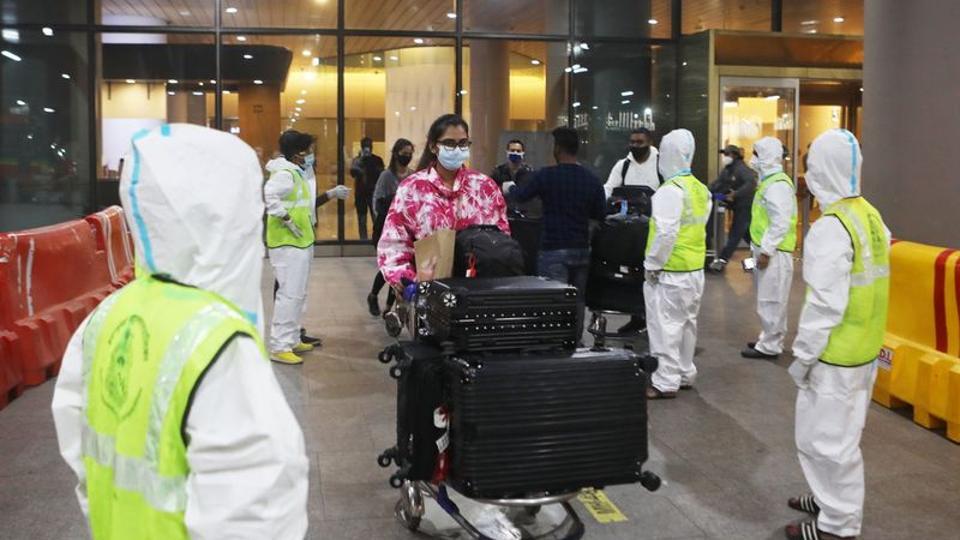
“The guidelines and the list (of countries) are pretty dynamic that keeps getting updated based on country specific variations,” a government official aware of the development said on condition of anonymity. “The guidelines are formulated based on the risk posed, internally as well as internationally, and will be updated accordingly in future.”
Incoming travellers will have to upload their Covid-19 vaccination certificates on the government’s Air Suvidha portal aimed at digitally documenting relevant details of international passengers at the country’s entry points.
Each passenger will also be required to submit a declaration with respect to authenticity of the certificate, and will be liable for criminal prosecution if it is found to be fake.
The requirement of mandatory seven-day home quarantine after arrival has also been done away with. Passengers will now have to self- monitor their health for 14 days.
There are countries that have an agreement with India on mutual recognition of vaccination certificates that are nationally recognised, or certificates on vaccines recognised by the World Health Organisation, according to the health ministry’s guidelines.
Similarly, there are countries that currently do not have such an agreement with India, but they exempt Indian citizens who are fully vaccinated with nationally recognised or WHO recognised vaccines.
“On the basis of reciprocity, the travellers from only such Countries which provide quarantine-free entry to Indians will be allowed for relaxation under Certificate of completing full primary vaccination schedule of COVID-19 vaccination,” the guidelines state. “The travellers from such countries only are considered for allowing entry based on vaccination certificate & shall upload their fully vaccinate certificate on the Air Suvidha portal.”
A pre-departure negative RT-PCR test report was mandatory for anyone arriving into the country and, following the outbreak of the Omicron variant, on-arrival testing was made mandatory for all. Additionally, people from some at-risk regions, including all of Europe, needed to stay at the airport till their results were determined.
However, the new guidelines also mandate that a sub-section, which is 2% of the total passengers in a flight, will undergo random post-arrival testing at the airport entry point. In each of the inbound flights, such travellers will be identified by the airlines concerned, and should preferably be from different countries to get a better mix of samples for epidemiological purposes.
These passengers will be allowed to leave the airport after submitting their samples. However, if a sample tests positive, the concerned person will be managed as per laid down standard protocol.