
 E-Paper



Covid-19: Why Delhi traders fear losing business to neighbouring states
Businesses are bleeding due to the double restrictions, as traders shift to neighbouring states with fewer restrictions

 Prefer HTon Google


New Delhi: Ashwani Marwah, general secretary of Traders Association, Lajpat Nagar, says that business in the market has dropped below 60% since the weekend curfew, in addition to the imposition of the odd-even opening of shops in markets, by the Delhi government in a bid to contain the spread of Covid-19. Traders’ organisations are planning to write to the Delhi government to relax these norms.
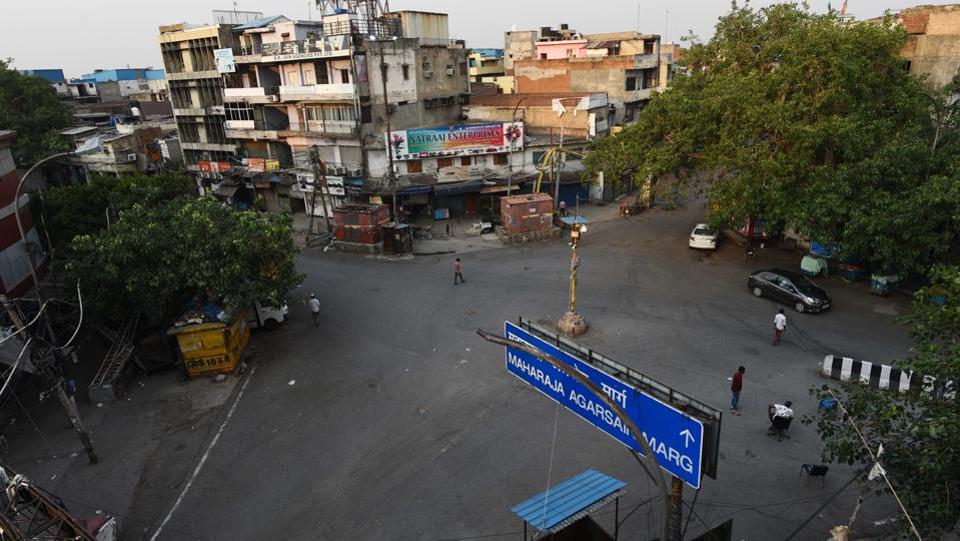
“Some shops open just twice a week; the business is badly hit. We have written to the Delhi government to allow all shops to open, as it is becoming to sustain the business. The timing can be reduced, if the government wants,” said Marwah.
This is the situation in most markets in the national Capital. Traders say that businesses are bleeding due to the double restriction on markets, as business is gradually shifting to neighbouring states with fewer restrictions.
Pradeep Kumar Gupta, a wholesale garment trader in Chandni Chowk, said that customers, especially those coming from outside Delhi, don’t come to the market to buy stuff from just one shop. With double restrictions in place, people are not coming to the markets.
“A substantial percentage of our customers come from outside Delhi. But due to uncertainty, customers are not coming and are looking for alternatives in their own states. If this continues, we will completely lose business in the long run,” said Gupta.
Losing business to neighbouring states
The wedding industry is already experiencing the trend of losing business to neighbouring states, said Ramesh Dang, member of the Delhi Wedding Forum (formed post-Covid-19).
Delhi used to be a preferred wedding destination even for people living in Noida, Gurugram, and Faridabad, say industry members. While there is a ban on banquets and only 20 guests are allowed in weddings in Delhi, in neighbouring states the norms are relaxed with 50-250 guests being allowed. The wedding season has just started, and banquet and tent house owners say that instead of bookings, they are getting cancellation requests.
Dang said, “Our industry has suffered a lot in the past two years due to the Covid pandemic. We are now losing business to neighbouring states as people are cancelling events here due to the restrictions and moving to Noida, Gurugram, and Faridabad, where the norms are not so strict. We have written to the government to allow at least 50-100 people or 50% of the venue capacity.”
He added, “We have somehow managed to stay afloat as there were strict restrictions imposed on social gatherings in the past two years. If the ban is not lifted, it will impact lakhs of people associated with the industry.”
Calling the double restrictions disastrous for business, Praveen Khandelwal, secretary-general of Confederation of All India Traders, said that the effects of businesses moving to neighbouring and other states will be felt on Delhi’s economy in the long run. “Unlike other states, Delhi doesn’t have agriculture and industries to earn revenue. If we continue to lose business to neighbouring states, there will be a major impact on the city's economy,” Khandelwal said.
Raj Kumar, a wholesale garment trader in Karol Bagh, said, “People from outside Delhi don’t come to purchase a single thing. They want to explore the market and place orders for different things in one visit. But when 50% of the market is closed, they don’t know when to come. Some of my regular clients call to check if the shop is open today or not.”
Brijesh Goyal, chairman of Chamber of Trade and Industry and convenor of AAP’s trade wing, said, “We are going to write to Delhi Disaster Management Authority (DDMA) to review its decision, as double restrictions are posing a huge problem to traders. Close to 3-4 lakh customers from outside Delhi but due to the restrictions, they are confused. It is a serious concern.”
The fear of a total collapse
Since March 2020, when the first lockdown was announced, traders have been badly hit. In some markets, people have begun to shut shops.
Anil Taneja, president of Nehru Place Market Welfare, said that some shops have closed down in the market. “Some on rent have shut shops. The rent of a small shop is also in lakhs in the market. Businesses have suffered a lot in the past two years and people are now finding it difficult to pay salaries and maintain the establishment. The new restrictions have only made it even more difficult to sustain the business,” said Taneja.
Another sector badly affected due to the restrictions is the health and wellness centres. Currently, gyms are not allowed to operate. Chirag Sethi, vice-president of Delhi Gym Association, said, “We are the first to be closed down when Covid cases begin to increase and last to open. In the past two years, our industry has suffered the most, as gyms have largely remained closed. Today, many have shut down, as it is difficult to pay salaries. Even property owners are reluctant to rent out space to gyms now. We have written to the Delhi government to allow gyms and also provide some relaxation in fixed electricity charges for the period when the gyms were closed.”
A Delhi government spokesperson said, “Imposing Covid-19 related restrictions is a very painful step for the government as well. On the one hand, when curbs are imposed livelihoods take a hint, but on the other when they're not, a significant threat is posed to the health of the public at large. Protecting lives and ensuring the safety of each and every resident is paramount to the Kejriwal government. Experts are reviewing the situation very closely. As and when the situation improves, the government would certainly reduce the quantum of the restrictions.”


