Covid-19: Only 12% of the 770 million people between the ages of 18 and 60 years who are eligible for precaution (or booster) doses have so far shown up to get their third shot of the vaccine, according to government data accessed by HT, which highlights the uphill challenge faced by officials in expanding booster coverage in the country.
ALSO READ | Long COVID in children is less common than in adults? Here's what new study says
Data also shows
Covid-19: Only 12% of the 770 million people between the ages of 18 and 60 years who are eligible for precaution (or booster) doses have so far shown up to get their third shot of the vaccine, according to government data accessed by HT, which highlights the uphill challenge faced by officials in expanding booster coverage in the country.
ALSO READ | Long COVID in children is less common than in adults? Here's what new study says
Data also shows that only 35% of booster coverage has been achieved among the 168 million people who lie in the three categories of population deemed at highest risk – people aged above 60, health care and frontline workers – and were thus the first groups to be made eligible for booster shots on January 10.
At least five states and a Union territory remain in the red zone with abysmally low coverage of 11% and below, officials familiar with the development pointed out. The states are Goa (11%), Haryana (10%), Punjab (10%), Jharkhand (9%), Nagaland (9%) and Meghalaya (8%). The Union territory of Chandigarh reported to have 11% precaution dose coverage.
At the other end of the spectrum, with the best booster coverage in the country, lie Andaman and Nicobar Islands has covered 78% of its eligible population, followed by Ladakh with 59%, Puducherry (42%), Chhattisgarh (35%) and Andhra Pradesh (34%).
“The coverage is low and the government is making efforts to ensure that the coverage goes up; and launch of Covid vaccination Amrit Mahotsav campaign is one of the measures that included setting up of dedicated camps to administer shots,” said a senior government functionary aware of the matter, requesting not to be named.
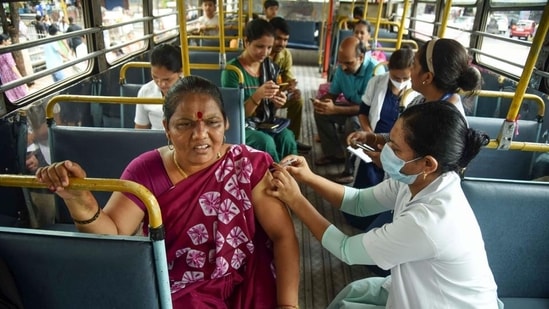
Data shows that while 157 million precaution doses have been administered across the country till Tuesday evening, 103.9 million of these shots have come after July 15 when the government launched ‘COVID Vaccination Amrit Mahotsava’ — a campaign to give an impetus to precaution doses at a national level. Under the campaign, special vaccination drives were conducted at railway and bus stations, schools or colleges, elderly care homes, work places etc.
“It has made some difference in the last 46 days, but we clearly need to do more, and we are looking at measures that can further be taken to increase the uptake of precaution dose,” added the person.
Among the vaccines being administered since the special 75-day campaign was launched, 101.7 million (101,678,376) doses of Covishield have been administered as booster jabs, which remains by far the most-administered vaccine, followed by 16,814,771 doses of Covaxin, and 8,503,008 doses of Corbevax. These shots have been given across 14,049 camps, government data shows.
According to government data, cumulative total of vaccines doses administered at railway stations has been 4,259 so far. In bus stations, 9,183 doses, 370 at airports, schools and colleges have reported 1,16,675, and in camps during religious yatras, 3,522 doses have been provided. The camps at other places such as border areas, the number has been 7,94,589, health ministry officials citing data said.
The special drive aimed to administer precaution doses free of cost to all aged 18 and above at government vaccination centres across the country is being held as part of the government’s Azadi Ka Amrit Mahotsav to celebrate the 75th anniversary of India’s Independence.
According to the health ministry data, 98% of India’s adults has received at least one dose of Covid-19 vaccine, while 92% have received two shots of the vaccine.
But last mile coverage is always difficult in a country like India, say experts.
“The last leg is always a challenge and the government needs to have a targeted approach based on population groups that are left behind,” said Giridhara R Babu, head of epidemiology, Indian Institute of Public Health, Bengaluru.
One Subscription.
Get 360° coverage—from daily headlines
to 100 year archives.
Archives
HT App & Website