The draft electoral roll for Delhi was published on Monday, excluding nearly 4.7 million electors, as the window for claims and objections also opened, officials said. Delhi's final roll will be published on November 4.
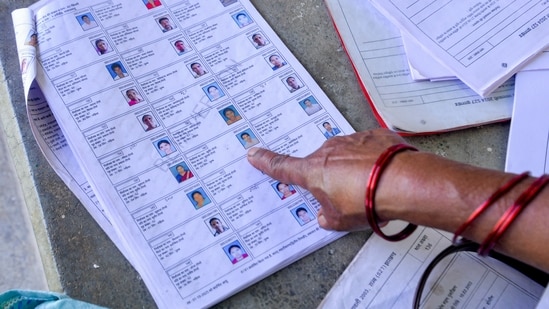
"Aggrieved persons, whose forms were not submitted, can submit their claims in Form 6 along with the Declaration form and supporting documents after the publication of Draft Roll 2026 during the period fixed for receiving claims and objections -- August 31 to September 30," said an official from the office of the Delhi chief electoral officer.
The draft rolls contain the names of around 9.75 million electors whose forms were received and digitised during the enumeration exercise that concluded on August 17.
These account for 67.21% of Delhi’s 1,45,10,299 electors, according to figures released by the Delhi chief electoral officer.
The remaining electors have been categorised as “uncollectable” under the Absent, Shifted, Dead, Duplicate and Others (ASDDO) categories. Their names are not part of the draft roll, but they can seek inclusion by filing claims and objections, the official said.
The publication of the draft will also trigger scrutiny of electors whose names appear in the roll but whose details could not be linked to the 2002 intensive revision roll or whose enumeration forms contain anomalies. Officials said such electors may receive notices.
{{/usCountry}}The publication of the draft will also trigger scrutiny of electors whose names appear in the roll but whose details could not be linked to the 2002 intensive revision roll or whose enumeration forms contain anomalies. Officials said such electors may receive notices.
{{/usCountry}}Anomalies could include a mismatch between an elector’s name in the current roll and the 2002 roll, an age gap of less than 15 years or more than 50 years between an elector and a parent, or a gap of less than nine months between the birth dates of siblings.
The electoral registration officer may seek additional documents where there are doubts about an elector’s age or citizenship.
The Election Commission suggested a list of supporting documents, including government or PSU employee or pensioner identity cards, documents issued by government authorities, banks, post offices, LIC and PSUs before July 1, 1987, birth certificates, passports, matriculation or educational certificates, permanent residence certificates, forest rights certificates, caste certificates, NRC records where applicable, family registers and government-issued land or house allotment certificates.
Documentary requirements will vary according to the elector’s date of birth. Those born before July 1, 1987, will need proof of their date and/or place of birth; those born between July 1, 1987 and December 2, 2004, will need documents for themselves and one parent; while those born after December 2, 2004, will need documents for themselves and both parents.