A commission redrawing poll constituencies in Jammu and Kashmir on Monday proposed adding six assembly seats in the Jammu region and one in Kashmir, sparking sharp responses from parties in the Valley that condemned the proposal and distanced themselves from the process.
The three-member delimitation commission also proposed reserving nine seats for scheduled tribes and seven for scheduled castes, a first in the Union Territory. The panel presented the draft to five associate members, who belong to the Bharatiya Janata Party and the National Conference, and asked for their responses by December 31.
“Six additional constituencies have been proposed in Jammu and one in the Valley,” said a person with knowledge of developments. “The commission has circulated a draft paper containing the details of how the proposal was formulated and circulated among the associate members.”
If the proposal is cleared, the total number of poll constituencies will rise from 83 to 90, with 43 in the Jammu region and 47 in Kashmir. In the current state House, Jammu has 37 members and Kashmir has 46.
Also read | Delimitation commission serving interests of BJP: Jammu and Kashmir leaders
{{/usCountry}}Also read | Delimitation commission serving interests of BJP: Jammu and Kashmir leaders
{{/usCountry}}The draft sparked furious responses from mainstream parties in the Valley, which accused the panel of disenfranchising Kashmir. The NC, which had agreed to participate in the process, said it won’t sign the draft proposal and the Peoples Democratic Party (PDP), which had boycotted the panel’s work, said the commission was serving the BJP’s political interests. The BJP said the commission did a tremendous job and any reaction before the official report was premature.
“The draft recommendation of the J&K delimitation commission is unacceptable. The distribution of newly created assembly constituencies with 6 going to Jammu & only 1 to Kashmir is not justified by the data of the 2011 census,” tweeted former chief minister Omar Abdullah.
The delimitation commission, which aims to carve out new poll constituencies in the region, was set up in March 2020 with five parliament members from the UT as associate members. The delimitation process is important because it is the first step towards holding fresh elections in the region that has been under central rule for three years.
Jammu and Kashmir lost its special status and statehood on August 5, 2019, when the central government moved to void Article 370 of the Constitution. At a landmark all-party meeting in June, Prime Minister Narendra Modi told leaders of political parties that statehood will be restored after fresh elections are held in the region, on the basis of the delimitation process.
But parties from the region, which remains bitterly opposed to the scrapping of its special status, want statehood to be restored before delimitation and elections – a demand rejected by the Centre.
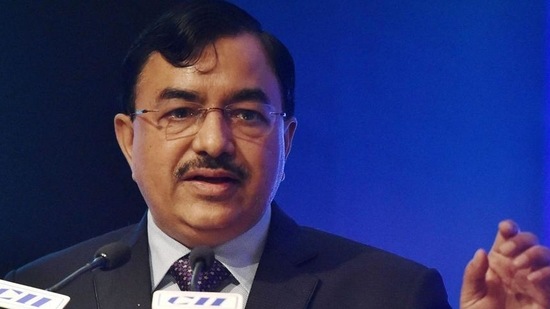
The commission, headed by former Supreme Court judge Ranjana Desai and also comprising chief election commissioner Sushil Chandra, held its second meeting in Delhi on Monday. The panel presented the draft proposal to the five associate members – Union minister Jitendra Singh, NC chief Farooq Abdullah, NC MP Mohammad Akbar Lone, NC MP Hasnain Masoodi and BJP MP Jugal Kishore Sharma, said a statement from the election commission.
Senior deputy election commissioner Chandra Bhushan Kumar explained that the delimitation commission categorised all 20 districts in three broad categories A, B and C giving margin of +/- 10% of average population per assembly constituency while proposing allocation of the constituencies to the districts. “The commission has also, for some districts, proposed carving out of an additional Constituency to balance the representation for geographical areas having inadequate communication and lack of public conveniences due to their inhospitable conditions on the international border. For the first time, in Jammu and Kashmir, 9 (Nine) seats are proposed to be allocated for scheduled tribes out of 90 seats on the basis of population. Seven seats are proposed for scheduled castes,” the statement added.
“He (Kumar) informed that in the Union Territory, since last delimitation, number of districts has increased from 12 to 20 and number of tehsils from 52 to 207. The population density in the districts of the Union Territory varies from 29 persons per square km in Kishtwar to 3,436 persons per square km in Srinagar,” said the statement.
A second person with knowledge of developments said that as of now, only allocation of seats to the particular regions has been proposed and the final shape of the poll constituencies is being worked on.
“Chief election commissioner shared the experiences of the commission of interacting with people in the Union Territory of Jammu & Kashmir during its visit. He emphasised that the work of delimitation is being carried out within the overall statutory framework and keeping the interest of common people of the Union Territory of Jammu & Kashmir,” said the statement.
Many mainstream parties in Jammu and Kashmir condemned the draft proposal.
“My apprehensions about the delimitation commission weren’t misplaced. They want to pitch people against each other by ignoring the population census & proposing 6 seats for one region & only one for Kashmir,” former chief minister Mehbooba Mufti tweeted.
She accused the panel of serving the interests of the BJP. “The real game plan is to install a government in J&K which will legitimise the illegal & unconstitutional decisions of August 2019,” she added, referring to the scrapping of Article 370.
People’s Conference chairman Sajjad Lone termed the recommendation unacceptable.
National Conference, which had earlier boycotted the commission but later decided to join the process, distanced itself.
“Misrepresenting and distorting the facts with malicious intention! Very misleading statement. We have clearly expressed our resentment over the draft of the Delimitation Commission, the biased process of seat sharing. The party will not be a signatory to this report,” the party said in a tweet.
Union minister Singh said the commission did a tremendous job.
“We must appreciate they had followed certain laid down parameters on the basis of which they have come out with the documents which are very objectively done...the associated members regardless of their party and political affiliations not only appreciated the work done by the delimitation commission but also committed that they would in the future also extend their cooperation for the rest of the exercise,” Singh said.
BJP spokesperson Altaf Thakur said, “We will react only once the official report is released. Till then it’s premature to react on this.”