
 E-Paper



Denial of basic care to disabled in prison is violation of rights: Supreme Court
The court also underscored that NCRB does not record the disability status of prison inmates but tracks breakup of their caste, gender and religion.

 Prefer HTon Google


NEW DELHI:The Supreme Court on Tuesday said jail authorities should provide wheelchair-friendly spaces, accessible toilets, ramps and dedicated spaces for therapeutic needs of the disabled, observing that denial of basic care and facilities to the disabled in prisons amounts to violation of their fundamental rights,
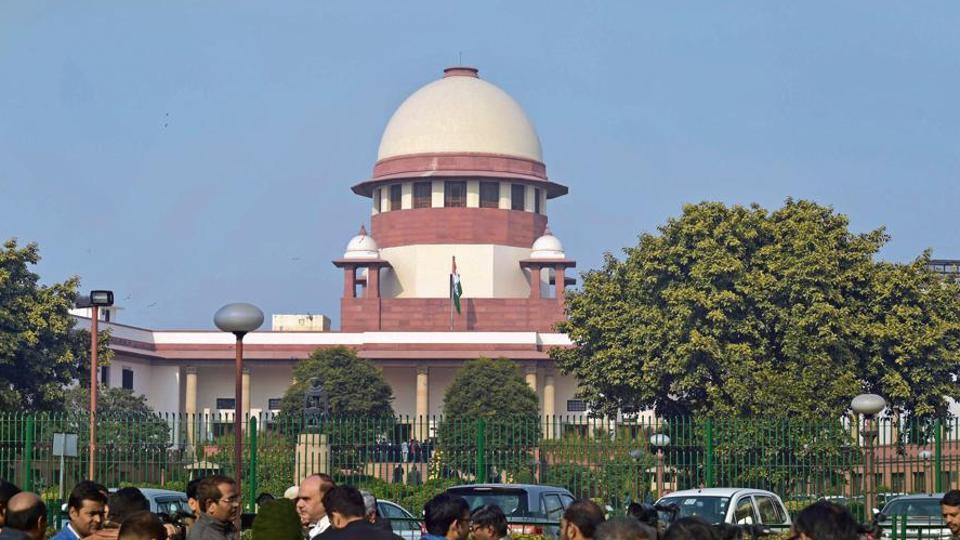
The court also underscored that the National Crime Records Bureau (NCRB) does not record the disability status of inmates though it provides detailed breakup of their caste, gender and religion.
In a first step, the court directed prison authorities to identify prisoners with disabilities at the time of admission and to provide them information about prison life in a simple and accessible format (sign language, Braille, etc).
The directions came while considering a petition filed by L Muruganantham who suffered from Becker’s Muscular dystrophy and was incarcerated for 11 days (February 29, 2020 to March 10,2020) in a Tamil Nadu jail which did not have facilities required for disabled persons like him.
Issuing a slew of directions specific to Tamil Nadu, a bench of justices JB Pardiwala and R Mahadevan ordered a state level accessibility audit of all prisons within six months, training and sensitisation of prison officials, among other reforms and ordered the Director General, Prisons of the state to report compliance of these measures by filing a report before the State Human Rights Commission (SHRC) within three months.
Writing the judgment for the bench, justice Mahadevan said, “Lawful incarceration does not suspend the right to human dignity. The punishment lies only in the restriction of liberty – not in the denial of humane treatment or reasonable accommodations.”
The case presented before the court acted as a trigger for the bench to take up the issue in the larger interest of society. On a close examination of the jail manual, the court found systemic deficiencies in jails and outdated prison manuals which were not in tune with the Right to Persons with Disabilities (RPwD) Act 2016 and judicial pronouncements.
“Unlike the minimal safeguards afforded to women prisoners, there is currently no specific legal or policy framework that guarantees dignity, accessibility, and protection for persons with disabilities or for members of the transgender community in prisons,” the court lamented.
Most prison facilities are structurally inaccessible to individuals with mobility, sensory, or cognitive impairments. Institutional routines and infrastructure are not designed to accommodate diverse needs, making it difficult – or at times impossible – for such prisoners to use toilets, dining areas, libraries, or health clinics, the court said.
Additionally, due to the absence of trained caregivers or appropriate custodial policies, persons with disabilities are often denied help with essential daily activities such as bathing, dressing, or eating, it added.
“Such inaccessibility and denial of basic care are not mere administrative lapses; they amount to violations of fundamental rights enshrined under Articles 14 and 21 of the Constitution of India,” the bench said. It also breaches provisions of the RPwD Act, 2016 – specifically Sections 6, 25, and 38 – which mandate the state to ensure healthcare and non-discriminatory treatment for persons with disabilities, including those in custody.
Article 15 of the United Nations Convention on Rights of Persons with Disabilities (UNCRPD), to which India is a signatory, prohibits any cruel, inhuman, or degrading treatment of disabled persons in detention.
“Failure to meet these obligations inflicts disproportionate suffering on disabled prisoners and betrays the constitutional role of the state as a custodian – not a tormentor – of those it detains,” the bench said.
It expressed deep concern over the plight of incarcerated individuals with disabilities, who are among the most marginalized and vulnerable groups, within the justice system.
While prisons form the “tail-end” of the criminal justice system, the court noted how persons with disability were deprived of the right to a fair hearing due to the unavailability of interpreters, accessible communication formats, or assistive technologies during investigation and trial.
“The social and structural barriers they face in society are only magnified within the prison environment…These systemic omissions constitute indirect discrimination and disproportionately burden persons with disabilities – entrenching their social exclusion,” the court said.
As part of the reforms proposed by the court, the decision held, “All prison premises shall be equipped with wheelchair-friendly spaces, accessible toilets, ramps, and sensory-safe environments to ensure universal accessibility. All prisons shall designate and maintain dedicated spaces for physiotherapy, psychotherapy and other necessary therapeutic services.”
The court emphasised that prison authorities were duty-bound to coordinate with public healthcare systems to ensure uninterrupted care. “Logistical or financial limitations cannot be cited to justify a withdrawal of this obligation,” it said, directing that persons with disabilities be provided access to physiotherapy, speech therapy, psychiatric care, and assistive devices, such as wheelchairs, hearing aids, or crutches.
It said, “State has a constitutional and moral obligation to uphold the rights of prisoners with disabilities…a systemic transformation is urgently required – one grounded in compassion, accountability, and a firm constitutional commitment to dignity and equality. The disabilities of incarcerated individuals must not become a basis for further deprivation or suffering; rather, the prison system must evolve to affirm their rights and provide the care necessary for rehabilitation.”
The petitioner Muruganantham approached the top court to seek enhancement of the ₹5 lakh compensation ordered by the Madras high court in November 2022 for the lack of facilities available for him in jail.


