India on Thursday said concerns expressed by UN human rights experts on Centre's move to scrap Jammu and Kashmir’s special status and enact new laws disregarded the fact that the region is an integral part of the country and that the decision on the changes was made by Parliament.
Fernand de Varennes, special rapporteur on minority issues, and Ahmed Shaheed, special rapporteur on freedom of religion or belief, had said in a statement issued in Geneva that the changes in Jammu and Kashmir could curtail political participation of Muslims and other minorities and lead to potential discrimination in employment and land ownership.
Also read: Quad meet stresses on rules-based world order, respect for territorial integrity
The external affairs ministry questioned the timing of the remarks by the UN experts, saying they were “deliberately timed” to coincide with the visit by 24 envoys to Jammu and Kashmir.
ALSO WATCH | 24 foreign envoys reach J&K’s Srinagar to assess situation
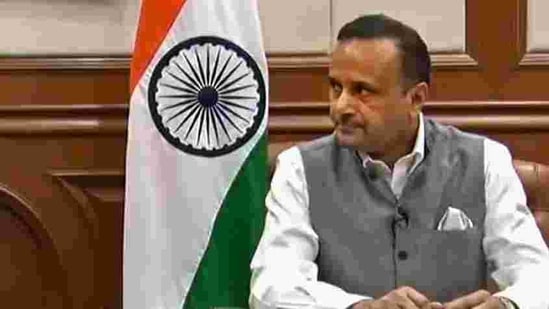
The statement by the special rapporteurs “disregards the fact that Jammu and Kashmir is an integral and inalienable part of India and the decision of 5 August 2019 regarding the change in the status of the state of Jammu and Kashmir into a union territory of India was taken by the Parliament of India,” external affairs ministry spokesperson Anurag Srivastava said.
{{/usCountry}}The statement by the special rapporteurs “disregards the fact that Jammu and Kashmir is an integral and inalienable part of India and the decision of 5 August 2019 regarding the change in the status of the state of Jammu and Kashmir into a union territory of India was taken by the Parliament of India,” external affairs ministry spokesperson Anurag Srivastava said.
{{/usCountry}}Srivastava said it was “deplorable” that the experts had not waited for India’s response after sharing a questionnaire on February 10. “Instead, they chose to release their inaccurate assumptions to the media,” he said.
De Varennes and Shaheed said in their statement, “The loss of autonomy and the imposition of direct rule by the government in New Delhi suggests the people of Jammu and Kashmir no longer have their own government and have lost power to legislate or amend laws in the region to ensure the protection of their rights as minorities.”
The experts said the erstwhile state of Jammu and Kashmir was “established with specific autonomy guarantees to respect the ethnic, linguistic and religious identities of its people”, and it was the only Indian state with a Muslim majority.
They contended the government had “unilaterally and without consultation, revoked the constitutional special status of Jammu and Kashmir” in 2019, and passed “domicile rules which removed protections given to those from the territory” in May 2020. “Subsequent changes to land laws are further eroding these protections,” they said.
Also read: 'New laws, ending of J&K's autonomy affect rights of minorities' - UN experts
The experts added, “The number of successful applicants for domicile certificates that appear to be from outside Jammu and Kashmir raises concerns that demographic change on a linguistic, religious and ethnic basis is already underway.”
The new legislation “overrides previous laws which granted the Kashmiri Muslim, Dogri, Gojri, Pahari, Sikh, Ladhaki and other established minorities rights to buy property, own land, and access certain state jobs”.
“These legislative changes may have the potential to pave the way for people from outside the former state of Jammu and Kashmir to settle in the region, alter the demographics of the region and undermine the minorities’ ability to exercise effectively their human rights,” de Varennes and Shaheed said.
The special rapporteurs urged the Indian government to ensure that economic, social and cultural rights of the people of Jammu and Kashmir are protected, and they are able to “express their political opinions and participate meaningfully in matters affecting them”.
However, Srivastava said the UN experts had failed to account for steps aimed at “ending decades of discrimination, enshrining democracy at the grassroots level through successful conduct of local elections for the District Development Councils, and ensuring good governance”. He said their statement also “ignored the positive impact of extending laws applicable to the rest of India to Jammu and Kashmir, enabling the people... to enjoy the same rights as available to people in other parts of India”.
Srivastava said apprehensions of a demographic change are “baseless and unfounded” as most of the domicile certificates were issued to erstwhile permanent resident certificate (PRC) holders.
“We expect the special rapporteurs to develop a better understanding of the issues under their consideration before jumping to hasty conclusions and issuing press statements,” he added.