Chief Justice of India (CJI) on Monday declined to disclose the reasons behind his decision not to meet Congress leader Rahul Gandhi, saying he had maintained the confidentiality of the letter exchanged between them.
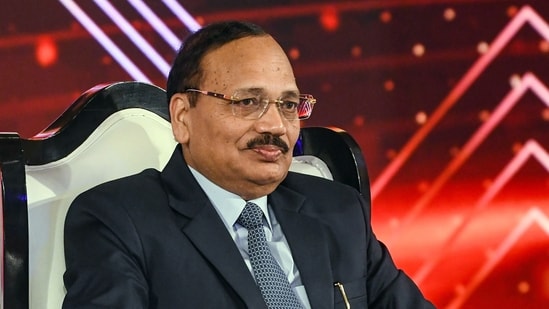
Rahul Gandhi and Mallikarjun Kharge, Leaders of Opposition (LoPs) in Lok Sabha and Rajya Sabha, respectively, had written to the CJI seeking a meeting with him between 4 and 5 pm on Monday to hand over a memorandum demanding an end to "vote chori", Chief Election Commissioner (CEC) Gyanesh Kumar's resignation, halting of Special Intensive Revision (SIR) of electoral rolls, and switching back to the paper ballot format. Track all updates related to protests against CEC Gyanesh Kumar here
Responding to questions about his decision to decline the meeting, the CJI said he had received the letter a day earlier and had replied to it the same night.
Listen in
"I received the letter yesterday, so I replied to it last night. I have given some reasons in the letter on the basis of which I expressed my inability to meet him," he said after speaking at an NHRC event focused on human rights and access to water.
{{/usCountry}}"I received the letter yesterday, so I replied to it last night. I have given some reasons in the letter on the basis of which I expressed my inability to meet him," he said after speaking at an NHRC event focused on human rights and access to water.
{{/usCountry}}When asked to elaborate on the reasons, the CJI refused to disclose the contents of the correspondence. "I would request you to ask him about the contents of that letter. I have maintained its confidentiality," he said, speaking to ANI news agency.
Asked how elected representatives, including members of Parliament, should take their concerns forward, the CJI said the doors of the Supreme Court remained open to everyone.
"The doors of the Supreme Court are open to all. Anyone can approach us with a petition, whether an ordinary citizen or a member of an elected body," he said.
He added that every Indian citizen had the right to approach the court and that the judiciary would hear their grievances in accordance with the law.
"Every citizen of India has the right to come to us. We will hear their problems in accordance with the law and ensure that they receive whatever relief they are entitled to," the CJI said.
On being asked about the situation in Delhi and the protests, CJI refused to comment, saying it is a law and order issue.
On cancellation of One Nation One Election JPC's visit to SC, Chief Justice of India (CJI) Justice Surya Kant says, "There are comparatively more grounds in this case because in that issue (One Nation One Election JPC meeting), there was a possibility of a conflict of interest arising in court, which led us to discuss the administrative side. My senior judicial colleagues and I shared the collective view that we should avoid any conflict of interest."