
 E-Paper



Manmohan Singh leaves a long legacy: His political, economic achievements
Manmohan Singh, who held the Finance portfolio in his early political days, played a key role in ushering in economic reforms in the 1990s.

 Prefer HTon Google


Former Prime Minister of India and veteran Congress leader Dr Manmohan Singh died on Thursday at the age of 92, leaving behind a legacy of political and economic achievements.
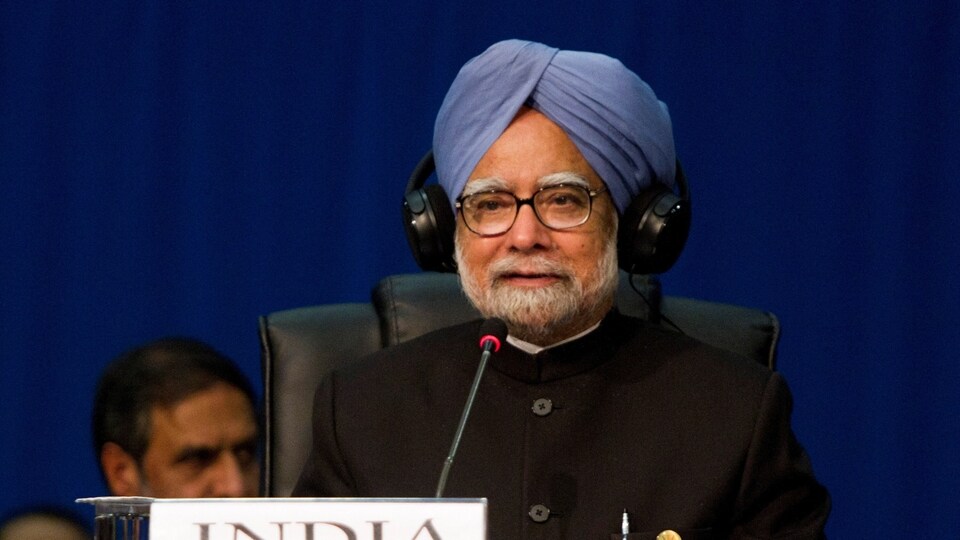
Singh, who also held the Finance portfolio in his early political days, played a key role in ushering in economic reforms in the 1990s.
A celebrated economist across the globe, Dr Manmohan Singh entered politics at the height of the 1991 economic crisis when late Prime Minister P V Narasimha Rao inducted him into the government as Finance Minister.
READ | When Manmohan Singh said “History will be kinder to me than the media”
Together, both the leaders steered the economy out of the balance of payments crisis and laid the foundation for the economic reforms that have been upheld by every successive government since.
A stellar scholar: Manmohan Singh's academic achievements
- Dr Manmohan Singh completed his Matriculation examinations from Punjab University in 1948. His academic career took him from Punjab to the University of Cambridge, UK, where he earned a First Class Honours degree in Economics in 1957.
- Dr Singh followed this with a D. Phil in Economics from Nuffield College at Oxford University in 1962.
- His book, “India’s Export Trends and Prospects for Self-Sustained Growth” [Clarendon Press, Oxford, 1964] was an early critique of India’s inward-oriented trade policy.
- Manmohan Singh's academic credentials were burnished by the years he spent on the faculty of Punjab University and the prestigious Delhi School of Economics.
- The Indian leader had a brief stint at the UNCTAD Secretariat as well, during these years. This presaged a subsequent appointment as Secretary General of the South Commission in Geneva between 1987 and 1990.
Manmohan Singh's political achievements
- A technocrat with an eye for politics and a long portfolio of key positions such as Reserve Bank Governor and Secretary General of the South-South Commission, made Dr Manmohan Singh, an accurate choice for Sonia Gandhi when she decided to renounce the post of Prime Minister following the backlash
- Dr Singh took reigns from the NDA government at a time when India was reeling under the aftermath of the 2002 post-Godhra riots surrounded by an atmosphere of communal imbalance, Singh's administration, as it believed brought in a sense of balance in the situation.
- One of the biggest highlights of Singh's regime was securing the India-US Civil Nuclear Agreement, which opened up civilian nuclear cooperation and was seen as a landmark moment in India’s foreign relations.
- It was under his government that India launched several social schemes including 'The Mahatma Gandhi National Rural Employment Guarantee Act (MGNREGA), which provided employment opportunities to millions in rural areas.
Dr Manmohan Singh's economic achievements
Dr Singh's government delivered a robust 8.5 per cent GDP growth for most of his tenure but the scams- 2G, CWG and Coal block allocations-and the resultant policy paralysis of the government stymied his performance.
As a Finance Minister, he played a crucial role in India's economic liberalisation in 1991, which included devaluing the rupee, reducing import tariffs, and privatising state-owned enterprises.
Notably, while Singh was not directly responsible for bringing the Goods and Services Tax (GST) into effect, the groundwork for the said tax reforms was laid under his government.


