
 E-Paper





Follow the latest breaking news, major developments and agenda-setting stories from India and around the world with the newsdesk at Hindustan Times. Operating round the clock, the desk brings together experienced editors, reporters and correspondents to deliver fast, accurate and contextual reporting across subjects that influence public policy, governance, business, society and international affairs. The HT News Desk covers politics, elections, government policies, the economy, business and markets, science and technology, the environment, law and order, infrastructure, education, climate issues and geopolitics, while closely tracking developments across states, institutions and global capitals. The team also leads coverage of major breaking news events, policy announcements, court proceedings, natural disasters, public emergencies and significant international developments. Reports published by the newsdesk are based on information gathered from reporters on the ground, official statements, government agencies, court records, regulatory filings, recognised institutions and other authoritative sources. Stories undergo editorial scrutiny and verification processes to ensure accuracy, fairness and relevance, and are updated as events evolve and additional information becomes available. Whether covering a key political decision in New Delhi, an economic policy shift affecting millions, a landmark court ruling or a major global event, the HT News Desk aims to provide readers with reliable, fact-based journalism that delivers not only the latest developments but also the context and analysis needed to understand their wider implications.
DRDO starts work on ‘next-gen’ hypersonic weapon
Hypersonic weapons are specifically designed for increased survivability against modern ballistic missile defence systems. These missiles are capable of delivering conventional or nuclear payloads at speeds not imagined hitertoo over long ranges.


The Defence Research and Development (DRDO) has started work to produce a hypersonic weapon – missiles that travel at five times speed of sound, or a little over a mile every second. A wind tunnel to test and fine tune the technology will be operational soon, senior government officials who did not want to be named said.
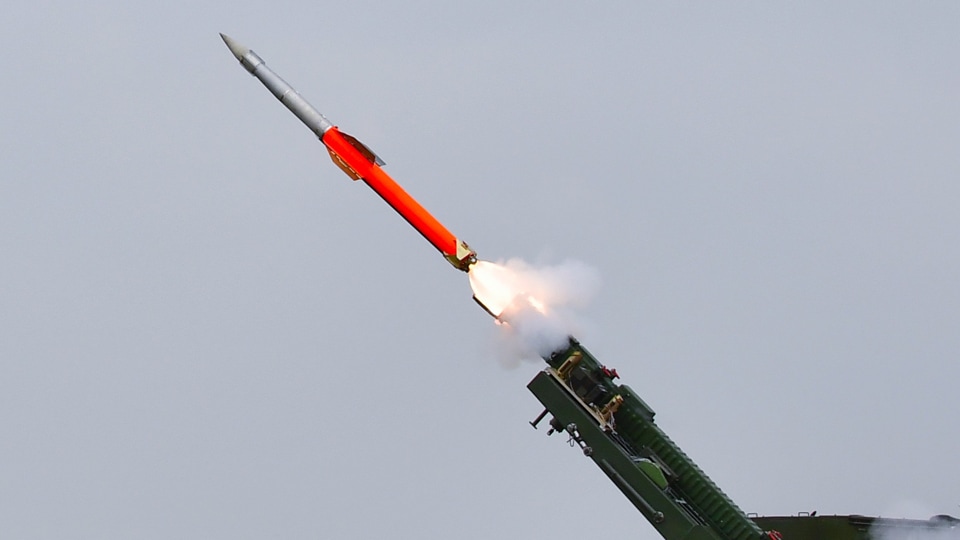
Defence Minister Rajnath Singh is expected to inaugurate the facility soon, they added.
“A hypersonic weapon system is one of the many niche technologies we are exploring seriously,” one of the officials said, asking not to be named.
Billed as a “next-gen” weapon system, the race to acquire hypersonic weapons technology is heating up. China, Russia, and the United States are testing hypersonic weapons of various types to enhance strategic nuclear deterrence and strengthen front-line combat units.
Existing intercontinental ballistic missile (ICBM) re-entry vehicles also travel at those superfast speeds, but the hypersonic glide vehicles now in development are far more manoeuvrable, making their tracking and interception nearly impossible.
Hypersonic weapons are specifically designed for increased survivability against modern ballistic missile defence systems. These missiles are capable of delivering conventional or nuclear payloads at speeds not imagined hitertoo over long ranges.
In a bid to boost defence manufacturing in India, the DRDO is also offering 1,500 of its patents, including critical missile technology, life sciences, and naval technology, for use by Indian Industry, DRDO chairman G Satish Reddy said.
The patents can be accessed by free of cost even by start-ups and medium and small manufacturing enterprises.
Some of the patents offered for free include technologies to manufacture “man-mounted air-conditioning system”, aircraft arrester barrier system, a sliding mechanism for missile containers, lightweight high strength broadband microwave absorbing rubber, silicon-based lubricants for wide temperature range applications, low-density carbon foam, and anti-corrosive paint for application under immersed conditions, among others.
“DRDO is determined to encourage industry to develop advanced defence equipment thereby making the Make-In-India programme a success. We have today an 1,800-industry base, we are determined to enlarge this base and take the technological capability to a higher level,” Reddy said, explaining the reason behind offering patents at no cost.
Indian industry will not have pay “license fee or royalty” for any of the patented technologies, said a second senior DRDO official who did not want to be named. “DRDO won’t be just offering the technology but will also be handholding the industry and help them produce the product,” he said.
In a related development, DRDO has also tweaked its policy for “Transfer of Technology” (ToT) to the industry. No, ToT fee will be charged from the industry, DRDO Development Partners developing systems or sub-systems for military applications. And, for other industries, the ToT fee is reduced to 5% against an earlier rate of 20%. Also, no royalty is charged for supply to Indian Armed forces and other Govt departments. A nominal royalty of 2% will be charged for supply in the commercial market and for exports.
“Hypersonic weapons will become very critical in the near future. China has demonstrated that it has the technology. Others like US and Russia may already possess such weapons. It’s time that India also starts looking at these technologies,” Lieutenant General(retd) Vinod Bhatia, former Director General of Military Operations said.


