
 E-Paper



EC team starts 3-day public hearings on delimitation proposal in Assam
India's top election officials are holding public hearings in Assam to discuss proposed changes to the electoral map of the state. The draft delimitation proposal aims to alter the geographical boundaries of assembly and parliamentary constituencies, eliminating some seats and creating new ones. The process has faced criticism from opposition parties and social organisations, who claim that the proposed changes heavily favour the ruling Bharatiya Janata Party. The Election Commission of India has invited suggestions and objections on the draft until 11 July.

 Prefer HTon Google


Guwahati: India top election officials landed in the Assam capital on Wednesday to hold public hearings on the draft delimitation proposal for assembly and Parliamentary constituencies in the state, starting a three-day consultation process as they attempt to finalise significant changes in the electoral map of the region.
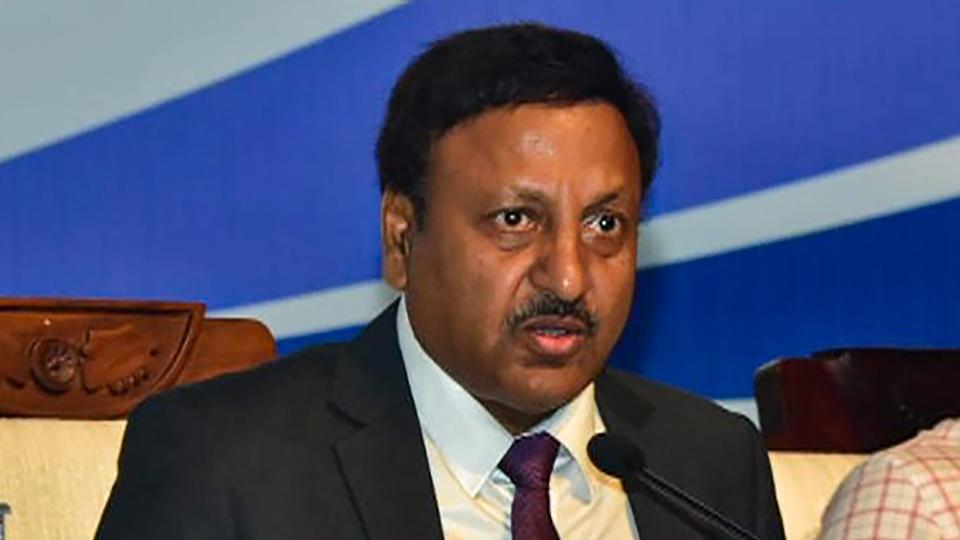
Chief election commissioner (CEC) Rajiv Kumar, and election commissioners (ECs) Anup Chandra Pandey and Arun Goel are holding simultaneous sessions in three different halls at the Srimanta Sankardeva Kalakshetra. During the public hearing process, the Election Commission of India (ECI) will hold discussions with various stakeholders, including political parties and members of civil society, over the draft proposals, officials aware of the matter said.
On the first day, the officials said, suggestions for Kamrup Metropolitan, West Karbi Anglong, Chirang, Baksa, Dima Hasao, Kamrup, Udalguri, Karbi Anglong and Kokrajhar districts, were accepted. Feedback on the draft for Goalpara, Bongaigaon, Barpeta, Nalbari, Sonitpur, Karimganj, Darrang, Hailakandi, Cachar, South Salmara, Nagaon, Morigaon and Dhubri will be heard on Thursday; and on the last day, the districts of Tinsukia, Dhemaji, Lakhimpur, Sivasagar, Jorhat, Dibrugarh, Charaideo, Golaghat and Majuli will be taken up.
The draft proposals, published June 20, retained the number of assembly seats in Assam at 126 and the Lok Sabha constituencies at 14 but altered the geographical boundaries of most of the constituencies, both assembly and Lok Sabha, eliminating some seats and creating some new ones.
The last delimitation exercise in Assam took place nearly five decades ago in 1976 based on figures from the 1971 census. The country will go through this process after 2026. However, according to ECI officials, they are exercising this in Assam “to correct the imbalance due to a sharp differences in the pattern of population growth”.
The fresh delimitation exercise in Assam was earlier suspended in 2008 following suggestions by the then Congress government in the state that it might create law and order problems.The process restarted on January 1 this year after the state government gave assurances that the law and order situation in Assam was conducive at present to conduct the exercise.
Following the release of the draft, the EC has invited suggestions and objections from political parties and other groups till July 11. A team from the commission will visit Assam again next month for the public hearing on the draft proposal.
The chief electoral officer of Assam, Anurag Goel, on Tuesday requested all organisations to limit the number of representatives for each group to a maximum of five people.
ECI has faced criticism over the draft proposals from Opposition parties and several social organisations, who have alleged that the newly drawn electoral map heavily favours the ruling Bharatiya Janata Party (BJP). Nine political parties, including Congress and Trinamool Congress,have also knocked on the doors of the Supreme Court against the entire delimitation exercise.
Under the document, the assembly seats reserved for Scheduled Castes have been increased to nine from eight and for Scheduled Tribes to 19 from 16. For Parliamentary constituencies, two (additional) seats have been proposed under the ST category and one for the SC community.
The redrawing of boundaries has sparked protests in several parts of Assam, especially the Bengali-speaking Barak valley (which includes three districts Cachar, Karimganj and Hailakandi), where the delimitation proposals can have maximum impact.
Several organisations and individuals in Barak Valley expressed dissatisfaction because the number of assembly seats in this area will be reduced to 1 from 15 if ECI finalises the draft proposal.
Earlier on June 27, at least 600 people were detained in Barak Valley during a 12-hour-bandh against delimitation draft. The bandh initially called by Silchar-based political party Barak Democratic Front (BDF) was supported by other parties such as Congress, TMC and All India United Democratic Front (AIUDF).
Senior advocate and former member (judge) of Foreigners Tribunal in Silchar, Dharmananda Deb, claimed that the delimitation draft will increase gaps between elected representatives and people.
“In 1976 delimitation, Barak Valley had 14 seats which later increased to 15. Four decades later, ECI is reducing seats which is unscientific. This will reduce representation of people in the state assembly, which is not good for democracy,” he said.
Apart from reducing assembly seats in Barak Valley, the ECI has proposed to reserve Silchar Lok Sabha seat for Schedule Cast and opened the Karimganj seat, which was an SC reserved seat since the Independence.
Despite strong opposition against the Citizenship Amendment Bill (CAB), which later became Citizenship Amendment Act (CAA), BJP had won nine out of 14 Lok Sabha seats in 2019 general election. Congress won three seats while AIUDF and independent candidates won one seat each.
In 2021 assembly polls, BJP won 60 out of 126 seats and formed government with Asom Gana Parishad (AGP), which won nine seats. Chief minister Himanta Biswa Sarma after the release of delimitation draft claimed that this exercise will do what Assam movement of 1980’s and NRC couldn’t do for Assamese people.
Meanwhile, the ECI’s hearing started at 2pm on Wednesday but no official reaction came from the ECI officials.
Members of All Assam Students’ Union (AASU) met the ECI in Guwahati on Wednesday. AASU’s advisor Samujjal Bhattacharyya said that they are satisfied with the draft and they believe that it will secure the constitutional power of original Indians.
“It is a positive sign that 2001 population census is being followed in delimitation process, we have been demanding this since 1986. We have welcomed the delimitation draft with a few minor amendments,” Bhattacharyya said.
A day before the ECI’s visit, CM Sarma on Tuesday said that the delimitation exercise will increase representation of Assamese people in assembly and Lok Sabha.
“The delimitation exercise will pave the way for Assamese people to have a decisive say in 92-93 seats, instead of 75-76 seats. If we fall for Congress’ conspiracy theory, people of Assam will be at loss for a third consecutive time, after NRC and Assam Accord,’’ he tweeted.
Reacting to Sarma’s statements, the general secretary of the United Opposition Forum, Lurinjyoti Gogoi, said that the way, Sarma is making claims, looks like they have interfered in the works of ECI in drafting the proposal.
“Himanta is claiming that with delimitation, they’ll protect the indigenous people in Assam but the reality is, they are trying to secure more seats for BJP-RSS collaboration and there is a hidden communal agenda,” he said.
Gogoi criticised the ECI for drafting the delimitation on 2001 population census which according to him will make ways for illegal migrants who have registered their names between 2001 and 2023, to strengthen their representation.
“In 2007, many parties including the BJP demanded that the delimitation should be done after completing the National Register of Citizens (NRC) and this was a legitimate demand because we have to know the number of illegal migrants living in Assam,” he said.
Veteran RSS leader and senior member of the BJP, Basudev Sharma, however, criticised the delimitation draft and compared it with Cyril Radcliffe’s border demarcation during the partition.
“BJP in Assam started its journey in Barak Valley and the present leaders in Guwahati were in other parties when we were building the base for BJP. Now they are reducing seats in Barak Valley without consent of people here,” he said.
He claimed that the BJP failed to protect the Hindus in Assam and now they are taking decisions which will reduce the voices of Hindus.
“They failed to implement Citizens Amendment Act which can protect the victims of partition. More than 14 lakhs Hindus were excluded from NRC, and the state leadership is not even bothered about it,” he added.


