E-Paper



Escalation of India-China tensions will hit regional stability; need to negotiate settlement: Russia
Moscow has played a behind-the-scenes role in nudging New Delhi and Beijing towards a negotiated settlement of the standoff

 Prefer HTon Google


Russia on Thursday said any further escalation of tensions between India and China could impact regional stability across Eurasia and reiterated the need to find a negotiated settlement to the border standoff along the Line of Actual Control (LAC).
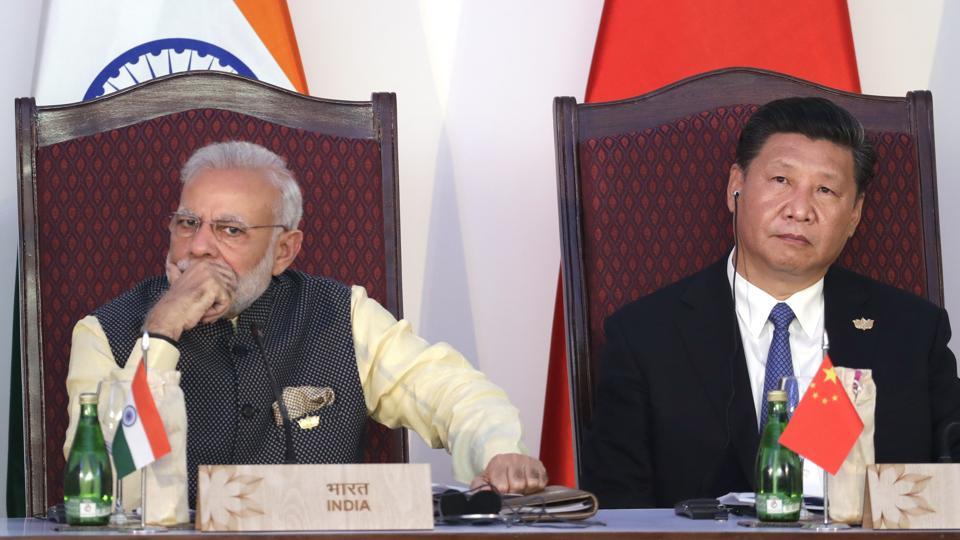
Russia’s deputy chief of mission Roman Babushkin pointed to meetings between the Indian and Chinese defence and foreign ministers on the margins of Shanghai Cooperation Organisation (SCO) meetings in Moscow in September and said groupings such as SCO, Russia-India-China (RIC) and Brazil-Russia-India-China-South Africa (Brics) can help “expand common ground and mutual trust”.
Babushkin’s remarks came against the backdrop of the nearly seven-month-long India-China border standoff. New Delhi and Beijing are currently considering a proposal for a phased disengagement of troops at key friction points in Ladakh sector and military commanders of the two sides are expected to meet this week to take the process forward after months of stalemate.
Also Read: Indian Army, PLA consider scaling up disengagement
“It is feared that amid common turbulence and unpredictability, escalation between India and China would further affect regional instability in our common home Eurasia, while escalation as we are witnessing can be misused by other players in their geopolitical purposes,” Babushkin told reporters during a briefing.
“Russia is in a unique position since it has special strategic partnerships with both India and China and these relationships are independent in nature. We are naturally concerned by the current India-China tensions. However, we believe that a peaceful solution is inevitable [and] better sooner than later,” he said.
Moscow has played a behind-the-scenes role in nudging New Delhi and Beijing towards a negotiated settlement of the standoff, and Babushkin noted that the SCO meetings of defence and foreign ministers in Moscow in September provided an opportunity to defence minister Rajnath Singh and external affairs minister S Jaishankar to hold bilateral meetings with their Chinese counterparts.
The meeting between Jaishankar and Chinese foreign minister Wang Yi on September 10 led to the two sides finalising a five-point roadmap to end the standoff, including dialogue aimed at quick disengagement, maintaining proper distance between troops of the two sides, abiding by all agreements and protocols on border management, and working on new confidence-building measures once the situation eases.
Babushkin said Russia believes “it’s very important to encourage both our Asian friendly countries to be more engaged in constructive dialogue”, and the “their commitment to exercise restraint and maintain communications through diplomatic and military channels to remove tensions are absolutely welcome”.
Dialogue is the main tool for cooperation within the framework of SCO and Brics as it helps “expand common ground and mutual trust” and both groupings have developed mechanisms for such cooperation, he said.
Babushkin pointed out that the RIC grouping will be chaired by India next year and said: “We are confident that it is well designed to ensure a positive atmosphere and expand its practical agenda.”
At the same, he said, Russia doesn’t have any problem with India’s partnership with the US and other countries.
“India is a global player with multi-faceted and widely diversified national interests and we respect that...India does not provide any reason for doubt when it comes to multilateral and bilateral commitments, even though we know that there are attempts to pressure India and use unfair and illegal competition tools such as threats of sanctions and other restrictions,” he said.