E-Paper



Experts flag lack of key commitments at COP27
COP27 was concluded in Egypt’s Sharm El Sheikh on Saturday, extended by a day after dramatic remarks from several country representatives who rued the lack of “ambition” to do more on the climate crisis, even as some of them – especially those from developed nations – were accused of trying to divert some of their responsibilities to poorer nations.

 Prefer HTon Google


World leaders failed to rise to the climate crisis challenge at this year’s UN Climate Conference (COP27), experts said on Monday, pointing out how there was a lack of any commitments to cutting emissions or providing more money to help the transition to clean fuels.
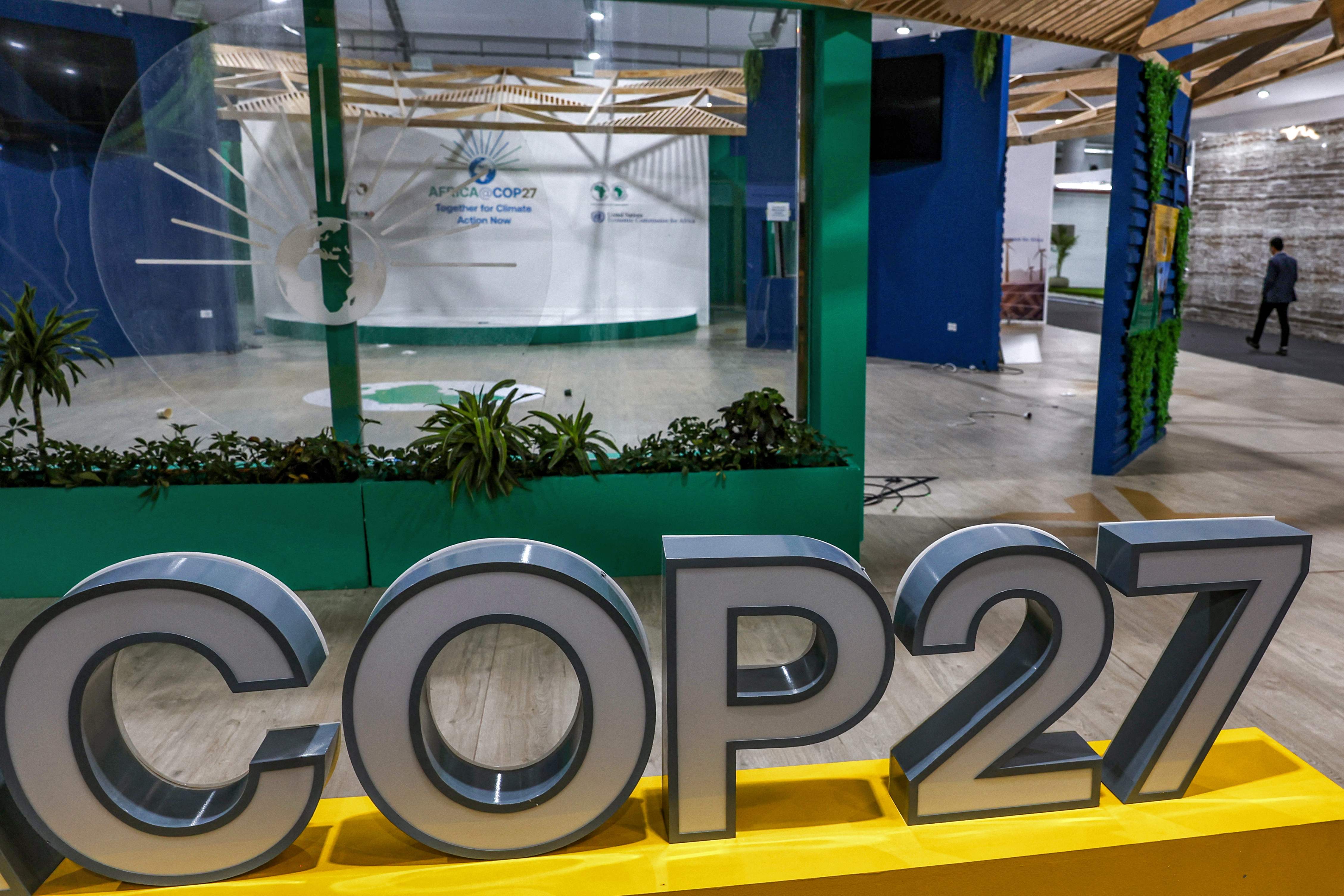
COP27 was concluded in Egypt’s Sharm El Sheikh on Saturday, extended by a day after dramatic remarks from several country representatives who rued the lack of “ambition” to do more on the climate crisis, even as some of them – especially those from developed nations – were accused of trying to divert some of their responsibilities to poorer nations.
This is despite the fact that the talks took a much-awaited decision to set up a Loss and Damage fund to help developing nations deal with disasters linked to global warming, although much needs to be clarified on this front too, including who will contribute to it and how the money will be paid out.
“COP27 at best treaded water on mitigation. But the reality is that the ‘ambition cycle’ that the COP is meant to drive may have run out of steam without more finance coming on the table to back up the round of national pledges. A work programme on mitigation has been established but that will move slowly,” said Navroz K Dubash, professor at the Centre for Policy Research.
Mitigation refers to efforts to reduce emissions of greenhouses gases, a step that is taken, among other things, by shifting to cleaner fuels.
“Does this mean that nothing will happen on mitigation? Not necessarily. Countries, including India, seem to be putting in place efforts at transitioning to green technologies such as energy storage and hydrogen, driven by the hope of competitive advantage. We may be in a phase where actual action outstrips international statements of ambition, at least in some parts of the world, which would not be a bad outcome,” Dubash added.
To be sure, the COP27 cover text, which summarises the key decisions agreed upon by 197 countries, mentions that more efforts must be made to keep global warming under 1.5°C – the call was first made last year, at Glasgow during COP26.
This COP (conference of parties) was meant to firm up implementation roadmaps for the call, but lacked any concrete steps.
“COP 27 does not reflect the need for urgency in action -- both in terms of mitigation and financing. The loss and damage fund, though agreed upon, is weak on detail and intent. The fact that the EU (European Union) and other western countries faced with energy crisis want to continue use of natural gas, also a fossil fuel, has made the rapid transition out of fossils now even more difficult. I believe this COP should go down as one in which the world leaders failed us badly,” said Sunita Narain, director general, Centre for Science and Environment.
Narain’s reference on the transition was to a change in wording in one section, which called for efforts to be made to use “low emission” sources.
“Apart from reiterating the same intent, the final resolution does not call upon parties to decarbonise faster and in fact weakens the global need to move away from fossil fuels by bringing in low emissions energy (alluding in all likelihood to gas) in addition to renewable energy,” said Ashwini Hingne, senior manager, Climate Program, World Resources Institute India.
Behind a lot of the inertia are geopolitical complications. The European Union acknowledged at the conference that it will have to depend on diversified sources of natural gas for the next three years.
When EU Climate chief Frans Timmermans was asked on EU looking to source natural gas from Africa, he said during a press briefing at COP27 on November 15 that: “We have to make sure our households and businesses survive in the next couple of years. We will be faced with this winter and next two winters where we have to ensure we have fossil fuels to survive. Because of speeding up deployment of renewables and because of consumption reduction we are still on target. So yes, we are burning more coal than we had intended and look for LNG where we can find it but that’s only for next three years,” he said, referring to the disruption in gas supply to Europe due to Russia’s war on Ukraine.
This was even when developed countries like EU pushed for global commitments to phase out fossil fuels, a stand experts said did not have a moral ground because of their plans to press ahead with more oil and gas use.
“Since EU and other developed countries are disappointed that fossil fuel phase out is not in the text, we would like them to take leadership and revise their nationally determined contributions and put into plans their fossil fuel phaseout urgently and stop expansion of fossil fuels including oil and gas,” said Meena Raman, director of Third World Network and an expert on the climate negotiations.