On March 8, the Defence Research Development Organization (DRDO) successfully carried out the final test of the land based prototype of the Air Independent Propulsion (AIP) system in Mumbai. The AIP system, retrofitted by expanding the hull area, ensures that diesel attack submarines can remain under surface for a longer period and become more silent than a nuclear-powered submarine. The AIP system will be retrofitted into Kalvari class submarines, the third of which (INS Karanj) will be commissioned on Wednesday March 10.
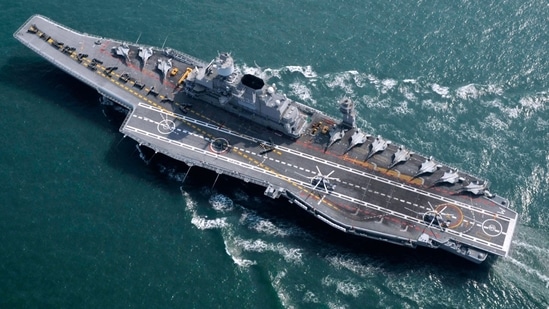
But analysts say that rather than being seen in isolation, Monday’s significant test should be seen as part of the navy’s overall capability-building plans, ranging from the ongoing plan to build six nuclear-powered attack submarines or SSNs – the project is back on track and was discussed at the Combined Commanders’ Conference in Kevadia, Gujarat -- to the commissioning of its second aircraft carrier, INS Vikrant, later this year.
Also Read: DRDO develops AIP technology, Indian subs to be more silent and lethal
Overall, they add, the plans should also be seen as a concerted bid by the Indian Navy to counter the rise of China’s navy – now larger than the US navy in terms of number of ships, although the US is still ahead in terms of tonnage and capability. In submarines for instance, India currently has only one Akula class SSN on lease from Russia; one more is expected to come on lease before 2025.
The analysts said the Indian Navy is all set to acquire big teeth and long legs this year. While South Block remains tight-lipped about the country’s increasing naval capabilities, HT learns that the Chinese interlocutors during WMCC (working mechanism for consultation and coordination) meetings on disengagement in East Ladakh complained about Indian Navy warships being aggressive against the PLA Navy in the Indian Ocean. Thanks to Indian Navy full deployment in Indian Ocean and real time intelligence from the QUAD allies and France, the People’s Liberation Army Navy’s (PLAN) warships are only deployed around the Gulf of Aden as of now with no presence anywhere else in Indian Ocean.
{{/usCountry}}The analysts said the Indian Navy is all set to acquire big teeth and long legs this year. While South Block remains tight-lipped about the country’s increasing naval capabilities, HT learns that the Chinese interlocutors during WMCC (working mechanism for consultation and coordination) meetings on disengagement in East Ladakh complained about Indian Navy warships being aggressive against the PLA Navy in the Indian Ocean. Thanks to Indian Navy full deployment in Indian Ocean and real time intelligence from the QUAD allies and France, the People’s Liberation Army Navy’s (PLAN) warships are only deployed around the Gulf of Aden as of now with no presence anywhere else in Indian Ocean.
{{/usCountry}}India’s national security planners are worried about the expanding PLAN and expect Chinese carrier strike force deployment in Indian Ocean by 2023 with Beijing expected to commission a third aircraft carrier this year. That’s one reason the Indian Navy has embarked on its own capability-building drive. India will commission its second aircraft carrier INS Vikrant and second nuclear powered ballistic missile submarine (SSBN) INS Arighat this year. While INS Vikramaditya, the other carrier, will be home-based on the western seaboard of India, INS Vikrant will be on the eastern seaboard. Each will have one SSBN and SSN as part of its strike force.
Also Read | Manpower grossly insufficient for committed R&D projects: Parliamentary panel on DRDO
Although the Indian Navy wants a third aircraft carrier with more tonnage than the two existing ones, the strategic planners of the Modi government are still to be convinced of the idea given the massive expenditure involved. The Vikramaditya’s tonnage is 45,000 and the Vikrant’s 37,500. There’s long been talk of a third carrier, INS Vishal, with a tonnage of 65,000, but this could set India back by at least $15 billion.
Adding teeth to the Indian Navy are also its two leased Predator drones, which provide maritime domain awareness from Gulf of Aden to Sunda Straits with the unmanned aerial platform having endurance upwards of 30 hours and acquiring attitude of over 30,000 feet. Once the Indian military is trained to handle the Predator drones, currently based in the Arakkonam base in Tamil Nadu, the plan is to buy 10 armed Predator drones for each of the three services.
Vice Admiral (Retd) Madanjit Singh, former Western Naval Command Chief, said that New Delhi should be cured of its sea-blindness as this is the war theatre of future. “The Modi government must expand to blue water navy status if PLAN’s expansion is to be checked.”