
 E-Paper



DRDO develops AIP technology, Indian subs to be more silent and lethal
A boost for Atma Nirbhar Bharat campaign, AIP-fitted submarines remain sub-surface for a longer period and are quieter than nuclear-powered submarines.

 Prefer HTon Google


A day before INS Karanj attack submarine is inducted into Indian Navy, the Defence Research and Development Organization (DRDO) conducted the final development test of Air Independent Propulsion (AIP) in Mumbai on Monday night, a major step that will make Indian submarines more lethal. AIP allows a submarine to be submerged for longer periods under water and makes the sub-surface platform more deadly by making it quieter than a nuclear submarine.
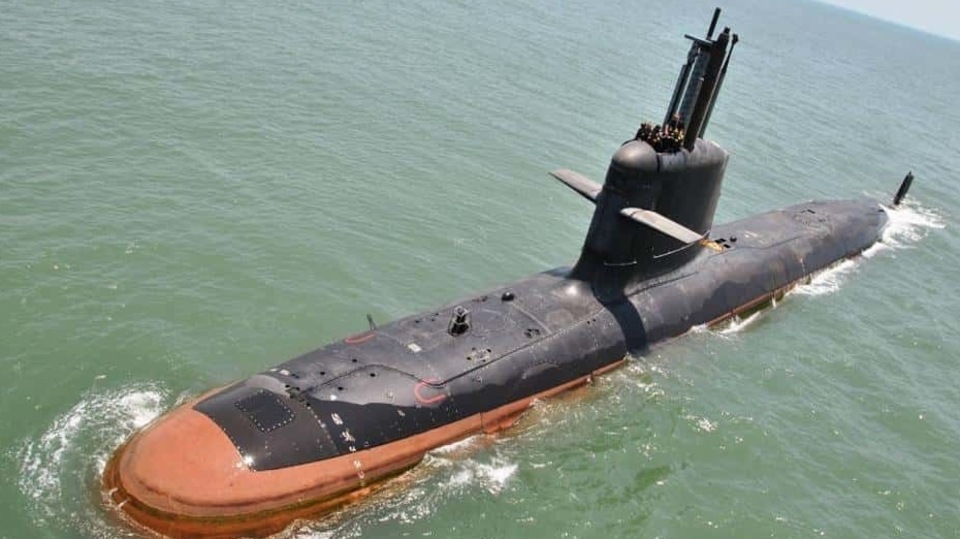
The Indian Navy now plans to retrofit all its Kalvari class non-nuclear attack with AIP during their first upgrade, expected around 2023. The 1615 tonne Kalvari class submarine is being built by Mazagon Dockyards Limited in collaboration with French Naval Group and is based on Scorpene design. INS Karanj, third of the class, is expected to be commissioned tomorrow.
The development of AIP technology is a major boost for the Atma Nirbhar Bharat campaign since only the US, France, China, UK and Russia have this key technology. The DRDO’s AIP technology is based on a Phosphoric Acid Fuel Cell and the last two Kalvari class submarines will be powered by it. The AIP design was tested on land in Mumbai on Monday night, the last of a series of tests.
The AIP or marine propulsion technology allows non-nuclear submarines to operate without access to atmospheric oxygen (through snorkel or surfacing) and augments the diesel-electric propulsion system of attack submarines. This means that the AIP fitted submarine does not have to surface for charging its batteries and remains underwater for long periods. The AIP is retrofitted into existing submarine hulls by adding an additional hull section. The AIP equipped submarines are identified as SSP while classic diesel attack submarines carry the SSK classification.
While the nuclear submarine generates noise due to the ship’s reactor constantly pumping coolant to maintain temperatures of the engine, the AIP-equipped submarine maintains a lethal silence. The new technology will add to lethality of Indian submarines, which also take advantage of internal refraction in equatorial waters due to differences in temperatures on the surface and within the ocean.
The DRDO’s AIP technology has also got a pat in the back from the French, who were in touch with the Indians in the context of Kalvari class manufacturing. Despite urgent requests, the French have decided not to upgrade the Pakistani Agosta 90 B submarines with AIP technology, forcing Islamabad to either go to China or Turkey.


