Amid criticism from some US lawmakers and civil society groups about proposed changes to India’s Foreign Contribution Regulation Act FCRA), Indian Ambassador to the US Vinay Kwatra took to X in an effort to counter what he said were misperceptions about the amendments.
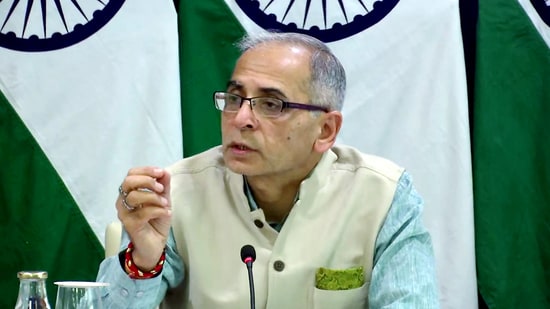
In a series of posts, Kwatra explained that India’s FCRA mirrored similar attempts in other countries to regulate the flow of foreign funds into the country and that foreign contributions to Indian organisations had almost doubled over the past 15 years. Kwatra also repudiated allegations of religious discrimination - such as those made by US Congressman Riley Moore who claimed the changes were an “attack on Christians” - by pointing out that the proposed legislation would apply uniformly to all religious groups.
Kwatra’s statements came amid expectations that Parliament would take up the FCRA Amendment bill for discussion and voting this week. Opposition from religious groups in India - including the Catholic Bishops Conference of India - has centered around concerns that the foreign contributions and assets of a civil society or religious organisation could be seized permanently should it fail to regain an FCRA licence. These concerns have travelled borders, with HT reporting in June that a number of US based Christian groups and lawmakers had begun taking up the matter.
In his thread on X, Kwatra pointed out that India has had a version of the FCRA since 1976, which was subsequently updated in 2010. The veteran diplomat stated that the act was not indeed to stem the flow of foreign funds into India.
{{/usCountry}}In his thread on X, Kwatra pointed out that India has had a version of the FCRA since 1976, which was subsequently updated in 2010. The veteran diplomat stated that the act was not indeed to stem the flow of foreign funds into India.
{{/usCountry}}“In reality, foreign money inflows into India have been rising, not falling. Foreign contributions to registered organisations grew from roughly $1.2 billion in 2010–11 to $2.67 billion in 2024–25. India has over 3 million NGOs. A bare fraction of these, only 14,450, hold FCRA registration. Thus, the overwhelming majority of the civil society organizations are entirely outside the Act.
FCRA does not stop anyone from accepting foreign charity, research grants or humanitarian aid. It asks three things — register, receive the money through laid down process, report what you did with it,” he said in one post.
Addressing concerns about provisions related to the seizure of assets, the Indian envoy pointed out that many of these frameworks were not new and had been in place since 2010. The amended bill in front of Parliament this month will only seek to clarify procedures once assets are seized.
“When a registration is cancelled or surrendered, foreign contributions and the assets created from them already vest in a State Government authority. This has been in force since 2010. It is not new. What the 2026 Bill adds is a designated authority to safeguard those assets — and a way back. If the organisation restores its registration, all assets and unused funds are returned in full,” Kwatra asserted, before adding that places of worship received their own protection such that “where a cancelled association has created property connected to a place of worship, that property goes to another FCRA-registered association of the same faith to ensure continuity of worship.”
HT tried to reach to Kwatra for a comment but did not get a response.
By way of comparison, Kwatra pointed out that America had implemented the Foreign Agents Registration Act in 1938 and the FATCA in 2010. Australia, Canada and the UK have also introduced similar schemes, he added, with the European Union working on similar legislation.