Five officers of the Indian Navy completed the first all-women independent maritime reconnaissance and surveillance mission in the North Arabian Sea onboard a Dornier 228 aircraft on August 3.
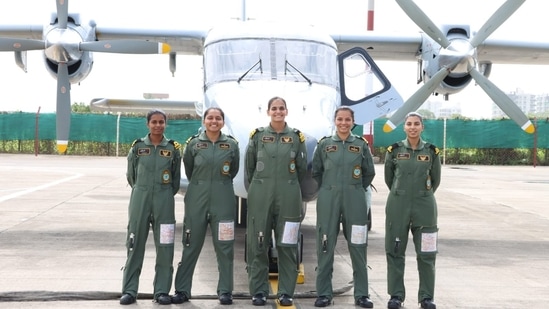
In a tweet, the Indian Navy said it was a historical moment for the country, this being the first time when an all-women team took up the surveillance mission in the North Arabian Sea. The mission was carried out by five officers of the INAS (Indian Navy Air Squadron) 314, based in Porbandar, Gujarat, the tweet further read.
The aircraft was captained by the Mission Commander, Lt Cdr Aanchal Sharma, and was accompanied by pilots, Lt Shivangi and Lt Apurva Gite, and tactical and sensor Officers, Lt Pooja Panda and Lt Pooja Shekhawat. The squadron is commanded by Cdr SK Goyal, a qualified navigation instructor.
Calling the mission a symbol of ‘nari shakti’ (women power), the defence ministry said the women officers received months of ground training and comprehensive mission briefings in the run-up to this historical sortie.
{{/usCountry}}Calling the mission a symbol of ‘nari shakti’ (women power), the defence ministry said the women officers received months of ground training and comprehensive mission briefings in the run-up to this historical sortie.
{{/usCountry}}Also Read | Indian Navy gets 2 MH-60R choppers from US
Calling it a first-of-its-kind military flying mission, the ministry further said, “The Indian Navy has been a front-runner in driving transformation in the armed forces. Its impressive and pioneering women empowerment initiatives include induction of women pilots, selection of women air operations officers into the helicopter stream and conducting an all-women sailing circumnavigation expedition across the globe in 2018”.
Also Read | Indian Navy Recruitment 2022: Applications invited for 112 tradesman mate post
Indian Naval Air Squadron 314, the sixth Dornier aircraft squadron, was commissioned at Naval Air Enclave, Porbandar, on the Gujarat coast in November 2019. The squadron has a very strategic location and serves a crucial role in enhancing surveillance footprint in the North Arabian Sea.