
 E-Paper



Four new Ramsar wetland sites recognised in India
The wetlands that received the tag are Bhindawas Wildlife Sanctuary and Sultanpur National Park from Haryana; and Thol Lake Wildlife Sanctuary and Wadhvana Wetland from Gujarat

 Prefer HTon Google


Four more wetlands from India – two from Haryana and two from Gujarat – have been recognised as Ramsar site of international importance, taking the number of such sites in the country to 46, covering a total area of 1,083,322 hectares. The Ramsar list aims to conserve an international network of wetlands that are important for sustaining biological diversity.
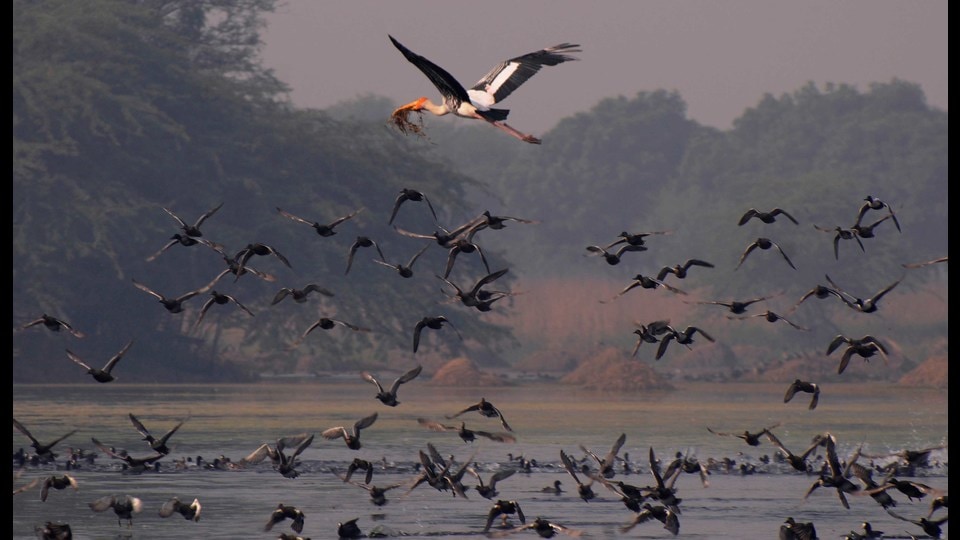
The wetlands that received the tag are Bhindawas Wildlife Sanctuary and Sultanpur National Park from Haryana; and Thol Lake Wildlife Sanctuary and Wadhvana Wetland from Gujarat. While these are the first two wetlands in Haryana to be recognised under the Ramsar Convention, Nalsarovar Bird Sanctuary from Gujarat was given the tag in 2012. With eight wetlands, Uttar Pradesh has the highest number of sites that have received the tag.
The convention is an intergovernmental treaty that provides the framework for national action and international cooperation for the conservation and wise use of wetlands and their resources.
“It is a matter of pride for us that four Indian sites get Ramsar recognition. This once again manifests India’s centuries old ethos of preserving natural habitats, working towards flora and fauna protection, and building a greener planet,” said Prime Minister Narendra Modi.
The development comes at a time when India is heading the UN body on conservation of migratory species of wild animals (CMS), with the government spearheading trans-boundary cooperation on securing the Central Asian Flyway.
The Bhindawas Wildlife Sanctuary is a human-made freshwater wetland and the largest one in Haryana. Over 250 bird species use the sanctuary throughout the year as a resting and roosting site. The site supports more than 10 globally threatened species including the endangered Egyptian Vulture, Steppe Eagle, Pallas’s Fish Eagle, and Black-bellied Tern.
The Sultanpur National Park also from the state supports more than 220 species of resident, winter migratory and local migratory waterbirds, supporting more than 10 globally threatened and critically endangered birds.
The Thol Lake Wildlife Sanctuary from Gujarat lies on the Central Asian Flyway and supports more than 320 bird species, including more than 30 threatened waterbird species such as the critically endangered White-rumped Vulture and Sociable Lapwing; and the vulnerable Sarus Crane, Common Pochard and Lesser White-fronted Goose.
The Wadhvana Wetland is important as it provides wintering ground to migratory waterbirds, including over 80 species that migrate on the Central Asian Flyway. They include some threatened or near-threatened species such as the endangered Pallas’s fish-eagle, the vulnerable Common Pochard, and the near-threatened Dalmatian Pelican, Grey-headed Fish-eagle and Ferruginous Duck.
“PM Shri @narendramodi ji’s concern for the environment has led to overall improvement in how India cares for its wetlands. Happy to inform that four more Indian wetlands have got Ramsar recognition as wetlands of international importance,” said Bhupender Yadav, Union environment minister.


