The central government’s move to end an expensive free-food scheme introduced during the pandemic while making the country’s subsidized food grains programme free till December 2023 is a politically savvy move, but could have long-term fiscal implications, experts said.
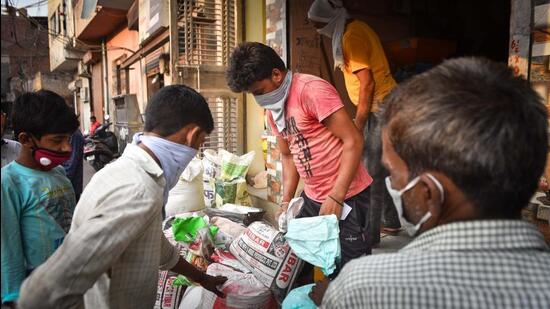
The Pradhan Mantri Garib Kalyan Anna Yojana (PMGKAY) scheme will be stopped, the cabinet decided last week. Instead, nearly 813 million beneficiaries will receive free food through the public distribution system under the National Food Security Act (NFSA) 2013.
The PMGKAY provided 5kg of food grains per month per head for free, in addition to the usual quota of rice and wheat provided under the NFSA at a subsidised price of ₹2-3 per kg, which will now be offered at no cost.
The PMGKAY was popular during and after the pandemic, as an estimated 60 million migrant workers returned to their home states. Although briefly stopped for six months, it was extended several times since its launch in 2020 and ran for 28 months. The total cost of PMGKAY since its launch till December 2022 is set to be ₹3.91 lakh crore, according to a cabinet note.
The PMGKAY was credited with aiding the return of Yogi Adityanath of the Bharatiya Janata Party to power in the 2022 Uttar Pradesh assembly election. “Immediately after swearing in, the UP CM announced that an additional quantity of foodgrains will be given to (ration) card holders in the state for three months (April to June 2022),” said Siraj Hussain, former Union agriculture secretary. “The Narendra Modi government, on the very next day, announced a further extension of PMGKAY for six months.”
{{/usCountry}}The PMGKAY was credited with aiding the return of Yogi Adityanath of the Bharatiya Janata Party to power in the 2022 Uttar Pradesh assembly election. “Immediately after swearing in, the UP CM announced that an additional quantity of foodgrains will be given to (ration) card holders in the state for three months (April to June 2022),” said Siraj Hussain, former Union agriculture secretary. “The Narendra Modi government, on the very next day, announced a further extension of PMGKAY for six months.”
{{/usCountry}}The move to make foodgrains under the NFSA free is likely to offset any potential political risks from scrapping the PMGKAY ahead of several assembly elections in 2023. Polls are due in Karnataka in May, Chhattisgarh and Madhya Pradesh in November, Rajasthan and Telangana in December, and followed by a general election due by May 2024, in which Prime Minister Narendra Modi will seek a fresh mandate.
“Politically, this is a deft move. The withdrawal of the PMGKAY was always going to be politically tricky, but the simultaneous reorientation of the food public distribution system makes it an easier political sell,” Sonal Varma, an economist with Normura, a financial services group, said in a research note. Analysts have viewed the government’s decision to make the existing PDS free as fiscally prudent, resulting in net subsidy savings 0.6-0.7% of GDP.
Hussain disagrees. Savings on subsidy are seen only when compared to the total costs of running both the PMGKAY and the regular susbidised foodgrains programme under the NFSA. For providing free food grains under the NFSA, the government will now have to spend an additional food subsidy of about ₹15,390 crore annually, Hussain said.
“These type of populist programmes are very difficult to reverse,” he said.