Freebies can drive a state to bankruptcy just to further a political party’s electoral prospects, the Supreme Court noted on Friday as it called for an “extensive” hearing by a three-judge bench to adjudicate the preliminary issues surrounding freebies and electoral promises.
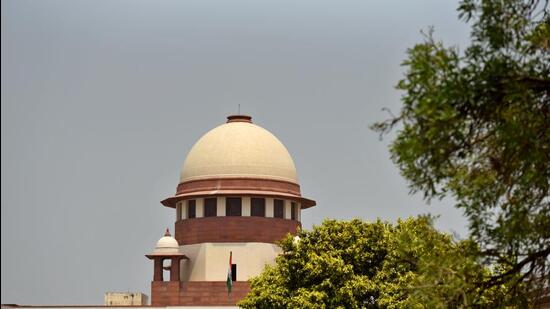
A bench, led by the outgoing Chief Justice of India (CJI) NV Ramana, said that the top court needs to take into account the welfare schemes thar are mooted by the governments for certain classes, but at the same time the danger of dispensing with the fiscal responsibility in distributing hand-outs cannot be ignored.
“Freebies may create a situation wherein the state government cannot provide basic amenities due to lack of funds and the State is pushed towards imminent bankruptcy. In the same breath, we should remember that such freebies are extended utilizing tax payers’ money only for increasing the popularity of the party and electoral prospects,” said the bench, which also included justices Hima Kohli and CT Ravikumar.
It emphasised that the true power ultimately lies with the electorate in a democracy and they decide the fate of a party and its candidates, besides judging their performance.
“It is also necessary to highlight herein the point raised by some of the intervenors, that all promises cannot be equated with freebies as they relate to welfare schemes or measures for the public good... At the same time, the worry raised by the petitioners herein, that under the guise of electoral promises, fiscal responsibility is being dispensed with, must also be considered,” added the bench.
{{/usCountry}}“It is also necessary to highlight herein the point raised by some of the intervenors, that all promises cannot be equated with freebies as they relate to welfare schemes or measures for the public good... At the same time, the worry raised by the petitioners herein, that under the guise of electoral promises, fiscal responsibility is being dispensed with, must also be considered,” added the bench.
{{/usCountry}}Looking at the complexity of the issues involved, the court said, a three-judge bench should accord extensive hearings to all the stakeholders before it and decide certain preliminary issues, which involved the scope of judicial intervention in the matter, and the purpose and composition of the committee that may examine the issue.
The court added that the three-judge bench should also adjudge the pleas to review a 2013 Supreme Court ruling that said some freebies were related to the directive principles guiding a state’s policies.
The court is hearing a PIL by advocate and former BJP spokesperson Ashwini Upadhyay for issuance of stringent guidelines to deregister errant political parties and seize their election symbols for offering “irrational freebies”.
As reported by HT on Thursday, the bench decided to put off the formation of an expert committee to look into freebies offered by political parties to voters in the wake of strong resistance from AAP and DMK that warned it against getting caught in a political quagmire by setting up a committee. The parties argued that the apex court is aiming at an exercise which is beyond judicially manageable standards, asserting the rights of the legislature, elected governments and voters to take a call on the issue.
Freebies will continue to destroy the economy unless there is a conscious decision taken by all political parties to stop such hand-outs, the Supreme Court had observed during the Wednesday hearing, adding the Centre should consider calling an all-party meeting.
The justice Ramana-led bench had further indicated on Wednesday that the new three-judge bench will consider the plea for reconsidering the 2013 Supreme Court judgment, which termed distribution of free gifts such as gold plates, fans, TVs, mixers-grinders and laptops expenses for public purposes and directly related to directive principles of state policy. The Friday order formalised the views expressed by the bench on that day.
Apart from recording the submissions of the parties, it highlighted the call for reconsidering the 2013 judgment in the case of S Subramaniam Balaji vs Government of Tamil Nadu & Ors. Since the 2013 judgment was by a two-judge bench, only a bench with strength of three or more judges can review it.
On August 3, the bench for the first time suggested initiating a dialogue by forming a committee, and asked for the views of all parties. While the Centre backed the court’s views, AAP, DMK and YSR Congress Party asserted the rights of the legislature, elected governments and voters to take a call on the issue.
ECI, which has taken a position that the poll body cannot regulate distribution of freebies, welcomed the constitution of a panel but said it would rather stay away as a participant due to its role as an arbiter of political disputes.
On August 11, the bench commented that all freebies cannot be couched as welfare schemes and advocated for “some financial discipline” to tackle the “serious issue” of hand-outs as electoral promises.
The court again considered the matter on August 17, August 23 and August 24 but failed to bring about a consensus either on the formation of the committee or on the scope of the judicial review, even though it attempted to clarify several times that the court cannot pass any direction on electoral promises, and that the idea is to help Parliament with a report by the proposed panel.
On Tuesday, the court had remarked that it wants to facilitate a dialogue in Parliament, which could consider framing a law with the assistance of the suggestions that the proposed committee appointed by the court may make. However, the court could not persuade parties before it to come to a consensus on the formation of a panel, forcing it to refer the matter to another three-judge bench for thrashing out preliminary issues.