District-wise data on deletions in the enumeration phase of the Special Intensive Revision (SIR) exercise in Odisha released by the Election Commission of India on July 6 shows that the state is an outlier compared to other big states. All big states among the 17 where the enumeration phase has concluded and that have released district-wise figures show higher deletions in the more urban districts. However, deletions in Odisha show no discernible pattern at the district-level, especially not with the urbanisation level of the district.
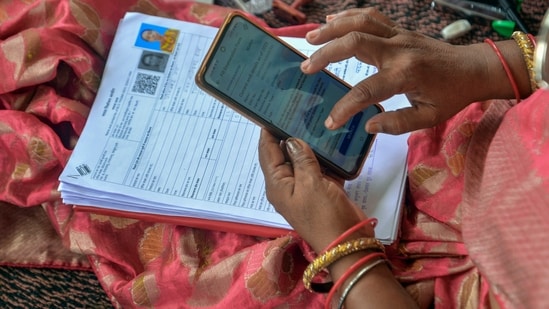
The SIR is a two-stage process. The first phase of the exercise involves the ECI distributing enumeration forms and publishing the names of those who return filled forms in the draft roll. The second stage makes corrections to this draft roll after further verification, which results in the publication of the final roll. The draft roll for Odisha published on July 5 shows that the state’s electoral roll shrunk by 2.01 million or 6% compared to the pre-SIR roll to 31.3 million, the third lowest percentage deletion after Lakshadweep (2.5%) and Mizoram (5.3%).
Also Read: SIR kicks off in Delhi: 168K forms given out, 7.6k digitised on Day 1
Highest deletions
The district-wise summary of deletions in Odisha’s draft roll released Monday shows that the highest deletions were recorded in Ganjam, Cuttack, Mayurbhanj, Jajpur, and Balangir, where the electoral roll shrunk by 207,624, 155,166, 111,267, 105,014, and 99,258. The lowest deletions were recorded in Deogarh, Boudh, Nuapada, Subarnapur, and Jharsuguda, where the roll shrunk by only 11,004, 13,944, 16,829, 19,224, and 28,542. The highest percentage deletions were recorded in Malkangiri, Balangir, Cuttack, Nayagarh, and Ganjam, where the roll shrunk by 10.2%, 7.4%, 7.1%, 7%, and 6.9%. These districts were at very different levels of urbanisation in the 2011 census, with their rural population share at 91.9%, 88%, 72%, 91.7%, and 78.2% in the census. Similarly, the districts with the lowest percentage deletions are Nuapada, Subarnapur, Boudh, Deogarh, and Khurda, where the roll shrunk by 3.3%, 4%, 4.1%, 4.4%, and 4.5%. The rural share in these districts was 94.4%, 91.8%, 95.4%, 92.8%, and 51.8% respectively in the 2011 census.
{{/usCountry}}The district-wise summary of deletions in Odisha’s draft roll released Monday shows that the highest deletions were recorded in Ganjam, Cuttack, Mayurbhanj, Jajpur, and Balangir, where the electoral roll shrunk by 207,624, 155,166, 111,267, 105,014, and 99,258. The lowest deletions were recorded in Deogarh, Boudh, Nuapada, Subarnapur, and Jharsuguda, where the roll shrunk by only 11,004, 13,944, 16,829, 19,224, and 28,542. The highest percentage deletions were recorded in Malkangiri, Balangir, Cuttack, Nayagarh, and Ganjam, where the roll shrunk by 10.2%, 7.4%, 7.1%, 7%, and 6.9%. These districts were at very different levels of urbanisation in the 2011 census, with their rural population share at 91.9%, 88%, 72%, 91.7%, and 78.2% in the census. Similarly, the districts with the lowest percentage deletions are Nuapada, Subarnapur, Boudh, Deogarh, and Khurda, where the roll shrunk by 3.3%, 4%, 4.1%, 4.4%, and 4.5%. The rural share in these districts was 94.4%, 91.8%, 95.4%, 92.8%, and 51.8% respectively in the 2011 census.
{{/usCountry}}Clearly, there is no discernible relation of district-wise deletions in Odisha with their urban or rural nature. This is in contrast to the trend seen in other states where the most urban districts generally recorded the highest deletions, a possible reason for which could be rural-to-urban migrants choosing to retain their names in the rolls of their rural homes.
The deletions at the draft stage also do not bear relation with socially vulnerable groups. For example, the percentage deletion at the district level is not correlated with the population share of Scheduled Tribes (ST) in the district’s total population, or the share of Scheduled Castes (SC), or their combined share. ST and SC groups have 23% and 17% share in the Odisha’s population at the state level.
Also Read: The many SIR controversies
At the AC-level, the highest deletions in Odisha in absolute terms were recorded in Malkangiri, Sanakhemundi, and Choudwar, where 27,653, 24,622, and 23,828 names were excised from the rolls. Bhubaneswar North, Udala, and Sonepur recorded the fewest deletions, with only 4,077, 5,314, and 6,188 names removed.
The highest and lowest percentage deletions were in the same ACs as in absolute terms. Malkangiri, Sanakhemundi, and Choudwar recorded 11%, 10.5%, and 10% deletions. Only 1.4%, 2.4%, and 2.6% names were removed in Bhubaneswar North, Sonepur, and Udala.
To be sure, the ECI did not publish a summary of the number of electors at the AC or district level just before the SIR exercise began. Therefore, HT has used the roll as on January 1, 2025 (the latest roll for which summary is available on the website of the Chief Electoral Officer, Odisha) for checking the district and AC-wise percentage deletions in the state. This roll had 34.07 million electors at the state level, 2% more than the 33.4 million electors on the rolls just before the SIR exercise. While a 2% change is unlikely to induce a trend in district-level numbers, it can possibly shift the ranks of a few districts.