The minister of state (MoS) for home affairs Nityanand Rai, on Friday, tabled the Prevention of Insults to National Honour (Amendment) Bill, 2026 in the Rajya Sabha, proposing criminal penalties for anyone who deliberately disrupts or prevents the singing of Vande Mataram.
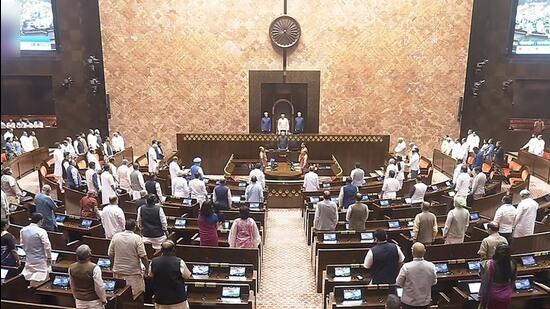
The proposed amendment seeks to expand the scope of the Prevention of Insults to National Honour Act, 1971, by bringing within its ambit acts of intentionally obstructing the rendition of the national song or creating disturbances during its singing.
The government argued that the legislation is intended to safeguard the dignity of Vande Mataram, which played a defining role in India’s freedom movement.
Bharatiya Janata Party (BJP) Rajya Sabha MP Sanjay Seth welcomed the proposal, saying the national song has gained wider acceptance in recent years and deserves the same level of public respect wherever it is sung.
The Opposition, however, questioned the constitutional validity of the move, contending that it could encroach upon fundamental rights.
Also Read: ‘Recite Vande Mataram without teleprompter’: Sanjay Raut dares PM Modi, Amit Shah
Communist Party of India (Marxist) (CPI(M) Rajya Sabha member John Brittas had, ahead of the Bill’s introduction, written to Union home minister Amit Shah urging the government to reconsider the proposal.
{{/usCountry}}Communist Party of India (Marxist) (CPI(M) Rajya Sabha member John Brittas had, ahead of the Bill’s introduction, written to Union home minister Amit Shah urging the government to reconsider the proposal.
{{/usCountry}}In his letter dated July 19, Brittas said that while Vande Mataram remains an iconic symbol of the Independence movement, equating its rendition with criminal liability marks a departure from the constitutional treatment of the National Anthem and the National Song. He argued that the proposed amendment raises issues relating to Articles 19, 21 and 25 of the Constitution, which protect freedom of speech and expression, personal liberty and freedom of conscience.
According to Brittas, the Constitution consciously stops short of compelling citizens to display patriotism except where Parliament has expressly legislated. He cautioned that expanding criminal law in this area could disturb the balance between national sentiment and individual rights.
Aam Aadmi Party (AAP) Rajya Sabha MP Sanjay Singh also opposed the bill.