Governors “cannot be at liberty to keep bills pending indefinitely”, the Supreme Court has ruled in a judgment, emphasising that the exercise of unbridled discretion in areas not entrusted to the discretion of the governor risks walking roughshod over the working of a democratically elected government in the state.
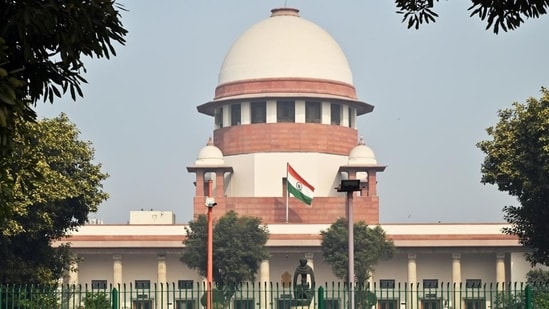
According to a bench led by Chief Justice of India Dhananjaya Y Chandrachud, state governors must show deference to the use of expression “as soon as possible” under Article 200 of the Constitution, making it obligatory to quickly return a bill with a message on the reconsideration of the proposed law if they chose to withhold their assent.
“Constitutional language is not surplusage. The expression ‘as soon as possible’ is significant. It conveys a constitutional imperative of expedition. Failure to take a call and keeping a bill duly passed for indeterminate periods is a course of action inconsistent with that expression...The governor cannot be at liberty to keep the bill pending indefinitely without any action whatsoever...The governor is not at liberty to withhold his action on the bills which have been placed before him,” said the bench, also comprising justices JB Pardiwala and Manoj Misra.
The court pointed out the governor must return a bill to the legislature for a review if she decides not to give her assent to it because any other interpretation of the constitutional provision would mean that the governor, as the unelected head of state, can virtually veto the functioning of the legislative domain by a duly elected legislature by simply declaring that assent is withheld without any further recourse.
{{/usCountry}}The court pointed out the governor must return a bill to the legislature for a review if she decides not to give her assent to it because any other interpretation of the constitutional provision would mean that the governor, as the unelected head of state, can virtually veto the functioning of the legislative domain by a duly elected legislature by simply declaring that assent is withheld without any further recourse.
{{/usCountry}}It acknowledged that the governor is entrusted with certain constitutional powers. “However, this power cannot be used to thwart the normal course of lawmaking by the state legislatures...the power to take decisions affecting the governance of the state, or as the case may be, of the nation essentially lies with the elected arm of the government. The governor is intended to be a constitutional statesman, guiding the government on matters of constitutional concern,” underlined the bench.
The court’s judgment came on a petition moved by the Punjab government against state governor Banwarilal Purohit keeping four bills, including those pertaining to fiscal management and the administration of gurudwaras, pending since June.
While the court had on November 10 dictated the operative part of the judgment in open court, asking Purohit to make a decision on the four bills in accordance with the Constitution, the detailed judgment was released on Thursday evening.
The judgment that maps out the role and duties of the governor in a constitutional democracy comes at a time when Raj Bhavans in several states have been locked in confrontation with the elected governments. In the last few months, Telangana, Tamil Nadu and Kerala, besides Punjab, approached the Supreme Court, seeking directives to their respective governors.
On November 20, the court expressed its displeasure at the delay on the part of the governors in giving assent to bills passed by state assemblies, as it took up the related petitions moved separately by Tamil Nadu and Kerala governments and asked for responses of their respective governors. The petition, moved by the Kerala government on a stalemate over eight bills, pending with the governor for a period ranging between seven and 26 months, will be heard on Friday.
The 27-page judgment on Thursday highlighted that the governor, as an appointee of the President, is the titular head of state, pointing out that federalism and democracy, both parts of the basic structure, are inseparable. “When one feature is diluted, it puts the other in peril. The tuning fork of democracy and federalism is vital to the realization of the fundamental freedoms and aspirations of our citizens. Whenever one prong of the tuning fork is harmed, it damages the apparatus of constitutional governance,” said the court.
Explaining Article 200, it clarified that if a bill is passed by the legislature with or without amendments, the governor shall not withhold her assent because the power to enact legislation is entrusted to the elected representatives of the people.
“The governor, as a guiding statesman, may recommend reconsideration of the entirety of the bill or any part thereof and even indicate the desirability of introducing amendments. However, the ultimate decision on whether or not to accept the advice of the governor as contained in the message belongs to the legislature alone...the message of the governor does not bind the legislature,” it noted.
The judgment also declared that reconvening a sitting of the Vidhan Sabha, which has not been prorogued, is permissible in law, and is within the exclusive domain of the speaker. The declaration was called for in the wake of Purohit casting doubt on the validity of Punjab’s assembly sessions, which had its sittings on June 19 and June 20, and again on October 20.
Convened in March, the budget session of the Punjab assembly continued till date with intermittent adjournments. As the state government chose not to prorogue (terminate) the ongoing session but kept adjourning it, governor Purohit raised objection to the validity of a sitting of the session in June when the impugned bills were passed. An assembly is prorogued as well as summoned by the governor on the recommendation of the state cabinet. Not proroguing the budget session in Punjab meant not seeking Purohit’s nod afresh for a new session.
“Any attempt to cast doubt on the session of the legislature would be replete with grave perils to democracy. The speaker, who has been recognised to be a guardian of the privileges of the House and the constitutionally recognized authority who represents the House, was acting well within his jurisdiction in adjourning the House sine die,” said the bench.
At the same time, the judgment recorded an assurance by senior counsel Abhishek Manu Singhvi, representing the Bhagwant Mann government, that the chief minister, heading the council of ministers, would be advising the speaker to convene the winter session of the assembly at an early date which would be fixed in due consultation.