The Goods and Services Tax Council on Thursday approved process reforms to complete GST 2.0, including revoking arrest powers of tax officials, dropping tax notices below ₹10,000, including pending ones, speeding up refunds and allowing input tax credit on employee health and life insurance, Union finance minister Nirmala Sitharaman said.
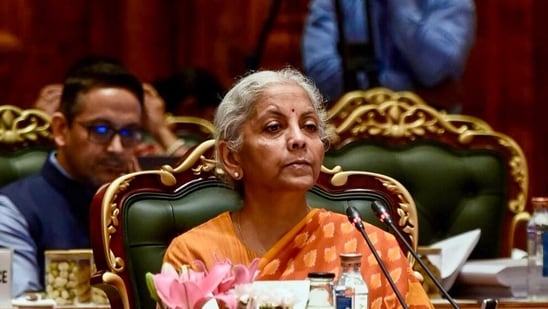
After rate rationalisation – when the Council in September 2025 cut the slabs to two, from 5%, 12%, 18% and 28% -- the Council turned to process reforms to help businesses and taxpayers. “Pehle daron mein rahat, ab prakriyaon mein aasani (after relief in rates, now ease in processes),” the finance minister said in Hindi, after the 57th GST Council meeting concluded in New Delhi.
Sitharaman said process reforms were taken up after GST 2.0 stabilised following the rate rationalisation of September 2025. A year after the two-rate structure (5% and 18%) was introduced, taxable supply is up 25.8%, from ₹40.19 lakh crore a month to ₹50.58 lakh crore, according to official data. Gross monthly GST collections now hover around ₹2 lakh crore, registering double-digit growth on an annualised basis.
Outlining some key decisions of the Council, Sitharaman said automatic registration within three working days was already available to low-risk and other eligible applicants, and the Council has now decided to accept routine changes in registration particulars automatically, such as the address of an additional place of business. Cancellation of registration by the taxpayer will also be easier, she said.
{{/usCountry}}Outlining some key decisions of the Council, Sitharaman said automatic registration within three working days was already available to low-risk and other eligible applicants, and the Council has now decided to accept routine changes in registration particulars automatically, such as the address of an additional place of business. Cancellation of registration by the taxpayer will also be easier, she said.
{{/usCountry}}Sitharaman said the 57th GST Council did not consider any rate changes as it had completed that task last year. She announced that the Council will take up rate changes only once a year, and any changes will take effect from April 1, a reform meant to ensure tax certainty and predictability. The Union finance minister chairs the Council, the apex decision-making body for the indirect tax, and finance ministers of states and Union territories are its members. By convention, its decisions are unanimous.
The Council has also made refunds faster. Taxpayers will get acknowledgement in 10 days instead of 15, with deemed acknowledgement where no response is issued, she said. Based on a risk assessment, the system will sanction 90% of the amount claimed within three working days of acknowledgement, down from seven. “It will enhance working capital for businesses,” the FM said.
The Council recommended allowing input tax credit (ITC) on more business expenses, including employee health and life insurance and telecom towers. Refunds under the inverted duty structure, where inputs are taxed at a higher rate than output, will also cover input services, for credit availed from November 1, 2026, she said. For a smooth rollout, phased refunds of tax paid on plant and machinery will cover eligible credit availed from April 1, 2027, she added.
“Fewer disputes and interruptions”
Sitharaman said Thursday’s decisions will lead to “fewer disputes and interruptions” as the Council has recommended common standards for notices and proceedings. “We will not be issuing any notices for monetary threshold of ₹10,000 or below,” she said. Pending notices below the threshold will also be withdrawn.
To ensure smoother movement of goods across the country, the Council recommended that goods can be inspected, detained or seized only by officers of the supplier state or the destination state. “No in-between stopping and checking,” she said.
“Further, goods can be intercepted only on specific intelligence and with the authorization by at least a joint commissioner level officer. So, any random GST officer cannot go, stop a vehicle and say, come on, show it to me. This prevents arbitrary checks by GST enforcement wings that affect the movement of goods from one state to another,” she said.
The Council also recommended removing arrest powers under GST and raising the prosecution threshold from ₹1 crore to ₹5 crore, she said. It also recommended reducing the general penalty from ₹25,000 to ₹10,000. The minimum punishment for GST offences will also go, leaving the choice of fine, imprisonment or both to the courts, according to an official note on the meeting.
The meeting also took a series of decisions to support exports and small businesses, Sitharaman said. Indian firms serving foreign clients through their own branches abroad will get export benefits, and work done in India on a foreign client’s goods will count as an export of services, according to the note. A simplified registration for small sellers on e-commerce platforms will let them sell across the country without setting up a place of business in each state, she said. “So, they don’t have to be present in every state,” she said.
The Council has also given in-principle approval to an optional scheme, set out in a concept note, for businesses with turnover up to ₹5 crore that supply only to consumers (B2C). They will file one annual return and pay tax quarterly, she said. The detailed framework will come before the Council at its next meeting, she added.
According to Sitharaman, one of the agenda items on Thursday was amending Section 16(2)(c) of the Central GST Act, under which input tax credit claimed by a genuine buyer can be blocked or reversed if a supplier in the value chain has allegedly failed to deposit the tax. This creates difficulties for taxpayers. “The Council today deliberated on the issue and discussed on ways to address this anomaly. This involved balancing the concerns of genuine taxpayers and also curtailing misuse of ITC. Upon the suggestions of several states, and in the spirit of cooperative federalism, it was decided to have an officers’ committee to examine this further,” the FM said.
“We were very much in favour, because I’ve had several delegations meet me and say, why should an honest payer be put to difficulty and made to wait till such a time everyone in the supply chain comes out clean? He has paid it and he is waiting. He can’t take the credit. So, with that, you know, having heard from delegations, we proposed that we should limit it to the one, next to the payer, and not go to the entire chain. But because today some states have requested, in the spirit of cooperative federalism, we agreed to have an officers’ committee to examine this further,” she said. The committee of officers will submit its report within three months and it will be immediately placed before the Council for a final decision. “So that whatever be the decision, I can’t preempt it, that also becomes a part of the 1st April 2027 onwards implementation agenda,” she added.
“Beyond the decisions of the GST Council, I would like to announce an initiative of the Central Government,” she said. Taxpayers have welcomed the faceless approach adopted in income tax, and the government now intends to extend it to CGST administration, she said. About 69.5 lakh taxpayers fall exclusively under CGST jurisdiction, and about 2 lakh of them are under multiple CGST jurisdictions, either within one state or across states. The government intends to bring these taxpayers under a centralised tax administration with a unified window for all CGST-related functions: scrutiny of returns, audit, adjudication, appeal, taxpayer services and grievance redressal, she said.
For these CGST taxpayers, the government will introduce faceless tax administration, she added. A framework will be finalised and put up for public consultation before the Budget next year and implemented during 2027-28, she said.