
 E-Paper



Haze envelopes Delhi amid worsening air quality; min temp rises to 9.6°C
An Air Quality Index (AQI) of 336 was recorded at 8am on Tuesday, compared to 304 (very poor) at 4pm on Monday and 279 (poor) on Sunday

 Prefer HTon Google


A thick haze enveloped Delhi amid worsening air quality on Tuesday, even as the minimum temperature rose by nearly four degrees to 9.6°C, around normal for this time of the year, after plummeting to the season’s lowest a day earlier.
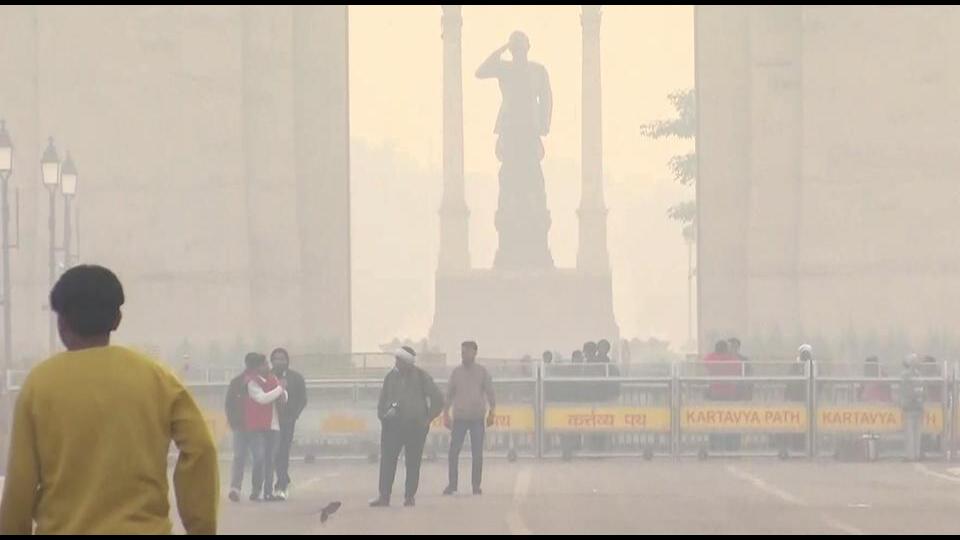
An Air Quality Index (AQI) of 336 was recorded at 8am on Tuesday, compared to 304 (very poor) at 4pm on Monday and 279 (poor) on Sunday. The AQI deteriorated after a brief improvement on Sunday, when it was below 300, snapping a 24-day streak between November 6 and November 29, when AQI stayed above 300. Three “severe” air days were recorded during this period from November 11 to November 13.
The Air Quality Early Warning System for Delhi said the AQI is now likely to stay “very poor” until at least December 4.
The minimum temperatures are likely to oscillate between 5-9°C until December 5. On Monday, the minimum temperature was five degrees below normal. It was also the lowest minimum for December in the first week of the month in at least 14 years, data from 2011 onwards, available on the India Meteorological Department (IMD) website showed.
The IMD has said this chill will continue, with the possibility of cold wave conditions in isolated pockets of Delhi until at least December 5. It declares a cold wave if the minimum temperature is below 10°C or 4.5°C or more below normal. At least two stations need to meet this criterion on two consecutive days. The IMD did not declare a cold wave on Monday, saying this criterion needs to be met on Tuesday as well.
IMD scientist Krishna Mishra said on Monday that the subdivision of Haryana-Chandigarh-Delhi reported departures below 4.4°C at least 2 stations. “...being the first day of reporting such departures, it will not be considered as a cold wave day as we declare cold wave only after it is reported on the second consecutive day,” Mishra said.



