High courts, as guardians of their judicial officers, must place empathy above institutional pride, the Supreme Court said on Friday, coming down hard on the Jharkhand High Court for refusing to accommodate a senior woman judicial officer, a single parent who sought either retention at her present posting or transfer to a nearby district so she could assist her son preparing for his Class 12 board examinations next year.
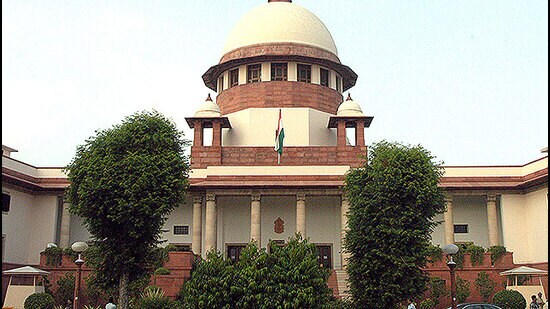
“As a high court, you cannot be egoistic. You have to be alive to the problems of your judicial officers,” a bench comprising Chief Justice of India (CJI) Bhushan R Gavai and Justice K Vinod Chandran told senior advocate Ajit Kumar Sinha, who appeared for the high court.
Recording its displeasure, the bench noted in its order that the high court “ought to have considered favourably” the officer’s request to either continue in Hazaribagh until March-April 2026, when her son’s board exams are scheduled, or to be transferred to the neighbouring district of Bokaro.
“The petitioner is a single mother and her only child/son is likely to appear for Class 12th exam in March-April 2026. The high court acts as a parent to judicial officers. The ground on which she has asked for retention or transfer to Bokaro is to enable her to continue her judicial duties and take care of her child. She has said there is no proper schooling facility available in Dumka where she has been transferred,” the bench observed.
Stressing that the judiciary must be sensitive to the personal hardships of its officers, the court added: “We hope and trust that our order will be considered in the right earnest by the high court.” The bench cautioned that any deviation would compel the Supreme Court to issue a binding judicial order. The matter has been listed again for September 8, a day before the officer’s leave ends.
{{/usCountry}}Stressing that the judiciary must be sensitive to the personal hardships of its officers, the court added: “We hope and trust that our order will be considered in the right earnest by the high court.” The bench cautioned that any deviation would compel the Supreme Court to issue a binding judicial order. The matter has been listed again for September 8, a day before the officer’s leave ends.
{{/usCountry}}On June 11, the Supreme Court recorded that the Jharkhand High Court allowed the officer 92 days of child care leave (CCL) only after a firm nudge from the top court. The officer had originally sought 194 days of leave, from June to December 2025, to help her son prepare for board and engineering entrance examinations.
Her plea highlighted that under Rule 43-C of the Central Civil Services (Leave) Rules, 1972, female government employees are entitled to 730 days of CCL during service, with full pay for the first 365 days and 80% for the rest. A March 2024 state resolution and an August 2024 circular by the high court itself reiterated this entitlement, especially in cases relating to children’s exams or illness.
Despite this, her CCL application was summarily rejected on May 10 without reasons, leading the Supreme Court on June 6 to warn the high court to revisit its decision or face intervention. Subsequently, the high court sanctioned 92 days of leave.
The officer, a scheduled caste judicial officer serving since 2002, was transferred in April from Hazaribagh, where her son is enrolled in school, to Dumka, despite her request for Ranchi or Bokaro postings with better educational facilities. She pointed out that another judicial officer had recently been granted three months of CCL, and argued that the denial of similar relief to her amounted to discrimination in violation of Article 14 of the Constitution.
Senior advocate Sinha, representing the high court, has maintained that granting long leave to a district judge heading the Hazaribagh judiciary or creating special accommodations may set an undesirable precedent. The state, too, earlier argued that such concessions could “open a Pandora’s box.”
But the top court has consistently emphasised that the matter is a question of fairness and compassion.