Two villages in Himachal Pradesh with two distinctive identities, one with the highest motorable road and the other renowned for its potent “tourist attraction” and ancient governance system, have set high standards in how communities can self-isolate for protection against Covid-19 without the administration or police wasting valuable time enforcing rules.
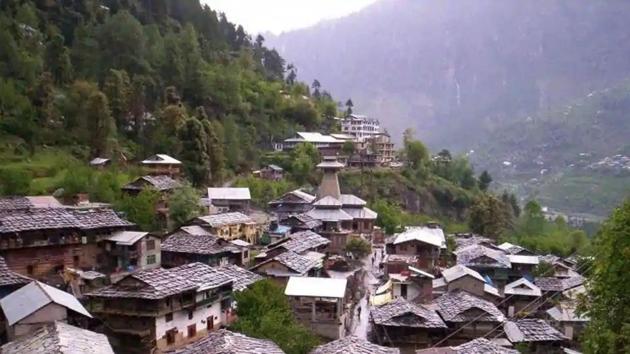
Welcome to Komic and Malana, where villagers, with remarkable maturity, have banned the movement of people voluntarily, knowing they have to save lives at any cost. The ruling deity in the latter village also issued lockdown orders much before the government did
Villagers in Komic – situated 15,500 feet above sea level – now rarely step out of their homes and strictly adhere to guidelines issued by the state government. They have restricted farm activities too. “We hardly go out and the children study at home,” says local resident Palzor.
The youngsters have made a time table which they follow diligently and study for four hours a day, she says.
Komic does not have a ration depot, but the villagers who have to travel 30 km to the nearest market in Kaza, have stocked up for the next six months. They are habituated to doing so as the entire Lahaul and Spiti district remains cut from the rest of the state for about six months a year due to heavy snowfall in Rohtang pass.
The only problem, Palzor says, is that relay signals for television are weak and they don’t have internet facilities.
{{/usCountry}}The only problem, Palzor says, is that relay signals for television are weak and they don’t have internet facilities.
{{/usCountry}}Deity’s orders
Malana, an ancient village located in scenic Kullu district’s Parvati valley, was the first panchayat in HP to restrict entry of outsiders from March 18, much ahead of Prime Minister Narendra Modi’s March 24 lockdown call.
Villagers like to say they have simply followed the orders of their supreme deity, Jamlu, who wished it so.
Said to be descendants of Greek king Alexander’s soldiers, the Malanis as locals are known, have their own parliamentary system comprising an upper house called Jayeshthang and a lower house called Kanishthang.
The reason why they anticipated problems and closed their borders ahead of others is the dubious local trade here in Malana cream, a strain of Cannabis hashish with high oil content and an intensely fragrant aroma.
Despite the government’s efforts to stop its production, Malana cream still attracts people from all around the world.
That’s also why many restaurants have sprung up here. “There are 20 odd restaurant owners who have remained in Malana. “We have told them that if they leave the village they would not be allowed to return”, says Bhagi Ram, head of the local panchayat, which has a population of 4,700 .
Ram said ration was not a problem and they had adequate stocks.
The Malanis use the Kanashi dialect, which is much different from the others spoken in the Kullu region.
Traditionally, inhabitants of this land-locked village used to make baskets, ropes and slippers from hemp. But in the late 1980s, visiting foreigners taught people here the methods of extracting the intoxicating resin from cannabis.