
 E-Paper



Hindu Temple In Abu Dhabi: How PM Modi, MBZ turned around India-UAE ties
It was the duty of EAM S Jaishankar that the temple is completed in time and that the total focus was there.

 Prefer HTon Google


The India-UAE relationship has undergone a major transformation under Prime Minister Narendra Modi. Now, PM Modi is set to inaugurate the BAPS Hindu Mandir in Abu Dhabi on February 14. He will also address the Indian community event, Ahlan Modi at Sheikh Zayed Stadium in UAE on February 13. Several economic deals are also expected to be signed during the Prime Minister’s visit. This comes after President of the United Arab Emirates Mohammed bin Zayed Al Nahyan, earlier, made a rare speech at the Vibrant Gujarat Summit. So, how did India turn around its relationship with the UAE? What are the major deals likely to be signed during PM Modi’s UAE visit? Why is the relationship between India and the UAE extremely significant? Hindustan Times Executive Editor Shishir Gupta sheds light on these issues in the latest edition of Point Blank.
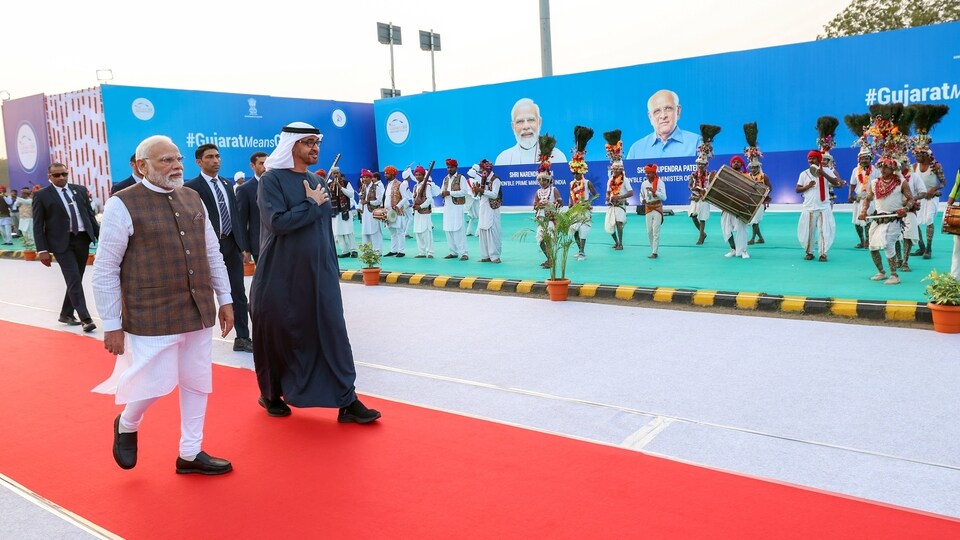
This is the biggest Hindu temple outside India. It is also a temple planned by two leaders -- the UAE president and Prime Minister Narendra Modi. It is a temple that is spread over 27 acres of land and with absolute delicate carvings. A temple in a country which is an Islamic emirate has its basis when Prime Minister Narendra Modi landed for the first time in UAE in 2015. He went to the mosque which was named after the father of the UAE president. That mosque is the biggest mosque after Mecca and Medina. So, UAE has a tradition of building big structures.
This temple is a part of this series but it is also a showcase of how the India-UAE ties have progressed over the years.
It was the duty of EAM S Jaishankar that the temple is completed in time and that the total focus was there. The temple is a symbol of the India-UAE ties.
When PM Modi took over in 2014, one of his projects was to reach out to the gulf countries. The Indian diaspora had been remitting massive amount back to India. The initial forays were made at the level of intelligence officials, at the levels of the national security advisor, at the level of then foreign secretary, S Jaishankar. When we reached out to the UAE, its leaders said very clearly that 'you have been viewing us from the prism of Pakistan, we look at you bilaterally'. And that is where it all started. Then we started to engaged bilaterally.
PM Modi's visit in 2015 was the first visit of any Indian prime minister after 34 years. The last one was PM Indira Gandhi in 1981. When IC 184 hijacking happened, the Indian ambassador wasn't even allow to go into the air base where the hijacked flight was landed before it took off for Kandhar. That was the state of India-UAE relations.
A lot of terrorists and criminals had taken refuge in the UAE and were targeting India via the country.
All that has changed. Today, UAE has the largest Indian passport carrying diaspora. It is 3.54 million. UAE is the new Singapore for the Indians. It is India's one of the closest allies, which is now going to sign a bilateral treaty. All has changed with the visionary leadership of Prime Minister Narendra Modi and Sheikh Mohammad Bin Zayed.


