
 E-Paper



How Manmohan Singh defended the historic 1991 Union budget, brought India out of financial crisis
The then finance minister, Manmohan Singh, had to face the angered Congress leaders who weren't happy with the proposed reforms.

 Prefer HTon Google


Turning the tide for the Indian economy in 1991, then finance minister Manmohan Singh played a key role in bringing the nation out of its darkest financial crises.
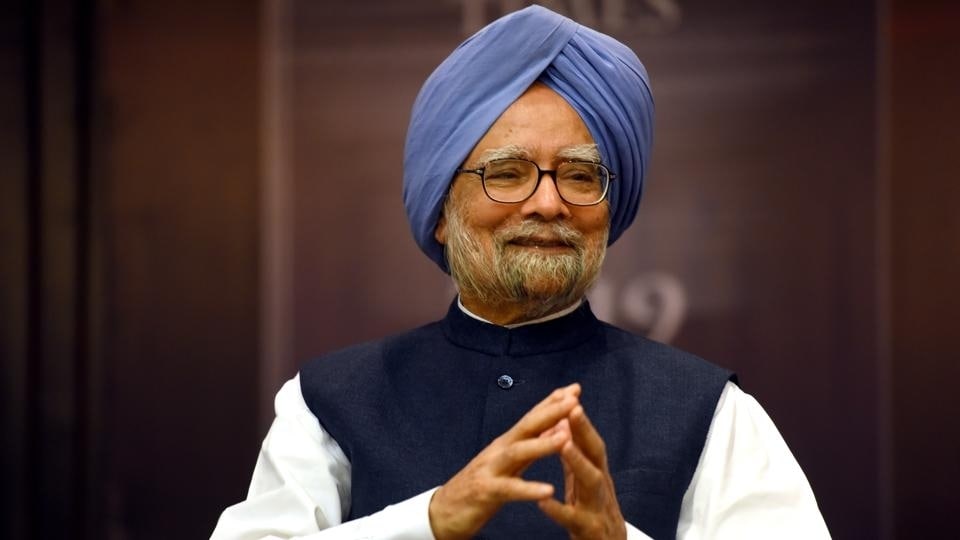
Under the PV Narasimha Rao-led government, Manmohan Singh went through several levels of tests to ensure that his 1991-92 Union budget was accepted across the nation and delivered path-breaking results.
India, at the time, was on the verge of an economic collapse, with low foreign exchange reserves and a weakened Soviet Union, which served as a cheap oil and raw materials source.
ALSO READ | Dr Manmohan Singh, ex-prime minister, dies at 92
To resolve the nation's economic crises, Manmohan Singh introduced economic reforms in the 1991 Budget.
“Macroeconomic stabilisation and fiscal adjustment alone cannot suffice. They must be supported by essential reforms in economic policy and economic management, as an integral part of the adjustment process, reforms which would help to eliminate waste and inefficiency and impart a new element of dynamism to growth processes in our economy," Manmohan Singh had said in his budget speech at the Parliament.
Manmohan Singh said the key purpose of the reform process would be to "increase the efficiency and international competitiveness of industrial production to utilise for this purpose foreign investment and foreign technology to a much greater degree than we have done in the past, to increase the productivity of investment, to ensure that India’s financial sector is rapidly modernised, and to improve the performance of the public sector, so that key sectors of our economy are enabled to attain an adequate technological and competitive edge in a fast changing global economy".
TRACK | Latest news on Manmohan Singh's death
However, to move to the other side of the budget, where things looked brighter for the Indian future, Singh had to face what people would term a "trial-by-fire."
ALSO READ | How Manmohan Singh’s economic reforms changed India
He faced questions from the media, anger of the Congress leaders who could not digest the reforms at the parliamentary party meeting, and many other obstacles.
Singh was firm on his budget. He addressed an unscheduled press conference on July 25, 1991, a day after presenting the Union budget. Congress leader Jairam Ramesh, in his book 'To the Brink and Back: India's 1991 Story,' recalled that the then finance minister did so to "ensure that the message of his budget did not get distorted by less-than-enthusiastic officials."
PM Rao left Manmohan Singh to face all flak 'on his own’
Jairam Ramesh wrote that after Rao took charge of the prime minister's office in June 1991, fast-paced changes began to take place in the country.
Ramesh, who was an aide to Rao during the initial months in office, wrote in the 2015 book that Singh explained his budget by calling it a "budget with a human face".
"He painstakingly defended the proposals to increase fertilizer, petrol, and LPG prices," he added.
The Congress leader recounted that only two MPs, Mani Shankar Aiyar and Nathuram Mirdha, supported Singh's budget wholeheartedly.
At the time, Rao had sensed the tensions among Congress leaders and promptly called a meeting of the Congress Parliamentary Party (CPP) on August 1, 1991. While allowing the MPs "to vent their spleen freely", the prime minister decided to stay away and let Singh face all the flak "on his own".
Later, two more meetings took place on August 2 and 3, wherein Rao's presence was seen. Ramesh recounted that, "In the CPP meetings, the finance minister cut a lonely figure and the prime minister did nothing to alleviate his distress."
ALSO READ | The 1991 Budget, in hindsight
Mani Shankar Aiyar had backed Manmohan Singh's budget by saying that it aligned with Rajiv Gandhi's beliefs on what needed to be done to avert the financial crises.
Giving in to the pressure from the Congress ranks, Singh had agreed to lower the 40 per cent surge in fertiliser prices to 30 per cent but, he decided to keep the hike in LPG and petrol prices as is.
On August 4 and 5, the Cabinet Committee on Political Affairs had met twice to decide on the statement that the finance minister would make in the Lok Sabha on August 6.
In his book, Ramesh said, "The statement dropped the idea of a rollback, which had been demanded over the past few days but now spoke of protecting the interests of small and marginal farmers."
He recounted it as a win for both the sides, saying that "the party had forced a rethink but the fundamentals of what the government wanted i.e., the decontrol of prices of fertilisers other than urea and an increase in urea prices, had been preserved".
"This was political economy at its constructive best -- a textbook example of how the government and the party can collaborate to create a win-win situation for both," Ramesh wrote while describing the historic 1991 Union budget and the economic reforms that were presented with it by the then finance minister Dr Manmohan Singh.
(with PTI inputs)


