
 E-Paper



How India’s Belt-Road Initiative snub proved prophetic
While China has invested nearly a trillion dollars into the initiative to leverage its financial and political clout with 150 countries, the economic situation of low-income recipient countries is dire and has taken a turn for the worse

 Prefer HTon Google


India, unlike 150 countries and 32 international organisations, stayed out of Chinese President Xi Jinping’s ambitious Belt-Road Initiative (BRI), especially since signing on would have meant accepting China-Pakistan Economic Corridor (CPEC) projects in Occupied Kashmir — a clear violation of its territorial integrity.
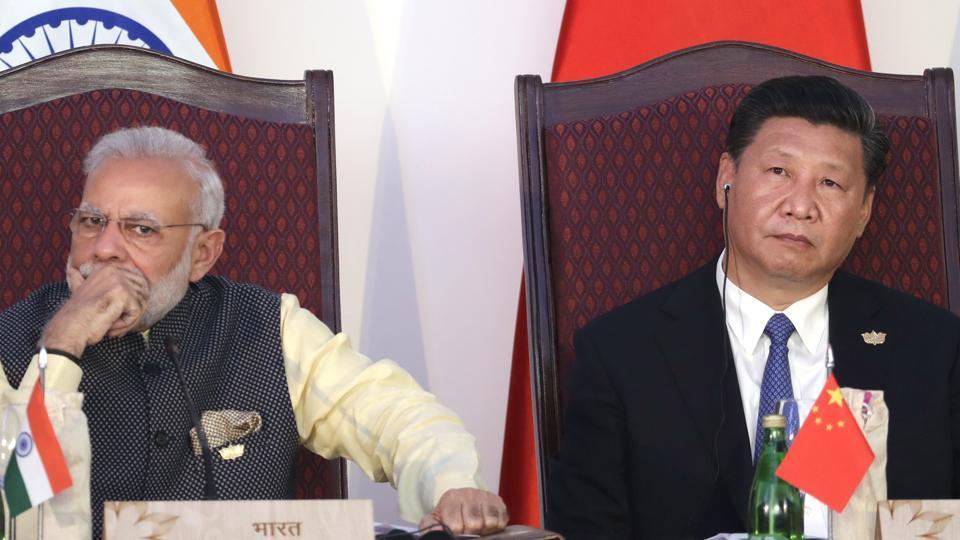
Watch: India leads by example with BRI snub to China | How Xi’s Loans Created Dire Situation In Pak
On May 13, 2017, the Narendra Modi government issued a formal statement on BRI; but a year before, then foreign secretary Subrahmanyam Jaishankar said in March 2016 that New Delhi would not allow Beijing to hardwire its strategic options in the name of infrastructure projects. A decade after President Xi launched the BRI project, India’s decision to protect its core interests and have the courage to stand alone has turned out to be right with other countries, including many from the West, following the lead of the Modi government.
While China has invested nearly a trillion dollars into the initiative to leverage its financial and political clout with 150 countries, the economic situation of low-income recipient countries is dire and has taken a turn for the worse. The data is worrying:
* Low-income countries owe 37% of their debt to China in 2022, compared to 24% in bilateral debt to the rest of the world. The fact is that 42 countries actually owe more to China through opaque operations by major banks and state owned enterprises with loan agreements being deliberately kept out of public purview according to Indian strategic planners.
* Chinese global projects to finance road-rail-port-land infrastructure have been a major source of debt for the participating countries with Pakistan leading the pack with $ 77.3 billion in debt followed by Angola ($ 36.3 billion), Ethiopia ($ 7.9 billion), Kenya ($ 7.4 billion) and Sri Lanka ($ 7 billion) according to Aiddata and BRI data compiled by China watchers.
* Maldives’ debt, according to data from that country’s finance ministry, rose to $6.39 billion by the end of the first quarter of 2022. This is 113% of the Maldivian GDP with China funding infra projects such as the Sinamale bridge and a new airport.
* Bangladesh owes 6% of total foreign debt to Beijing, around $4 billion. Dhaka is now seeking a $4.5 billion package from IMF.
* Djibouti, which gave a naval base to China, and Angola have the biggest repayment burdens as debt exceeds 40% of the gross national income (GNI). Both Laos and Maldives also have a debt burden of 30% of GNI to China and the new Chinese constructed railway line in Laos is already creating an economic mess in Vientiane.
* Sri Lanka has already defaulted on sovereign debt, with 9% of GNI owed to China, and Africa owes more than $150 billion to Beijing with Zambia also defaulting on debt with the country owing some $6 billion to Chinese banks.
The economic mayhem in the Indian subcontinent with Pakistan, Sri Lanka, and Bangladesh seeking relief from IMF has led to mounting public debt and public anger. Due to opaque funding operations, as many as 10 low-income countries have higher hidden debt, especially in Africa where the defaulting countries have to part with rights to port or mine or a railway line to Beijing.
Although Sri Lanka’s then government seemed to be leaning towards China (over India), Beijing has refused to sign off on a 10-year moratorium on debt repayment for the island nation as suggested by both IMF and the Paris Club. The Chinese EXIM bank is only offering a two-year moratorium as a result of which Colombo’s debt restructuring plan by IMF is in limbo and possibility of an eruption of public anger against the leadership is very high.
The same is the case with Pakistan as the majority of BRI contracts have been kept secret from the public so that high interest rates are not revealed in power-road-port infrastructure funding from Chinese Banks. Unless Pakistan agrees to very hard IMF conditionalities for loan, the Islamic Republic will also default very soon with iron brother China looking the other way.
Even though President Xi may be happy by inducing external levers to control as many as 150 countries through BRI, the debt crisis in recipient nations may impact China’s own finances as it will have to take a serious haircut in loan repayment from defaulting countries. The collapse of the real estate market in China last year has already caused stress in the banking system.
It is a result of both that China has slowed down its non-financial direct investments in BRI countries in 2022, which was $19.16 billion from January to November, a year-on-year increase of 6.5% as compared to 14.1% and 18.3% in 2021 and 2020 respectively.
Since 2015, China has signed 50,527 contracts at a total cost of $1 trillion, with an average contract value per year of $ 127.16 billion. Although Beijing has invested in 150 countries, Singapore, Indonesia, Malaysia, Vietnam, the UAE, Pakistan, Serbia, Thailand, Bangladesh, Laos and Cambodia have been consistent recipients. Only in 2015, was Russia, now a lose ally, listed as among the major countries receiving investments from China.
While Beijing claims to have transacted $12 trillion worth of trade with participants in BRI since 2015 till the end of August 2022, a serious 10-year audit of the ambitious program will reveal how recipient countries may have signed off on unfavorable terms. With a global recession looming and low-income countries hit by the never-ending Ukraine war, the Covid pandemic and food shortage, BRI is turning out to be a millstone around the neck of countries in the Indian sub-continent and in Africa, say analysts.
In truth, opinion is veering around to the stance that BRI has helped neither China nor the recipient nations. It has made China the most unpopular country among debtor nations and exposed their governments to popular political uprisings.


