
 E-Paper



HT Archives: Key accord inked to bring peace and stability to Punjab
PM Rajiv Gandhi and Akali Dal's Sant Longowal signed an accord addressing Punjab issues, including Chandigarh transfer and water disputes, ending a crisis.

 Prefer HTon Google


Prime Minister Rajiv Gandhi and Akali Dal president Sant Harchand Singh Longowal on Thursday finalised a comprehensive accord on a slew of issues concerning Punjab, marking a welcome end to the prolonged crisis in the border state that has bedevilled the nation.
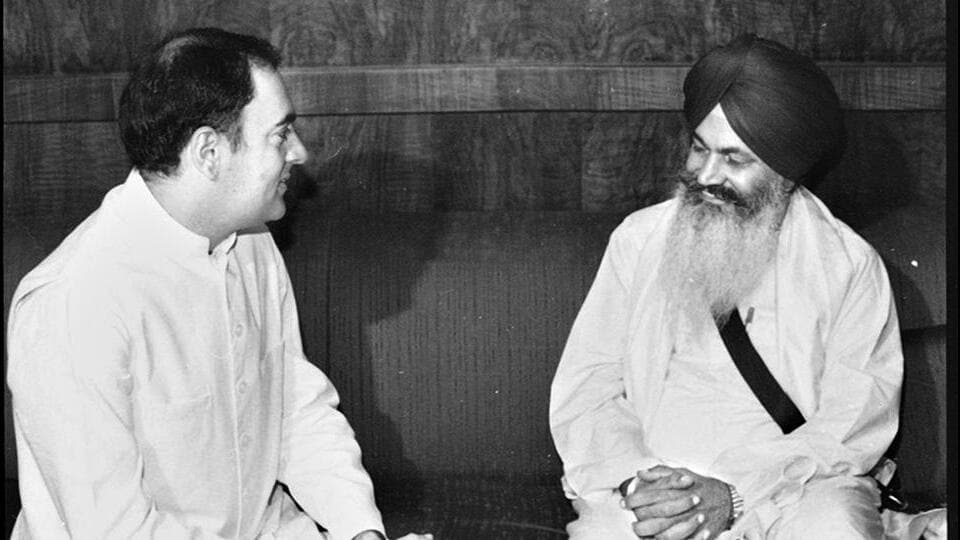
The 11-point Memorandum of Settlement signed at 5.30pm in Parliament House provides for the transfer of Chandigarh to Punjab, two high-power commissions to decide on territorial disputes between Punjab and Haryana, a tribunal on the Ravi-Beas water systems, reference of the controversial Anandpur Sahib resolution to the Sarkaria Commission, widening of the scope of the inquiry into the November 1984 riots, rehabilitation of those discharged from the Army, and compensation to the families of all the innocent people killed in agitation and riots since August 1982.
The memorandum was tabled in the Lok Sabha within 20 minutes of its signing by a beaming Prime Minister, who expressed the hope that this “will bring to an end a very difficult period through which the nation has passed.”
The five-page memorandum, signed by the two leaders, itself ends thus: “This settlement brings to an end a period of confrontation and ushers in an era of amity, goodwill and co-operation, which will promote and strengthen the unity and integrity of India.”
Members of Parliament on both sides of the aisle welcomed the Prime Minister’s announcement by thumping their desks. Two senior Opposition leaders in the Lok Sabha, Prof Madhu Dandavate (Janata) and C Madhava Reddy (Telugu Desam) welcomed it immediately. The transfer of Chandigarh to Punjab, as also of Hindi-speaking areas now in Punjab to Haryana is to take place simultaneously on the next Republic Day, 1986. The commission will submit its findings by December 31, 1985, which will be binding on both sides.
LK Advani, leader of the BJP parliamentary party, called the pact “a great relief”, even as he underscored reservations about specific provisions of the memorandum.
He also said that had the Akalis and the government shown this kind of sagacity during the tripartite conference in January 1983 “the country and Punjab might have been spared a lot of agony and bloodshed.”
Talks held at the time, which included opposition parties, collapsed on January 26, with Sikh leaders resigning from the state legislatures and Parliament.
It was noteworthy, he said, that at the time of the tripartite conference all Opposition parties had opposed any formal reference by the government to the Anandpur Sahib resolution, a list of demands the Akali Dal made in 1983.
“It is strange”, said Mr Advani, “that the ruling party whose principal election plank was that the Opposition parties were favouring the Anandpur Sahib resolution and it alone was resisting it, has now in an official communique signed by the Prime Minister himself formally recognised it”.
The agreement provides for the rehabilitation of all those discharged from the army, through gainful employment. The jurisdiction of the Justice Ranganath Misra Commission inquiring into the November 1984 riots that followed the assassination of former Prime Minister Indira Gandhi will be extended to cover the disturbances in Bokaro (Bihar) and Kanpur.
The government agreed to consider the formulation of an All-India Gurdwara Bill. “The legislation will be brought forward for this purpose in consultation with the Akali Dal and others concerned and after fulfilling all relevant constitutional requirements.” Under the accord, the government agreed to withdraw the notification applying the Armed Forces Special Powers Act to Punjab. The existing special courts will now try only cases relating to the offences of “waging war” and hijacking.” All other cases will be transferred to ordinary courts and enabling legislation, if needed, will be brought forward in the current session of Parliament.
The river water dispute is to be adjudicated by a tribunal headed by a Supreme Court judge. The accord provides that the report of the tribunal will be submitted within six months and will be binding on both Punjab and Haryana.
Gandhi said that on the Anandpur Sahib resolution, Sant Longowal made it very clear that it was meant to be an exercise for greater autonomy within the Indian Union. Those aspects of the resolution passed by the Akali Dal first in 1973 and again in 1978, which pertain to Centre-State relations now stand transferred to the Commission on Centre-State relations headed by Mr Justice R. S. Sarkaria.
The accord specifically provides for the promotion of Punjabi language.
The Prime Minister will write to the chief ministers on the question of according adequate representation to the minorities in employment and other avenues. On Chandigarh, the accord provides for the city going to Punjab. The present Union Territory has some adjoining areas included both from Punjab and Haryana. The Hindi speaking areas will now be transferred to Haryana and the Punjabi-speaking areas to Punjab.


