Pakistan’s Election Commission on Friday barred former premier Imran Khan from holding public office after finding him guilty of illegally selling gifts from foreign dignitaries and heads of state, sparking protests by his supporters in several cities.
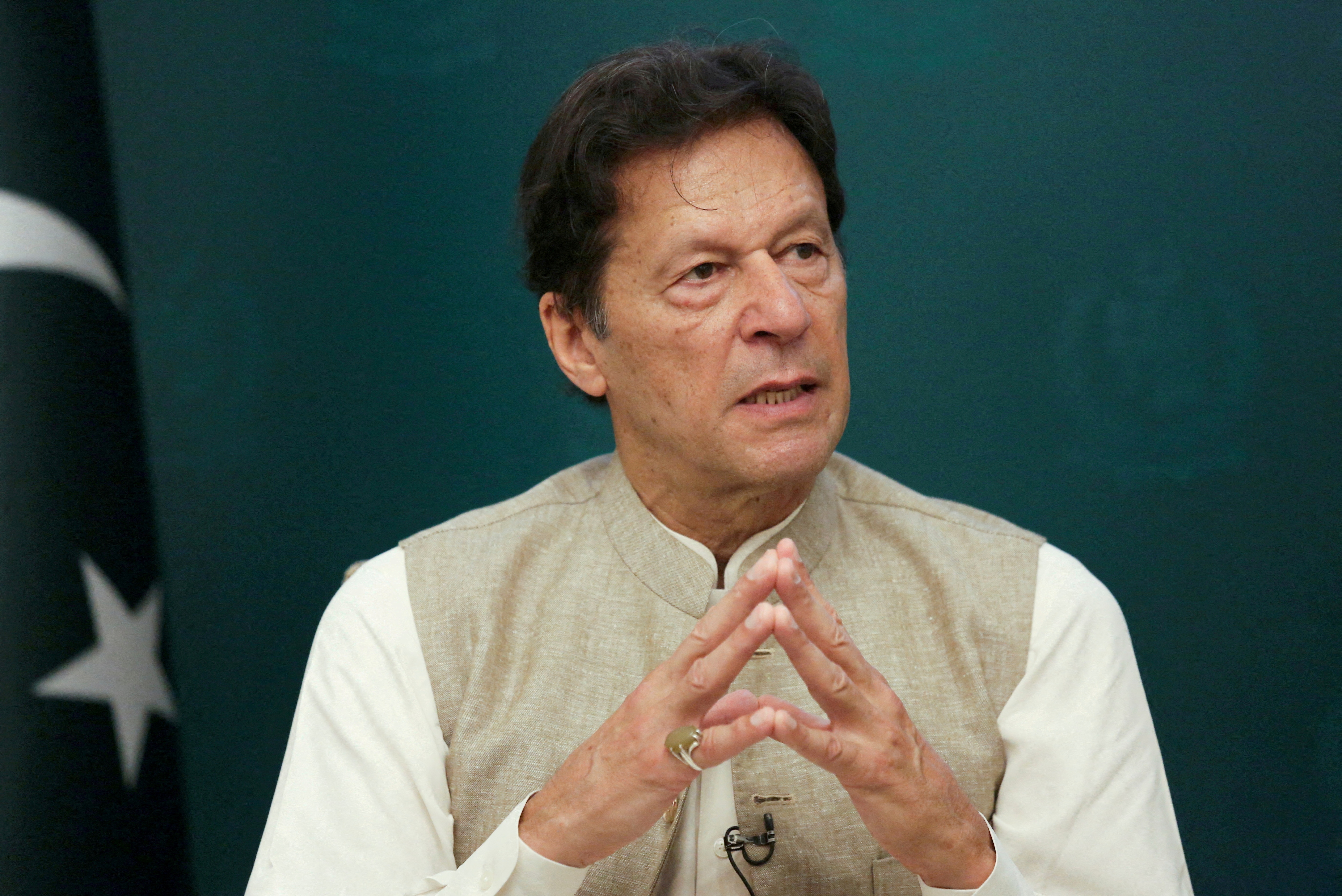
The election tribunal’s ruling came as a major blow for the 70-year-old cricketer-turned-politician, who was ousted from the post of prime minister in a no-confidence vote in April. It followed his Pakistan Tehreek-e-Insaf (PTI) party’s victory in by-elections on Sunday, with Khan himself winning in six parliamentary seats, and impressive wins in bypolls in the politically crucial Punjab province in July.
The four-member tribunal declared the seat originally held by Khan in the National Assembly or lower house of Parliament as vacant and ordered the initiation of criminal proceedings against him for submitting false statements and an incorrect declaration in a statement of assets and liabilities provided to the Election Commission.
Khan was accused of misusing his position during his 2018-2022 premiership to buy and sell gifts received during visits abroad that were in the “toshakhana” (official gift depository) and worth more than Pakistani ₹140 million ($635,000). The gifts included watches given by a royal family and officials alleged that Khan’s aides sold them in Dubai.
{{/usCountry}}Khan was accused of misusing his position during his 2018-2022 premiership to buy and sell gifts received during visits abroad that were in the “toshakhana” (official gift depository) and worth more than Pakistani ₹140 million ($635,000). The gifts included watches given by a royal family and officials alleged that Khan’s aides sold them in Dubai.
{{/usCountry}}The tribunal’s ruling said Khan had committed the “offence of corrupt practices” by making “false statements and incorrect declaration” and this was punishable under the provisions of the Elections Act of 2017. “The office is directed to initiate legal proceedings and to take follow-up action under...the Elections Act, 2017,” the ruling said.
The Election Commission said Khan was disqualified under Article 63(1)(p) of Pakistan’s Constitution, and legal experts said the ruling meant that he would also cease to be chairman of the PTI because of an earlier judgement by the Supreme Court. In February 2018, the apex court had ruled that an individual disqualified under Articles 62 and 63 of the Constitution cannot serve as the head of a political party.
Khan has denied the charges levelled against him and his lawyer Gohar Khan said the ruling will be challenged in the Islamabad high court.
Pakistan’s law minister Azam Nazeer Tarar told a news conference in Islamabad that all the evidence in the case against Khan was documentary and the Election Commission had found him involved in “corrupt practices”. He added, “The Election Commission of Pakistan has now referred his case for criminal proceedings against him in an appropriate court of law.”
Prime Minister Shehbaz Sharif hailed the Election Commission’s ruling in a tweet. “The nation has seen that the post of prime minister has been made a source of personal income through corrupt practices. The idol of ‘honesty and trust’ was shattered. Instead of fighting the law/gathering riotous groups, bow your head before the law. No one is above the law,” Sharif tweeted in Urdu.
However, the ruling added to the political and economic uncertainty that has plagued Pakistan since Khan was ousted from power, and PTI supporters came out on the streets in several cities to protest, blocking roads and highways and setting tyres on fire.
In a pre-recorded message posted on social media, Khan urged the people to “come out” for their rights. “By the time my message reaches you, I might have been put behind bars in an unfair case,” he said, speaking in Urdu.
“It is possible that I might not be able to address you again. I’ve been in the public for 50 years. I have neither flouted the law of Pakistan nor have I violated the Constitution,” he added.
The Pakistani media reported there were protests by Khan’s supporters in Islamabad, Rawalpindi, Lahore, Peshawar and Karachi. Footage beamed on Dawn News channels showed protestors setting tyres on fire in Peshawar, while police used tear gas to try and control the protesters in Islamabad.