An old trade route to export salt into the Kashmir valley from Western Punjab, the Mughal Road came into being in 1586 AD as the shortest route between Lahore and Srinagar for Mughal forces and caravans from Central Asia and beyond.
Originally called the Old Imperial Road, fourteen halting stations (Paraves) were constructed on the 246 mile stretch between Lahore and Srinagar. These stations were Gujarat, Bhimber, Saidpur, Nowshera, Chingus, Rajouri, Thanamandi, Bheramgala, Poshiana, Aliabad Sarai, Hirpur, Shopian, Ramu, and Kanakpura. The journey from one station to another was completed in approximately one day.
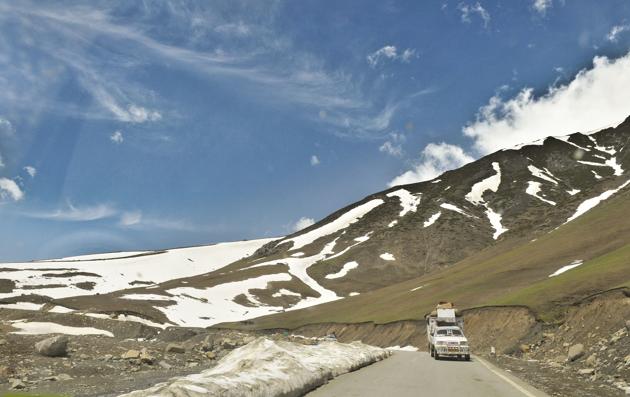
With numbers dwindling, magnificent Chinar trees are seen everywhere throughout the Kashmir valley along with the ruins of summer houses all of which owe their origin to Mughal vogue. The Mughal road is breathtaking to see as it winds around the Pir Panjal, also cutting through the Hirapur Wildlife Sanctuary which is a home to wild goat species known as Markhor which has its range spread wide from Afghanistan though Pakistan.
{{/usCountry}}With numbers dwindling, magnificent Chinar trees are seen everywhere throughout the Kashmir valley along with the ruins of summer houses all of which owe their origin to Mughal vogue. The Mughal road is breathtaking to see as it winds around the Pir Panjal, also cutting through the Hirapur Wildlife Sanctuary which is a home to wild goat species known as Markhor which has its range spread wide from Afghanistan though Pakistan.
{{/usCountry}}Akbar, Jehangir, Shah Jahan and Aurangzeb are among the Mughal emperors who have used this historic route. Emperor Jahangir who died on his way to the Kashmir valley wrote about difficulties of crossing Pir Pranjal and a waterfall in Hirapur in his autobiography Tuzuk-I-Jahangiri expressing that he had never seen such a beautiful waterfall. After the reign of Aurangzeb, the route was never used by the Mughal empire and its usage got limited to just the local people living in the vicinity.
Traditions and distinct lifestyles of the nomadic tribes of Pir Panchal region are a magnet for the evolving tourism circuit in the region after the reconstruction of the road which is also home to the now famous Mughal car rally circuit.