E-Paper



India asks WTO to protect rights of 9 mn fishermen families
India urges WTO to recognize sovereign fishing rights within EEZs, seeks 25-year subsidy moratorium for overfishing nations to protect nine million fisherman families.

 Prefer HTon Google


New Delhi India on Tuesday asked the Word Trade Organisation (WTO) to recognise and protect sovereign rights of countries for sustainable management of fisheries within their exclusive economic zone (EEZs) to protect interests of its nine million fisherman families.
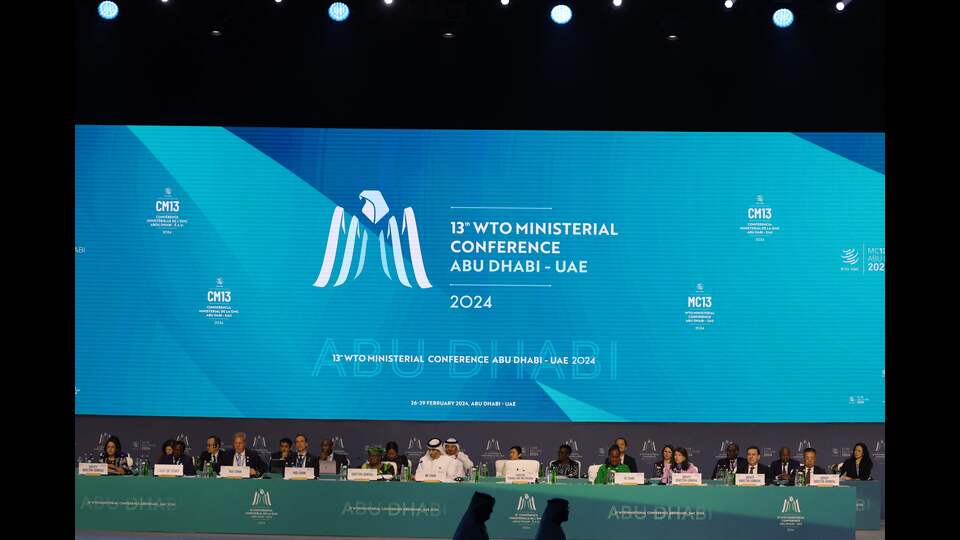
At the negotiations on fisheries subsidies in the ongoing Abu Dhabi ministerial (MC13), India reiterated its demand to recognise sovereign fishing rights of members within their EEZs as per the United Nations Convention on the Law of the Sea (UNCLOS). An EEZ expands to 200 nautical miles from the shore, within which the coastal state has the right to explore, exploit, conserve and manage both living and non-living resources, according to the UN body.
Besides allowing unhindered fishing in EEZs, India also asked a 25-year subsidy moratorium on advanced fishing nations for overfishing in the past while factoring in hidden subsidies such as cheap fuel to fishing vessels on the principle of special and differential treatment (S&DT), so that developing nations can develop their fishing sector.
India also emphasised the need to discipline subsidies given by the distant water fishing nations. Members should not lose sight of the harmful effects of subsidies for large-scale fishing on sustainable fishing and management of marine resources, it said at the negotiations.
India reiterated its long-held positions that responsible and sustainable fisheries is a practice ingrained in the ethos and practices of India’s large and varied fishing community, the commerce ministry said in a statement. “In that context, any comprehensive agreement on fisheries subsidies should keep in mind the interests and welfare of the fishing community that depends on the marine resources for their livelihood and sustenance,” it added.
“In addition, the current approach of considering the annual aggregate value of subsidies grossly overlooked the intensity of subsidies, and other factors such as the size of the EEZ, long coastal line, population of small fishers and the per capita subsidies to fishermen,” it said. While developed countries give as high as $75,000 to one fisherman family, India gives barely $15 in a year to its fisher family unit.
India wants developed nations to own the responsibility of damaging global fisheries wealth while agreeing to withdraw all subsidies they give for distant deep-water fishing, an official said, requesting anonymity. Advanced fishing nations such as those in the European Union have been giving huge subsidies to their comparatively small numbers of fishermen for years. “While it is a trade and profit issue for developed countries, for us it involves livelihood and nutrition,” he said.
After having achieved a Geneva package that included agreement on curbing harmful fishing subsidies, the WTO members are currently negotiating matters related to overfishing and overcapacity of fish stocks.
At the conclusion of MC12 in Geneva on June 17, 2022, the multilateral body agreed on the first part of fisheries subsidies, but the process to ratify is ongoing. On the Monday press briefing, WTO director-general Ngozi Okonjo-Iweala said 70 countries so far have ratified the agreement, leaving roughly 40 for it to reach the two-thirds approval required to enter into force. A second fisheries agreement is important as 260 million people depend on oceans that are 50% overexploited., she added.