India’s coronavirus disease (Covid-19) recoveries have crossed 1.5 million, a milestone the Union heakth ministry attributes to its strategy of aggressive testing, tracking and treatment of people infected by the virus.
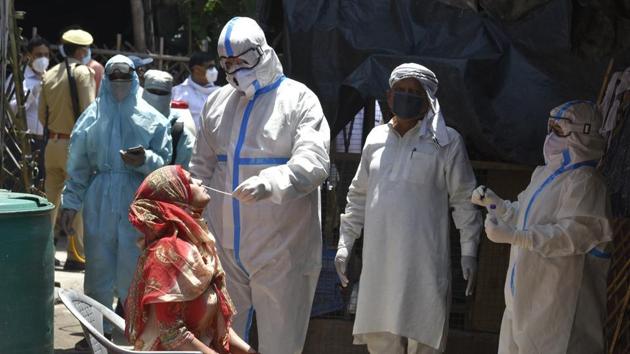
With record single-day recoveries of 54,859 on Sunday (according to the ministry’s database), the national recovery rate among Covid-19 patients has now touched almost 70%.
“Recovery of 15,35,743 Covid-19 patients has been made possible because of the policy of testing aggressively, tracking comprehensively and treating efficiently. Better ambulance services, focus on standard of care and use of non-invasive oxygen have given the desired results,” the ministry said in a statement on Monday.
Effective patient management has also led to India’s case fatality rate (CFR) dropping to 2%, the ministry claimed; the government aims to bring it down to 1%. On both parameters India has done better than the world. The global CFR was 3.69% on Sunday and the recovery rate, 64.42%.
“The record-high recoveries have ensured that the actual caseload of the country viz. the active cases has reduced and currently comprises only 28.66% of the total positive cases,” the ministry added in its statement.
{{/usCountry}}“The record-high recoveries have ensured that the actual caseload of the country viz. the active cases has reduced and currently comprises only 28.66% of the total positive cases,” the ministry added in its statement.
{{/usCountry}}“It suggests we are improving at various levels of care including at the societal level as well as in hospitals. It suggests that we have learnt to take care of our positive cases; we have learnt how soon to act and what works and what doesn’t. We are able to provide more organized and systematic treatment clinically. Those involved in Covid-19 management are learning by the day by reading and from each other,” said Dr VK Paul, a member of the government’s policy think tank Niti Ayog, and chairman of one of the national Covid task forces.
To be sure, aggressive testing and tracking through house- to-house surveys and well implemented containment strategies and surveillance in these areas may lead to an initial increase in positive cases but it reduces over time with well implemented strategies, according to experts in the health ministry managing Covid-19 situation.
India performed 719,364 Covid-19 tests on Saturday, taking the total testing closer to the Indian Council of Medical Research‘s (ICMR) target of one million per day by the end of August, HT reported on Monday.
Virologists agree that it is normal for the number of Covid-19-positive cases to spike when testing goes up.
“It is normal to see an immediate surge in the positivity rate when testing is ramped up manifold. It means all cases are being successfully identified, and after a prolonged period of time the percentage starts going down as people are tracked and isolated in time so that they do not pass on the infection,” says Dr T Jacob John, former head of the virology department at the Christian Medical College, Vellore, Tamil Nadu.
According to government data, around 10 Indian states account for at least 80% of the new Covid-19 cases. Many of the new cases are coming from the hinterland and the peninsula.
“What is worrisome is that the infection is spreading to newer areas, especially rural areas. The spillage is indeed a cause for concern and needs to be addressed. They should have taken steps earlier when the movement of people had begun because this was the fear that the infection might spread to rural areas from the cities,” said John.