
 E-Paper



India not to buy Russian oil? US again says so in tariff cut order, but no final word from ministries in Delhi yet
Piyush Goyal said MEA would speak on Russian oil issue; Trump's executive order on ‘penal’ tariffs says Delhi committed to stop Moscow oil dealings

 Prefer HTon Google


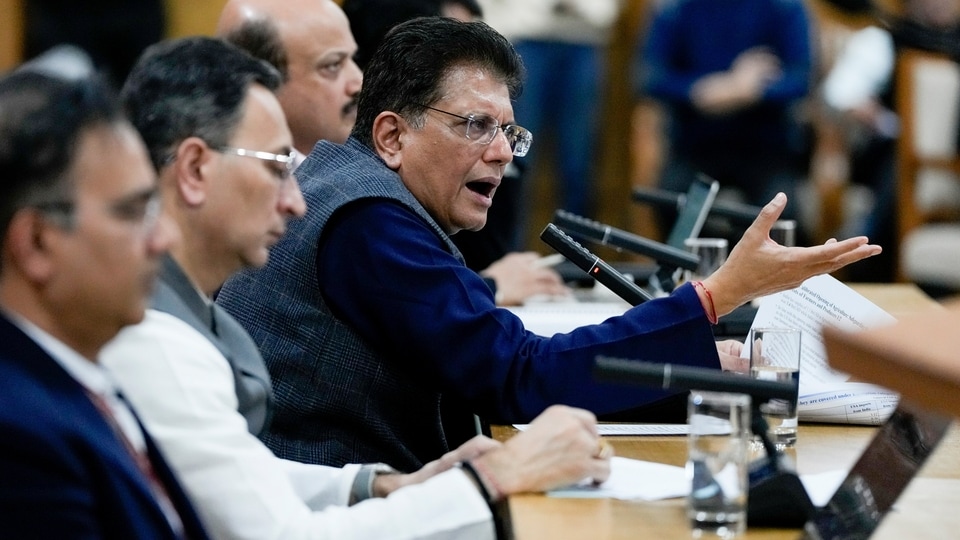
Union commerce minister Piyush Goyal on Saturday shared some more details of the India-US trade deal being finalised but, when asked if India will indeed stop purchasing oil from Russia as asserted by Donald Trump-led United States, he said the Ministry of External Affairs (MEA) will give information on that.
A White House order mentions this “stop” while announcing elimination of the 25% “penal” tariffs imposed on India for its oil purchases from Russia amid the the Ukraine war.
What US order says
"India has committed to stop directly or indirectly importing Russian Federation oil, has represented that it will purchase United States energy products from the United States, and has recently committed to a framework with the United States to expand defense cooperation over the next 10 years," the US President's executive order reads.
It's titled: ‘Modifying Duties to Address Threats to the United States by the Government of the Russian Federation’.
This order is different from the India-US Joint Statement that announced the “framework for an Interim Agreement" towards an eventual Bilateral Trade Agreement (BTA).
The order also speaks of possible reimposition of the 25% punitive tariff, “if the (US) Secretary of Commerce finds that India has resumed directly or indirectly importing Russian Federation oil”.
What joint statement says
The joint statement does not mention Russia, though it does say India will buy more energy from the US. “India intends to purchase $500 billion of U.S. energy products, aircraft and aircraft parts, precious metals, technology products, and coking coal over the next 5 years,” it says, as uploaded by both government on their portals.
In turn, India will “eliminate or reduce tariffs on all U.S. industrial goods and a wide range of U.S. food and agricultural products”. Piyush Goyal has said agriculture has been “totally protected” and those US agri-items won't be given duty waiver in which India is self-sufficient.
What MEA has said on Russian oil
On Russian oil, while Piyush Goyal has said the MEA would know about the Russian oil point, external affairs minister S Jaishankar had earlier said the Goyal would know more details on the deal as he was the one negotiating it.
On February 6, the MEA spokesperson said at a press briefing: “Insofar as India’s energy sourcing is concerned, the government has stated publicly on several occasions that ensuring the energy security of 1.4 billion Indians is the supreme priority of the government."
Also read | Energy security priority in oil buys, says MEA
He added, "Diversifying our energy sourcing in keeping with objective market conditions and evolving international dynamics is at the core of our strategy to ensure this. All of India’s actions are taken and will be taken with this in mind."
Reports have been saying that India has reduced its Russian oil imports over the past few months; but the government has not dwelled on that, instead sticking to the diplomatic line that decisions are taken as per sovereign assessment of market and global dynamics.
When will tariff be down to 18?
The deal-related joint statement by the Indian ministry of commerce and the White House says the US will apply a reciprocal tariff rate of 18 per cent on India. Here's what that means:
- Since August 2025, including the 25% for Russian oil purchases and 25% as reciprocal levy, the total had hit 50%, the highest among US allies.
- With the oil-linked half gone, only the 25% reciprocal levy remains as of Saturday, February 7.
- The total has to come down to 18%, “subject to the successful conclusion of the Interim Agreement”, says the joint statement.
The announcement, that both countries have agreed to a deal, was made on February 5 by Trump, and confirmed just after by PM Narendra Modi.
‘No deal yet’: Opposition after joint statement
From India's main Opposition party, the Congress, former finance minister P Chidambaram shared a scathing assessment. “The Joint Statement issued by India and the US makes it clear that no Bilateral Trade Agreement (BTA) has been reached. It is not even an Interim Agreement. It is a 'framework for an interim agreement',” he posted on X.
He said the details are opaque unless one reads several more US orders. “One thing is clear: the framework deal is heavily tilted in favour of the U.S. and the asymmetry is obvious,” he alleged. “How is this 'framework for an Interim Agreement' a matter of celebration?” he remarked.
Modi, Goyal hail ‘framework’
PM Narendra Modi has, meanwhile, thanked Trump “for his personal commitment to robust ties".
“This framework reflects the growing depth, trust and dynamism of our partnership,” Modi said on social media, adding it will “further deepen investment and technology partnerships between us.”
Piyush Goyal has said, "This (agreement) will open a $30 trillion market for Indian exporters,” referring to the US annual GDP. Goyal also said tariffs will go down to zero on a wide range of Indian goods exported to the US, including generic pharmaceuticals, gems and diamonds, and aircraft parts, further enhancing the country's export competitiveness.
This development comes just days after India and the European Union reached a Free Trade Agreement that could affect as many as 2 billion people after nearly two decades of stop-start negotiations. India also signed a comprehensive economic partnership agreement with Oman in December and concluded talks for a deal with New Zealand.


