E-Paper



India-US interim trade deal in 12 key points: What does White House's joint statement say?
This comes days after both leaders announced a trade deal, saying it ‘unlocks immense opportunities for mutually beneficial cooperation’.

 Prefer HTon Google


The US and India have unveiled a new framework for an Interim Agreement, marking what both President Donald Trump and PM Modi described as a major step toward a comprehensive Bilateral Trade Agreement (BTA). This comes days after both leaders announced a trade deal, saying it ‘unlocks immense opportunities for mutually beneficial cooperation’.
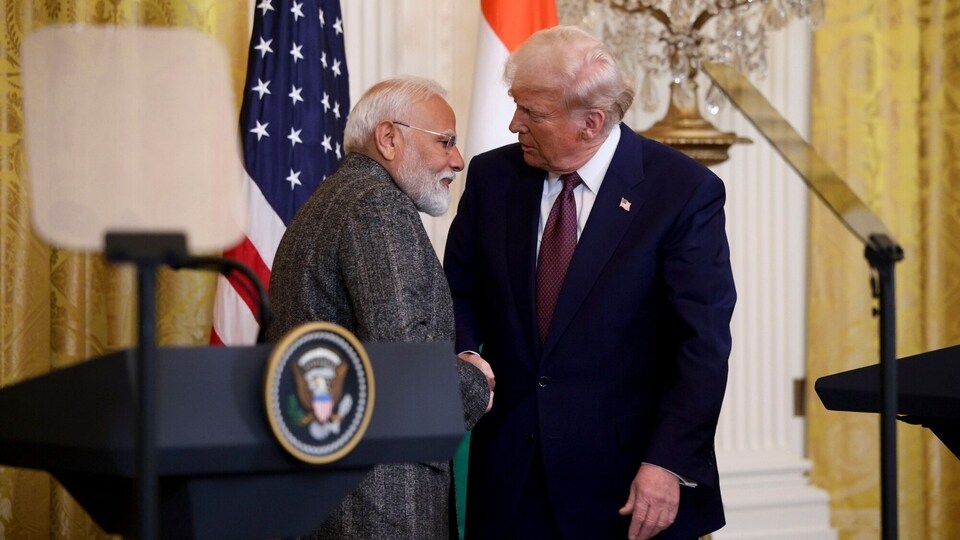
Trump said Monday that he plans to lower tariffs on goods from India to 18%, from 25%, after PM Modi agreed to stop buying Russian oil. “This will help END THE WAR in Ukraine, which is taking place right now, with thousands of people dying each and every week!” the president posted on Truth Social. Track India-US trade deal live updates
Modi, in turn, said he looks forward to working with the US and Trump.
“When two large economies and the world’s largest democracies work together, it benefits our people and unlocks immense opportunities for mutually beneficial cooperation. President Trump’s leadership is vital for global peace, stability, and prosperity. India fully supports his efforts for peace. I look forward to working closely with him to take our partnership to unprecedented heights,” he tweeted.
Read More: India-US trade deal top points: Piyush Goyal highlights benefits amid Opposition criticism
On Friday, the White House released an India-US joint statement, revealing a 12-point framework. The statement emphasized that the Interim Agreement will serve as a historic milestone, laying the foundation for a larger trade deal in the months ahead.
Read More: Pakistanis fume over India's ‘better’ trade deal with US and lower tariffs: ‘Photo ops are useless’
Key elements highlighted in the joint statement
1. Tariff cuts by India on US goods
The US said that India has agreed to remove or reduce duties on all American industrial products, as well as a wide variety of agricultural and food items. These include sorghum for feed, dried distillers’ grains, fresh and processed fruits, tree nuts, soybean oil, and alcoholic beverages.
2. Reciprocal tariff structure by the US
Under Executive Order 14257, the United States said it will apply an 18% reciprocal tariff on originating goods from India, covering categories such as apparel, leather, footwear, plastics, rubber, organic chemicals, decor, artisanal items, and machinery.
3. Potential tariff removals
If the agreement is finalized, Washington said it will lift reciprocal tariffs on Indian exports like gems, diamonds, aircraft parts, and generic pharma listed in the annex to Executive Order 14346.
4. Rollback of US national-security tariffs
Washington said it will withdraw duties on certain Indian aircraft and aircraft components previously imposed under national-security proclamations affecting aluminum, steel, and copper imports.
5. Preferential access for India in sensitive US sectors
The White House said India will receive tariff-rate quotas for specific automotive parts subject to US national-security tariffs, with potential negotiated outcomes for pharmaceuticals pending the Section 232 investigation.
6. Market-access commitments on both sides
As per the statement, both countries intend to offer each other sustained preferential access in sectors deemed strategically important.
7. Rules of origin safeguards
The joint statement added that India and the US will craft rules of origin ensuring that the benefits of the agreement accrue primarily to the two economies, limiting third-country passthrough.
8. Removal of non-tariff barriers
The US claimed that India has committed to resolving long-standing barriers affecting US medical devices, easing restrictive ICT import licensing, and reviewing the acceptance of US or global standards for key products within six months of the agreement’s entry into force. Non-tariff barriers affecting US agricultural trade will also be addressed, according to the statement.
9. Alignment on regulatory standards
Both sides plan to initiate discussions on technical standards and conformity assessments to make compliance simpler for exporters, the White House said.
10. Flexibility clause for future tariff changes
Should either country alter its tariffs after implementation, the other may adjust its commitments accordingly, the statement added.
11. Cooperation on economic security and technology
As per the joint statement, India and the US will strengthen their alignment on supply-chain resilience, investment screening, export controls, and actions that counter non-market trade practices by third countries. The two nations will also scale up trade and collaboration in emerging technologies, including GPUs and data-center hardware.
12. Major Indian purchases of US goods
The US said that India intends to purchase $500 billion worth of American energy, aviation products, precious metals, technology goods, and coking coal over the next five years.