India on Tuesday, in a day-long meeting, presented the findings of a feasibility study on Sustainable Aviation Fuel (SAF), setting the stage for a policy and implementation roadmap to cut aviation emissions as the sector expands rapidly.
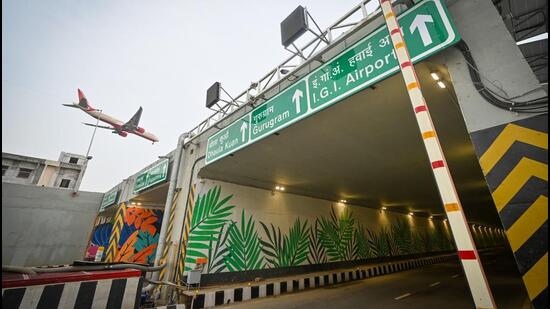
This comes ahead of the 42nd session of the International Civil Aviation Organisation (ICAO) Assembly set to be held at the UN aviation agency’s headquarters in Montreal later this month, where the Member States will set aviation future direction with a focus on environmental sustainability.
“The study, carried out by the Directorate General of Civil Aviation (DGCA) with support from the International Civil Aviation Organization (ICAO) and the European Union under the ACT-SAF programme, identifies viable pathways for producing and deploying SAF in India in line with global CORSIA sustainability standards,” an official aware of the development said.
The meeting was chaired by the civil aviation minister Ram Mohan Naidu and attended by aviation secretary Samir Kumar Sinha, ICAO representatives, the DGCA, oil companies and representatives from Boeing and Airbus.
“The workshop is expected to finalise policy and implementation steps, ensuring India meets its SAF blending targets while reducing crude oil imports by an estimated $5-7 billion annually and boosting farmer incomes through the use of crop residue,” an official said.
{{/usCountry}}“The workshop is expected to finalise policy and implementation steps, ensuring India meets its SAF blending targets while reducing crude oil imports by an estimated $5-7 billion annually and boosting farmer incomes through the use of crop residue,” an official said.
{{/usCountry}}With passenger numbers crossing 24 crore in 2024 and projected to double by 2030, officials said SAF will be central to balancing aviation growth with climate commitments.
“India is well positioned to become a global leader in SAF, because of its large agricultural base, availability of surplus biomass and strong refining capacity. Estimates suggest India could produce 8-10 million tonnes of SAF annually by 2040, more than domestic demand, opening export opportunities and creating up to 1.4 million green jobs,” another official said.
To be sure, the government has set phased blending targets- 1% of total fuel for international flights by 2027, 2% by 2028, and 5% by 2030. Indian Oil’s Panipat refinery has already been certified as the country’s first SAF producer, with production expected to begin by the year-end.
India’s aviation sector is among the fastest growing in the world, with 24 crore passengers recorded in 2024 and numbers projected to double by 2030. Aviation fuel consumption is expected to reach 16 million tonnes by 2030 and 31 million tonnes by 2040. During such a situation, SAF is seen as central to decarbonizing this growth, with the potential to cut lifecycle emissions by up to 80%.
Currently 88 airports in India run entirely on green energy, Bengaluru airport holds the highest global carbon accreditation, and Delhi, Mumbai and Hyderabad airports are carbon neutral.
Alongside SAF, India is also investing in green hydrogen where Cochin airport has set up the world’s first airport-based hydrogen production facility, while NTPC and IOC are developing large-scale SAF and hydrogen projects.