India on Sunday dismissed a controversy over the birthplace of Gautam Buddha and said a comment by external affairs minister S Jaishankar on the shared Buddhist heritage of the two neighbours was misunderstood in the Himalayan country.
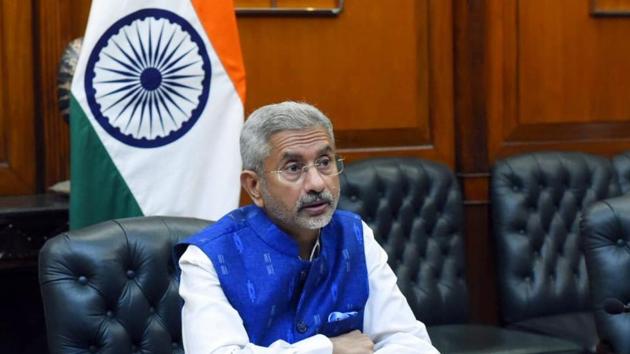
The clarification came a day after Jaishankar referred to the teachings of Buddha and Mahatma Gandhi at an event organised by the Confederation of Indian Industries. The remark triggered controversy in Nepal with political parties saying that Buddha, the philosopher and religious teacher who founded Buddhism, was born in Nepal and not India.
External affairs ministry spokesperson Anurag Srivastava said Jaishankar’s remark referred to common Buddhist heritage of India and Nepal. “There is no doubt that Gautam Buddha was born in Lumbini, which is in Nepal,” he said.
The Indian side said at the time of the Buddha, who lived in the 5th and 4th century BC, there was no separate nation state called Nepal, and that the Siddhartha Gautama became Buddha after attaining enlightenment in Bodh Gaya, which is in modern day Bihar.
Earlier in the day, Nepal’s foreign ministry said that historical and archaeological evidence showed Buddha was born in Nepalese territory. “It is a well-established and undeniable fact proven by historical and archaeological evidences that Gautam Buddha was born in Lumbini, Nepal. Lumbini, the birthplace of Buddha and the fountain of Buddhism, is one of the UNESCO world heritage sites,” a statement by the ministry’s spokesperson read.
{{/usCountry}}Earlier in the day, Nepal’s foreign ministry said that historical and archaeological evidence showed Buddha was born in Nepalese territory. “It is a well-established and undeniable fact proven by historical and archaeological evidences that Gautam Buddha was born in Lumbini, Nepal. Lumbini, the birthplace of Buddha and the fountain of Buddhism, is one of the UNESCO world heritage sites,” a statement by the ministry’s spokesperson read.
{{/usCountry}}There were also protests by political parties such as the main opposition Nepali Congress and individuals such as former foreign secretary Madhu Raman Acharya and former prime minister Madhav Kumar Nepal, a top leader of the ruling Nepal Communist Party.
The controversy came against the backdrop of a border row that erupted earlier this year when India opened a new road leading to Lipulekh on the border with Tibet. Nepal responded by publishing a new political map that included Kalapani, Lipulekh and Limpiyadhura, which are controlled by India, as part of Nepalese territory.
Last month, Prime Minister KP Sharma Oli sparked a controversy with his remarks that the “real” Ayodhya is in Nepal and that Lord Ram was Nepalese.