
 E-Paper



India slams Pakistan over 'war-mongering' remarks, warns of 'painful consequences'
“Pakistan would be well-advised to temper its rhetoric as any misadventure will have painful consequences, as was demonstrated recently,” India said on Thursday

 Prefer HTon Google


India on Thursday hit out at Pakistan's leadership over a spate of hostile statements, warning that any “misadventure” would have painful consequences. The Ministry of External Affairs (MEA) described the comments as part of a “well-known modus operandi” by Islamabad to stoke anti-India rhetoric and distract from its own failures.
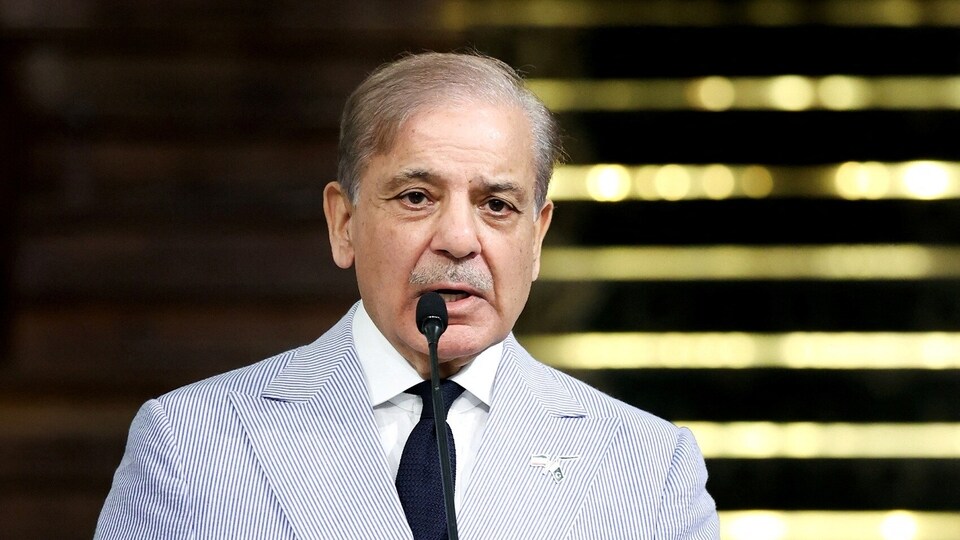
“We have seen reports regarding a continuing pattern of reckless, war-mongering and hateful comments from Pakistani leadership against India. Pakistan would be well-advised to temper its rhetoric as any misadventure will have painful consequences, as was demonstrated recently,” MEA spokesperson Randhir Jaiswal said during a press conference on Thursday.
The sharp reaction came after Pakistan Prime Minister Shehbaz Sharif on Tuesday warned that India would not be allowed to take “even one drop” of water belonging to his country, amid tensions following New Delhi’s April 23 decision to put the 1960 Indus Waters Treaty (IWT) “in abeyance” a day after the Pahalgam terror attack that killed 26 people.
“If you threaten to hold our water, you cannot snatch even one drop of Pakistan,” Sharif said at a ceremony in Islamabad, adding that India would be “taught a lesson” if it attempted such a move. Pakistan has repeatedly claimed that blocking water flow would be considered an act of war.
His remarks echoed those of former foreign minister Bilawal Bhutto-Zardari, who earlier likened the IWT suspension to an attack on the Indus Valley Civilisation and warned that Pakistan would not back down if “forced into war.”
The rhetoric drew an unusual response from actor-turned-BJP leader Mithun Chakraborty, who threatened Pakistan with “a series of BrahMos missiles” and, in a bizarre aside, said a dam would be built in India and “140 crore Indians” would relieve themselves there before unleashing it on the neighbouring country. He clarified his comments were aimed at Pakistan’s establishment, not its people.
Meanwhile, Pakistani Army chief Gen Asim Munir, addressing the diaspora in Tampa, Florida, said Islamabad would “destroy any dam” India builds to block water flow, asserting that “the Indus River is not the Indians’ family property.”
New Delhi responded to Munir’s comments by accusing Pakistan of “nuclear sabre-rattling” and questioning the integrity of its nuclear command. The MEA said such threats confirmed the military’s proximity to terrorist groups and would not deter India from safeguarding its security. It also noted with regret that Munir’s remarks were made “from the soil of a friendly third country.”
The war of words comes in the wake of Operation Sindoor, launched by India on May 7 against terror infrastructure in Pakistan and Pakistan-occupied Kashmir following the April 22 Pahalgam attack. After four days of drone and missile exchanges, both countries agreed on May 10 to end hostilities.


