
 E-Paper



India sparks Big Tech as Non-State Actors debate
Twitter is currently engaged in a tussle with the Indian government over the new IT rules, which came into effect on May 23. The government has criticised Twitter for its deliberate failure to comply with the new guidelines that mandate appointments of chief compliance officer, nodal officer, and grievance officer by social media platforms with more than 500 million users.

 Prefer HTon Google


External affairs minister S Jaishankar on Wednesday called for a debate on the responsibility, accountability and influence wielded by big technology companies as “non-state players”, saying such issues cannot be brushed under the carpet.
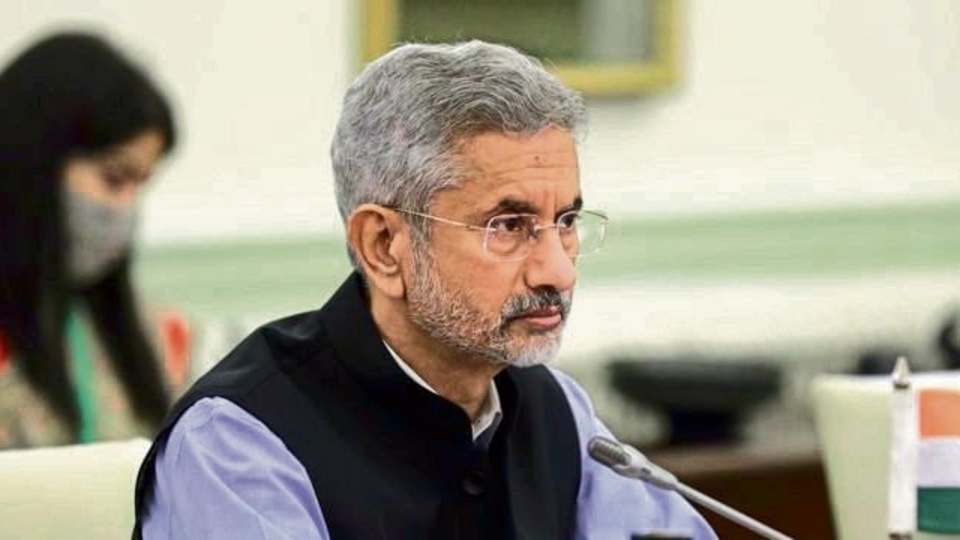
Jaishankar’s remarks came against the backdrop of a tussle between Twitter and the Indian government following the implementation of controversial new digital media rules. Another social media firm, WhatsApp, has challenged certain provisions of the new guidelines in court. Jaishankar made the comments while participating in a virtual conversation with former British prime minister Tony Blair.
The minister said there was a debate in different parts of the world on Big Tech, including a “very vigorous one in India”. While acknowledging technology and innovation as forces of progress that opened new vistas, Jaishankar said there is also a need for democratic societies to debate the responsibility that comes along with the power wielded by Big Tech companies.
Without naming any company, Jaishankar said: “In a democratic society, we have to ask ourselves... Big Tech is there… very visibly in my life. You have a big presence [but] where is the responsibility which comes with it? They have huge power, where is the accountability?”
He added: “This is again not an issue limited to India. They harvest our data as they do across the world. So, you have, in a sense, the opposite of the American revolution, which is you have representation and no taxation.”
Besides looking at the role of Big Tech as a governance issue, a political issue, and a democratic issue, there is also the need to examine the influence such firms command, he said.
“International relations have been devised on the basis of state-based players. What happens when you have non-state players who in some ways are bigger than many states? These are very serious questions which need debating,” Jaishankar said.
“I think they can’t be brushed under the carpet, saying you shouldn’t question them because then you are attacking freedom of speech. I think that’s a cop out. It obviously serves their interest, so it’s a very, very legitimate debate,” he said.
Union minister for electronics and information technology Ravi Shankar Prasad, meanwhile, said he was open to criticism, even from Twitter, while asserting that tech giants were welcome to do business in India but at the same time had to follow the laws of the land.
Responding to a question at the India Global Forum on whether he felt he was singled out by the social media company last week when he was briefly locked out of his account for an alleged violation of the American copyright infringement act, Prasad said that Twitter cannot just follow the laws of the US.
Addressing the contentious issue of traceability that messaging application WhatsApp has challenged in court, Prasad said that during a riot, a lot of incendiary content is circulated that is public in nature. “We are not asking them to open up their encrypted system,” he said. “The issue of fake news, misinformation and polluted materials has to be tackled. Tech companies are welcome to do business but they have to become accountable and learn to follow the laws of the land,” he added.
Blair, while responding to a question on big technology companies challenging democracy from the moderator of the conversation organised by India Global Forum, described such firms as “vast behemoths with enormous power”.
He said many firms should now be seen as public interest companies since they have enormous impact on the lives of people, and there is a need for a regulatory framework within which they should operate.
Blair said another key issue is the digital divide, as hundreds of millions of people don’t have access to technology. He also called for focus on the power of China in the technology sphere.
Twitter is currently engaged in a tussle with the Indian government over the new IT rules, which came into effect on May 23. The government has criticised Twitter for its deliberate failure to comply with the new guidelines that mandate appointments of chief compliance officer, nodal officer, and grievance officer by social media platforms with more than 500 million users.
Not complying with some of these provisions made the US giant recently lose the protection from litigation for content posted on that platform that social media intermediaries are afforded by Indian law.
The central government has said that Twitter is still not in compliance with the new rules, and will not be entitled to protection against penal action for third party content, or safe harbour, under Indian law.
The new social media and intermediary guidelines, which came into effect on May 25, were challenged by WhatsApp over privacy concerns with regard to mandatory traceability requirements that the company said represented a “dangerous invasion of users’ privacy”. The guidelines said that significant social media intermediaries primarily in the nature of messaging, such as WhatsApp and Signal, will have to identify the first originator of any message. WhatsApp argued that implementing the provision would effectively result in breaking end-to-end encryption.
HT reached out to Twitter and WhatsApp but did not immediately receive a response.
“Minister Jaishankar rightly pointed out that there is a need to regulate the social media space and Big Tech at large. It is also important that tech companies work towards ensuring greater consistency and transparency in the application of their policies. It is equally important to ensure that the laws regulating the internet and technology space ensure user privacy, safety, and security, which includes safeguarding the fundamental right to privacy and protecting free speech,” said Kazim Rizvi, founding director, The Dialogue.


