Even as India and the European Union (EU) prepare for the signing and entry into force of their free trade agreement, the two sides are moving forward with a bilateral investment protection pact as a complement to the trade deal, the EU’s new ambassador in Delhi, Jean-Éric Paquet, has said.
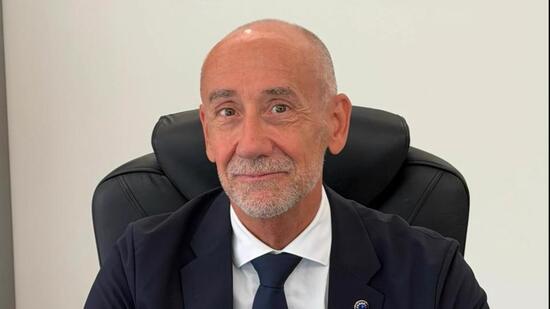
The EU is also looking forward to doing more with India under a new Security and Defence Partnership, including countering non-traditional threats and defence industry cooperation, Paquet said in an interview with HT. Edited excerpts from the interview:
Do you see the India-EU free trade agreement (FTA) getting across the finish line in December without any hitches?
We are looking at December to sign the agreement. A few days ago, the European Commission proposed a signature to the Council of Ministers. [India’s] ministry of commerce and ourselves in Brussels published the schedule of commitments [with] details of various tariff reductions and facilitations agreed by negotiators in January.
Now, all actors [in Europe and India] know what the setup will be at entry into force. We hope for signature at the end of the year — this looks solid but will need to be confirmed, and then the European Parliament will have to give its assent. That will certainly take a few additional months, so let’s say by the middle of next year, this will be in force.
What I think is important to note is that India and Europe are negotiating an investment protection agreement. This really goes hand-in-hand because the reality of creating this economic space across India and Europe, two billion people, 25% of global GDP, is to really allow operators to look at their flows, supply chains in that unified market. That means shipping goods back and forth, but also being able to invest in the other market. The investment protection agreement is really the necessary complement to the FTA. Negotiations are ongoing, let’s hope this can end up broadly in sync.
{{/usCountry}}What I think is important to note is that India and Europe are negotiating an investment protection agreement. This really goes hand-in-hand because the reality of creating this economic space across India and Europe, two billion people, 25% of global GDP, is to really allow operators to look at their flows, supply chains in that unified market. That means shipping goods back and forth, but also being able to invest in the other market. The investment protection agreement is really the necessary complement to the FTA. Negotiations are ongoing, let’s hope this can end up broadly in sync.
{{/usCountry}}Is there a timeline for concluding talks on the bilateral investment agreement?
I don’t think I can offer a timeline today but the negotiations, whilst they are substantial ones, are distinctly less complex than the very, very challenging tariff negotiations for the FTA. I think the issue will not be complex, the issue will be to make choices on the setup, coverage, remedies under the agreement. So that is all being discussed now.
Let’s hope this progresses swiftly. Again, I think for operators this is probably as important as the FTA and when both will be in play, this will really allow actors to fully use that space we are offering them.
There have been concerns on the EU’s carbon border adjustment mechanism (CBAM) and how are those being addressed?
The carbon pricing mechanism is now effectively fully in operation. The legislation was adopted in 2023 but then for three years the EU and the Commission worked with partners to prepare the ground to avoid that this comes into force too quickly and impacts operations. We were speaking with partners everywhere, including in India, allowing mechanisms to be properly prepared in terms of information, reporting, certification.
Since January 1, the charge is progressively coming into operation and will very slowly increase until 2034. So yes, the CBAM charge is here. The way this works is that what matters for Europe is the carbon intensity of imports to ensure that there is no carbon leakage…European industries are massively working and investing in reducing their own emissions under the European carbon pricing mechanism.
This means the purpose is not the charge itself, the purpose is to ensure we have a good sense of the respective carbon intensity of goods. What is happening is we already see for some partners, and I understand this also applies to India, that industries are already reducing the carbon intensity of their operations, and therefore their products are gaining market share.
At the same time, as India puts in place its own carbon mechanism, and you are working on carbon pricing, this will be taken into account. Again, if an importer has a carbon mechanism in its home market and we agree on how this operates and can be properly assessed, then the charge is much reduced. There will also be cases where there will be no charge because there will be equivalence essentially of mechanisms in Europe and in partner countries.
The discussion is very much about future developments and we will have teams coming from Brussels in the middle of October to continue the discussion on CBAM.
Do you foresee more partnerships with European countries or even at the level of the EU to help India make this transition?
India is very ambitious about its own transition and that’s very welcome in the broader context of emissions. We are all seeing absolutely every summer in Europe, but also here in the region, how disruptive climate change already is in terms of extreme weather events, wildfires, and loss of economic value, but also loss of life at a scale which is frankly unacceptable. Humanity is acting on climate change, India is acting on climate change, that’s very welcome.
We are working hand-in-hand with India and we are available, both in terms of investments and policy design, and there is a dialogue. In addition to that, India and Europe decided to put in place a climate fund of the magnitude of 500 million euros and that will be available to support investments in clean tech and reducing the carbon intensity of industries in India.
There hasn’t been an official announcement but there is already talk about a visit from the Indian side to Europe for the conclusion of the FTA. Is there anything you can share on this?
Not today. It would be particularly auspicious to have such a visit and connect it to the signature of the agreement. Let’s look forward to it and hopefully this can be confirmed soon.
What I would like to say is that what is very remarkable is the intensity of the relations between India and Europe. I think Prime Minister Modi visited several EU states during the year. Conversely, you have European leaders coming to India every other month, starting in January with the invitation to Presidents Antonio Costa and Ursula von der Leyen for Republic Day. The relationship is extraordinarily intense and active. If it can be crowned at the end of the year with a visit of the PM, that would be wonderful.
The security and defence aspect of the India-EU relationship has gained in salience. Have you identified areas that you’d like to work in jointly?
The Security and Defence Partnership (SDP) is a remarkable step forward by India and Europe. There has been quite a bit of work throughout the year, there will be more to come. It started with security and defence consultations between EU high representative Kaja Kallas and external affairs minister S Jaishankar in March. This is nurtured by very regular senior-level consultations across all areas of security and foreign policy. We have a good discussion on hybrid threats, including counter-terrorism and extremism. We are discussing maritime security, freedom of navigation.
The West Asia conflict is a backdrop to that, and in all these consultations, it is about sharing information, experiences, but also seeing whether effective action can take place, in the form of training, work with partners in the region. Maybe more tangible is an ongoing discussion between the Indian Navy and European navies.
We have Operations Atalanta and Aspides and we are looking at an administrative arrangement to facilitate this operational interaction between the navies. I hope this can be announced fairly shortly [as it] will be a really practical outcome of that partnership.
The rather big-ticket item is defence industry cooperation, which is very much part of the SDP. This is now starting between individual EU states and the industries and Indian partners. We hope to put in place, in the next few months, a Defence Industries Forum, which will be a platform to continue that conversation.
In Europe, we are investing at large scale into plugging capability gaps we have. What the leaders decided last year was 800 billion euros in defence industry, defence assets [and] defence industry investments. The challenge now is not so much to mobilise resources, but to have industry equip itself to be capable of delivering these assets.
We have partners, including across the Atlantic, for Europe. But everyone is under massive pressure to ramp up the capacity of industry. This is where I see obvious opportunities for really trying to work together more between India and Europe in supply chains.
Will the proposed security of information agreement fit into that?
It would certainly help, this is more between institutions. But obviously, there are some aspects of the defence industry where this can certainly help.
One area where India and the EU haven’t been on the same page is Ukraine, and there is now the Sanctioning Russia and Iran Act of the US. There is a concern in India that if it were to be sanctioned under this act and stopped from buying Russian oil, it will have to look at the same sources of energy as Europe and that could impact the global market. Is that something Europe has looked at?
There are pressures on the energy market at scale today already. Energy security is a key public policy concern and objective in India. Very much the same in Europe. We were confronted with a deep crisis in 2022, when Russia invaded Ukraine. Remember, overnight, Russian gas became either unavailable or unreliable, and that was half the gas in Europe. We handled it through a set of measures, we doubled down on investing in renewables. Energy efficiency was a major effort across society and industry, and we invested in infrastructure to facilitate deliveries of LNG and tapped into world markets.
It remains a challenge for people in Europe, as it is for India and the industry. Working on energy markets in a geopolitical context is indeed really important.
I don’t think I would want or can comment on US legislation. On the European side, we have put sanctions on Russian oil in the [form of a] price cap. Our purpose is not to disrupt world markets. Our purpose is to ensure we reduce, to the maximum extent possible, the financing going into Putin’s war machine.
There’s a war in Europe, and war crimes committed every day on civilians in Kyiv and other cities in Ukraine. I think we need to ensure this is not facilitated by financing.
We need to ensure we move completely out of Russian gas in Europe, and that will be effective in 2027 with a sanctioned regime [and] internal legislation. But hopefully, we can also continue to work with partners in Asia on energy markets.
The Indian leadership has made it clear to Russia on several occasions that the war in Ukraine needs to end. Do you see India doing anything more to help end this war?
This was very welcome, because what is very visible is that in the last year or two, Ukraine has been very clear that it’s ready for a ceasefire. Russia is not.
As long as this ceasefire is not accepted by Russia, peace talks cannot seriously start and just and lasting peace will be a very challenging negotiation. It needs to start with that ceasefire.
So, the formula of endless war to the end of war is very well put. Any pressure India can exercise on Russia to move to that ceasefire is very welcome.
Do you see more countries signing on for the Partners for Multilateralism (P4M) initiative, which India and the EU are part of?
We are supporting the UN with that partnership. I was extremely happy to see India co-sponsored and spoke at the event. So European Council President Antonio Costa, Canada’s Prime Minister Mark Carney, President Ruto of Kenya, President Lula of Brazil and India were part of the kickoff.
If you put aside hegemons, which have been quite clear on how they see international rules and find working within these rules less and less agreeable to them, the rest of the world is very clear. It has benefited and will continue to benefit from an established system around the UN, and economic rules. They need to be defended. From that point of view, most countries around the world have a stake in ensuring that this rules-based order is preserved.
It needs reforms and improvements. Representation is an important topic. But having these rules, defending them, because we all benefit from them, is what this partnership is about. Therefore, it’s so important that key players, India included, are part of it.
What are the EU’s priorities for ties with India in 2027?
What the EU delegation [and] the teams across 27 member state embassies are really focusing on is preparing for the entry into force of the FTA. Obviously, we don’t start from scratch, the [two-way] trade is 125 billion euros.
With services, it’s 180 billion euros. The foreign direct investment stocks on both sides are significant.
But so much more would make sense if you look at complementarities, the need to de-risk, work on resilience of supply chains. The work really needs to be about ensuring that everyone is fully aware of the changes, can prepare for them, and can fully use them so that when the FTA enters into force next year, you can really see this trade going up, these investments being decided.